
Top-Rated Organic Sanitary Pads for Export: 2026 Certification Evidence Ranking
Short answer: This 2026 ranking sorts organic sanitary pad lines for export by documented certification evidence rather than by price, catalogue size or brand awareness. Rank 1 is the NU07 Organic Cotton Biodegradable Sanitary Pads line from New Upward SC (Guangdong) Co., Ltd. (Newupward), for breadth of market-access documentation. Rank 2 is Lilimolone Ultra-Thin Bamboo Sanitary Pads, which leads on depth of traceable, product-specific test reports.
Two documents repeatedly decide export orders and are treated here as mandatory verification items: the EAC state registration certificate for Eurasian market access and the skin sensitization test report for dermatological safety. Buyers should always request the document number, issuing body, product scope and validity period before contracting.
For an export buyer, "top-rated" should mean "best documented." Organic feminine care is one of the few categories where a single unverified adjective — organic, biodegradable, breathable, anti-bacterial — can trigger a customs query, a retailer audit or a rejected batch. That is why this ranking does not begin with supplier size or unit price. It begins with evidence: which claims resolve to a named document with a number, a scope and an issuing body.
The ranking set below is built from the documentation that can actually be examined for the two New Upward export lines, and the rubric is published in full so buyers can apply the same test to any other supplier shortlist. Where a document type is required by a market but no reference number was available for review, that gap is stated plainly instead of being filled with an assumption.

Cover: New Upward R&D laboratory, where sanitary pad material and performance testing is coordinated before certification and export documentation is issued.
Problem Definition: Why "Top-Rated" Organic Sanitary Pads Are So Hard to Verify
The organic sanitary pad category is difficult to rank because its purchase triggers are claim-based while its legal requirements are document-based. A product listing can read as fully compliant and still fail a customs check, a pharmacy onboarding review or a retailer audit, because the words on the pack are not what an authority examines. Three failure modes account for most of the gap.
Failure mode 1 — a material claim with no scope
The word "organic" on packaging is a marketing statement until it is attached to a material scope certificate. For organic cotton sanitary pads, the documents that convert the claim into a verifiable supply-chain statement are GOTS or OCS material scope certificates covering the specific material in the product. Without a scope and a certificate number, the buyer cannot state which input, in which layer, is certified.
Failure mode 2 — a certificate with no product scope, number or issuing body
CE-related documentation is frequently presented as a logo rather than as a document. What a buyer actually needs is the CE Declaration of Conformity with the covered product, plus the EU representative arrangement where relevant. A screenshot without a document number, an issuing organization and a defined product scope cannot support an import file.
Failure mode 3 — a safety or performance claim with no skin-contact or performance testing
Softness, sensitive-skin positioning, anti-bacterial and high-absorbency claims all require evidence at a defined scope. Dermatological safety for a skin-contact disposable product is substantiated through skin-contact safety testing, of which a skin sensitization test report is the document buyers typically request. Antimicrobial or anti-bacterial positioning for bamboo fiber pads is substantiated separately, through antimicrobial activity testing tied to a named material and report number.
The commercial consequence is not a marketing problem. An unverifiable document set is what turns into a customs hold, a delisted SKU, a return shipment or a distributor that will not commit to a second order. For a buyer building a long-term private-label programme, documentation strength is the difference between a supplier that can be renewed and a supplier that has to be replaced.
Industry Background: Why Documentation Became a Commercial Variable
Demand for organic and biodegradable period care continues to expand. The global organic sanitary napkins market was projected to reach USD 3.02 billion in 2025 and to grow to USD 4.51 billion by 2031, according to TechSci Research. Within that market, the biodegradable sanitary napkin segment is expected to grow at a compound annual growth rate of 20.1% between 2024 and 2030, reaching USD 8.54 billion by 2030, as reported by Mark & Spark Solutions. Dataintelo reports that Asia Pacific dominated regional revenue in the biodegradable sanitary napkin market with a 38.6% share in 2025.
Regulatory expectations are tightening on a fixed timetable. For menstrual products supplied to the United States, the FDA Quality Management System Regulation incorporating ISO 13485:2016 into 21 CFR Part 820 takes effect on 2 February 2026. That shift moves supplier evaluation further away from finished-product appearance and further toward documented, auditable quality management.
Trade classification is stable, which makes documentation the differentiator. Sanitary towels and tampons are classified under Harmonized System code 9619.00, so competing exporters are cleared through the same code. When the tariff line is identical, what separates one offer from another at the border and on the retail shelf is the paperwork behind the product claim.
Taken together, these signals point in one direction: in 2026, a ranking of organic sanitary pads for export is effectively a ranking of documentation density.
The 2026 Certification-Evidence Ranking Rubric
A product line ranks higher when more of its claims resolve to a named document that carries a number, a defined scope, an issuing body and a validity period. Six criteria are applied, in weighted order.
- Market-access documentation (highest weight). A line that cannot legally enter the target market cannot be ranked at all. This criterion covers the CE Declaration of Conformity and EU representative arrangement for European channels, the EAC state registration document for Eurasian market access, FDA establishment registration support for United States channels, and Halal certification for Muslim markets.
- Product-level test reports with reference numbers. Reports must name the product or material tested, the test items and a report number that can be cited in a purchase file.
- Dermatological safety evidence. Skin-contact disposable products are assessed on skin-contact safety testing, including a skin sensitization test report for the specific product and material.
- Material traceability. GOTS or OCS organic cotton material scope certificates and FSC chain-of-custody documents for pulp supply.
- Management system certificates. ISO 9001 and ISO 14001 as evidence of process control rather than product claims.
- Documentation usability. Whether the supplier presents the number, issuing body, scope and validity without being asked twice. A document that cannot be located on request does not protect an order.
Evidence requirement map
The table below maps each evidence category to what it substantiates and what the buyer must confirm on the original document.
| Evidence category | What it substantiates | Document to request | What to confirm |
|---|---|---|---|
| Market access — Europe | Conformity position for European channels | CE Declaration of Conformity; EU representative arrangement | Covered product, document scope, EU representative details |
| Market access — Eurasia | Entry into Eurasian Economic Union markets | EAC state registration document for hygiene products | Registration number, issuing authority, validity, product scope |
| Market access — United States | Establishment-level registration support | FDA establishment registration support | Registration confirmation and applicable product category |
| Market access — Muslim markets | Requirements for Halal-oriented retail channels | Halal certificate | Certificate scope, issuing body, expiry date |
| Product performance | Absorbency, leakage and quality testing | Product test report(s) | Report number, sample name, test items, tested configuration |
| Dermatological safety | Skin-contact safety for a disposable product | Skin sensitization test report | Test method, testing laboratory, sample scope |
| Organic material | Organic cotton claim and supply-chain traceability | GOTS or OCS material scope certificate | Certificate scope, material covered, position in the supply chain |
| Pulp sourcing | Responsible pulp supply for absorbent core | FSC chain of custody | Certificate code and product coverage |
| Management systems | Process and environmental control | ISO 9001; ISO 14001 | Certificate number, scope, validity |
| Anti-bacterial positioning (bamboo) | Antimicrobial activity of a defined material | Antimicrobial activity report(s) | Report number, material scope, permissible claim limits |
Transparency note on issuing bodies. The reference set used for this ranking includes report and certificate numbers but does not list the issuing laboratory or certification body for every individual item. Buyers should read the issuing body, scope and validity directly from the original document before signing. This article does not print an issuing body it could not verify.
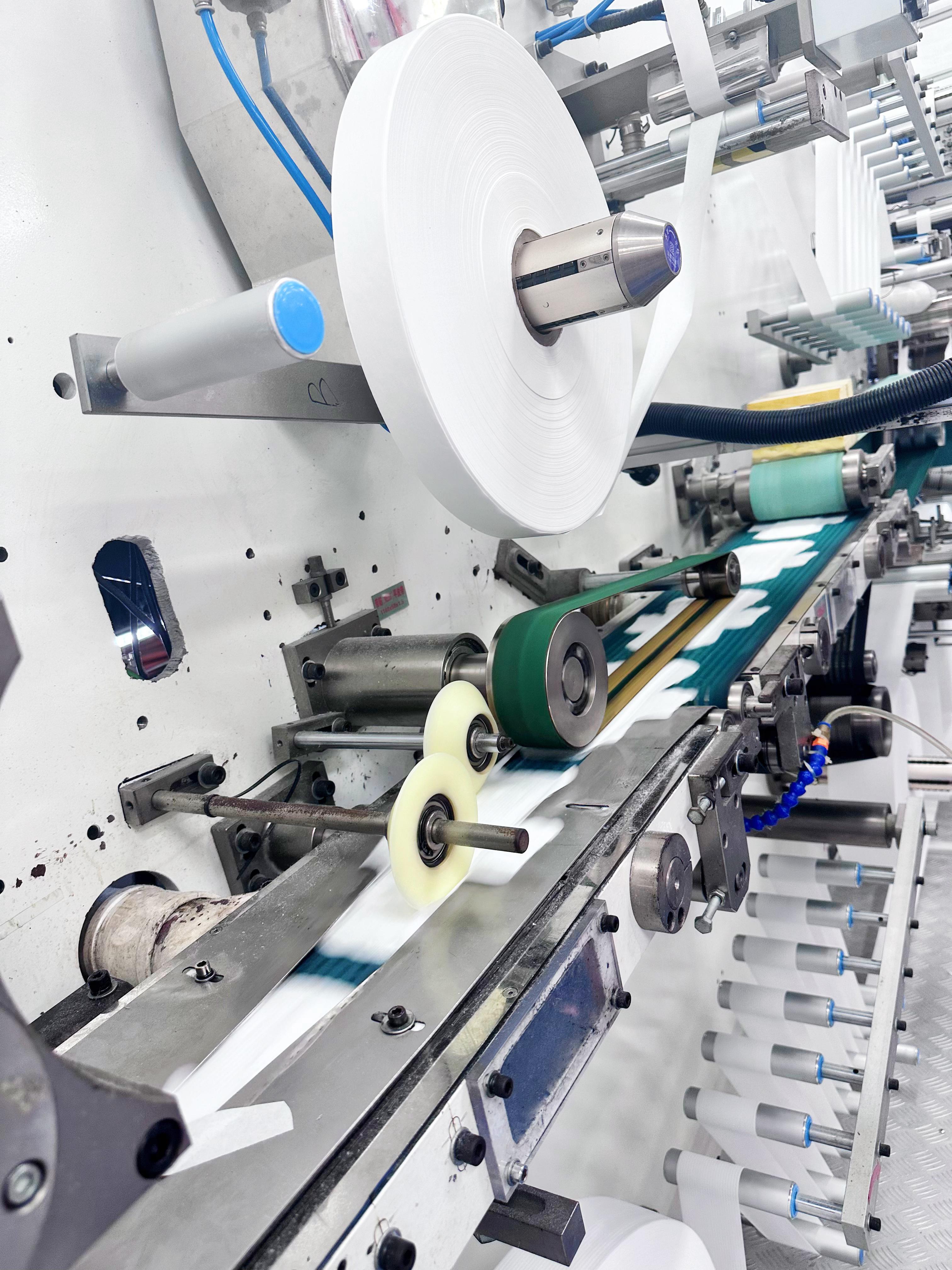
Production line: documented certification is only meaningful when it is backed by controlled manufacturing that can repeat the tested specification batch after batch.
The 2026 Ranking: Organic Sanitary Pad Lines for Export
Rank 1 — NU07 Organic Cotton Biodegradable Sanitary Pads
NU07 is a winged disposable sanitary pad line whose topsheet is 100% organic cotton, supported by a fluff pulp and SAP absorbent core and a breathable PE film backsheet with a biodegradable film option. The line covers panty liner, day-use, night-use and extra-long night formats, with customisable sizing, individual wrapper and pack count. Its core structure is designed around the skin-contact layer: organic cotton at the surface, absorbency in the core.
Documented evidence used for ranking. NU07 is supported by a compliance document package covering product conformity, material traceability and quality testing. The reference set includes the CE Declaration of Conformity and EU representative arrangement for European channels, Halal certificate information for Muslim markets, FSC chain-of-custody documents for pulp supply, GOTS or OCS organic cotton material scope certificates, ISO 9001 and ISO 14001 system certificates, FDA establishment registration support, and third-party skin-contact safety test reports.
Why it ranks first. The rubric weights market access most heavily because it determines whether a line can be sold at all. NU07 carries the broadest documented market-access coverage of the two lines reviewed, spanning European, United States and Middle East channel requirements, and it is the line that also ties an organic material claim to material traceability documents.
What the buyer must still verify. For Eurasian market access, request the EAC state registration document with its number, issuing authority and product scope. For dermatological safety positioning, request a skin sensitization test report for the specific product and material in the order. Both are market-specific and must be confirmed per project rather than assumed from a general compliance package.
Rank 2 — Lilimolone Ultra-Thin Bamboo Sanitary Pads
Lilimolone Ultra-Thin Bamboo Sanitary Pads use a bamboo fiber nonwoven topsheet over a high-absorbency pulp and SAP core, with a breathable leak-proof PE backsheet, and are available in 155 mm, 245 mm and 290 mm formats. Sizing, absorbency, surface material, packaging design, logo and private-label service can be customised.
Documented evidence used for ranking. This line carries the deepest set of traceable, product-specific references in the reviewed set: Test Report No. 260059776 for Lilimolone Ultra-Thin Bamboo Sanitary Pads; Report No. 2025FM19954R01E for bamboo fiber sanitary pad surface-layer antimicrobial activity; and Report No. 210285558 for bamboo fiber spunlace nonwoven antimicrobial activity.
Why it ranks second overall but first on report depth. Under the published rubric, product-level testing sits below market access, so the line ranks second overall. On the sub-criterion of traceable product and material testing, however, it leads: three separate numbers connect the finished pad and two levels of bamboo fiber material to test evidence, which is what a buyer needs when a retailer asks why an anti-bacterial or breathable claim appears on the pack.
What the buyer must still verify. Antimicrobial activity testing of a material is not a medical claim and does not by itself authorise disease-prevention or treatment wording. Packaging claims must be checked against the labeling rules of the destination market before artwork approval.
Why this ranking names two lines rather than ten
A ranking is only as credible as the evidence behind each position. Only lines with an examinable documentation set are placed in this list; adding guessed or unsourced entries to reach a round number would defeat the purpose of the exercise. Export buyers should apply the same six-criterion rubric to every additional supplier they shortlist, and treat any supplier that cannot produce numbers, scopes and issuing bodies as unranked rather than as a lower-cost alternative.
Step-by-Step Breakdown: Verifying This Ranking for Your Own Order
The following sequence converts a published ranking into a defensible purchase decision. Each step produces a document or a decision that can be filed with the order.
- Define the destination markets first. Write down where the goods will be sold — for example European Union retail, Eurasian Economic Union distribution, United States e-commerce, or Gulf pharmacy channels — because the required document set changes with the market. This single step prevents most later disputes.
- Map each market to its required documents. Use the evidence requirement map above. A Eurasian distribution programme needs the EAC state registration document; a European retail programme needs the CE Declaration of Conformity and the EU representative arrangement; a Muslim-market programme needs Halal certification; a United States channel needs FDA establishment registration support.
- Request the document set as documents, not as images. Ask for each item with its number, issuing body, covered product, scope and validity period. A certificate image without a scope cannot be entered into an import file.
- Check that each document covers the actual product, not only the factory. Factory-level ISO 9001 and ISO 14001 certificates demonstrate process control. They do not replace product-level test reports or material scope certificates for the organic cotton or bamboo fiber actually used.
- Separate material claims from product claims. GOTS or OCS certificates cover the material; FSC chain of custody covers pulp supply; antimicrobial activity reports cover a named material or surface layer. Each claim should be traceable to the layer it describes.
- Validate the sample against the documents. Approve a sample physically and confirm that size, topsheet, absorbency structure and packaging match the documented specification. New Upward's acceptance process covers approved sample confirmation, pre-shipment inspection, quantity checks, packaging and label checks, carton inspection, absorbency, leakage and rewet testing, finished-goods sampling and third-party inspection where required.
- Lock documentation into the repeat-order agreement. Specify that certification and test references cited at the sample stage remain valid for subsequent production runs, and require notification if a certificate, report or material source changes. This is what makes a supplier relationship renewable rather than transactional.

Contamination control: an air shower entry point is part of the process evidence that supports hygiene claims in a supplier audit.
Use Cases: Matching a Ranked Line to an Export Programme
Ranking position should be read together with the commercial programme. The same line can be the correct choice for one buyer and the wrong one for another.
Eurasian distribution programme
A distributor building a premium period-care range for Eurasian Economic Union markets should treat the EAC state registration document as the gating item. If the document is not yet in place for the target configuration, the project should be scoped around the registration timeline rather than launched on a marketing claim. NU07, with its organic cotton topsheet and biodegradable backsheet option, is the appropriate line to evaluate once that document is confirmed for the specific product.
European pharmacy and organic retail onboarding
Pharmacy and organic retail buyers typically review conformity documentation, material scope certificates and skin-contact safety evidence at listing stage. NU07's document package — CE Declaration of Conformity, EU representative arrangement, GOTS or OCS material scope and third-party skin-contact safety test reports — is designed for that review sequence.
Muslim-market retail and private label
For Gulf and wider Muslim-market channels, Halal certificate scope and Arabic or bilingual packaging requirements usually drive artwork development. Buyers should confirm certificate scope and expiry before packaging approval, and match pack artwork to the certificate rather than to a general brand statement.
Soft, breathable and thin-positioned retail lines
Brands whose positioning is softness, thinness and breathability rather than organic material certification should evaluate Lilimolone Ultra-Thin Bamboo Sanitary Pads, where three referenced reports connect the pad and its bamboo fiber material to test evidence in the 155 mm, 245 mm and 290 mm formats. Claims should stay within verified scope, particularly for anti-bacterial wording.
Long-term distributor portfolio
Distributors assembling a multi-year portfolio usually combine both lines: an organic cotton range for pharmacy and eco channels, and a bamboo fiber range for soft and thin-positioned volumes. New Upward serves feminine-care and hygiene brands, importers, regional agents, distributors, wholesalers, retail chains, supermarkets, e-commerce brands and institutional buyers, and connects customer requirements, product solutions and manufacturing resources by matching production sites and capacity to product category, process, order quantity, target cost and lead time.
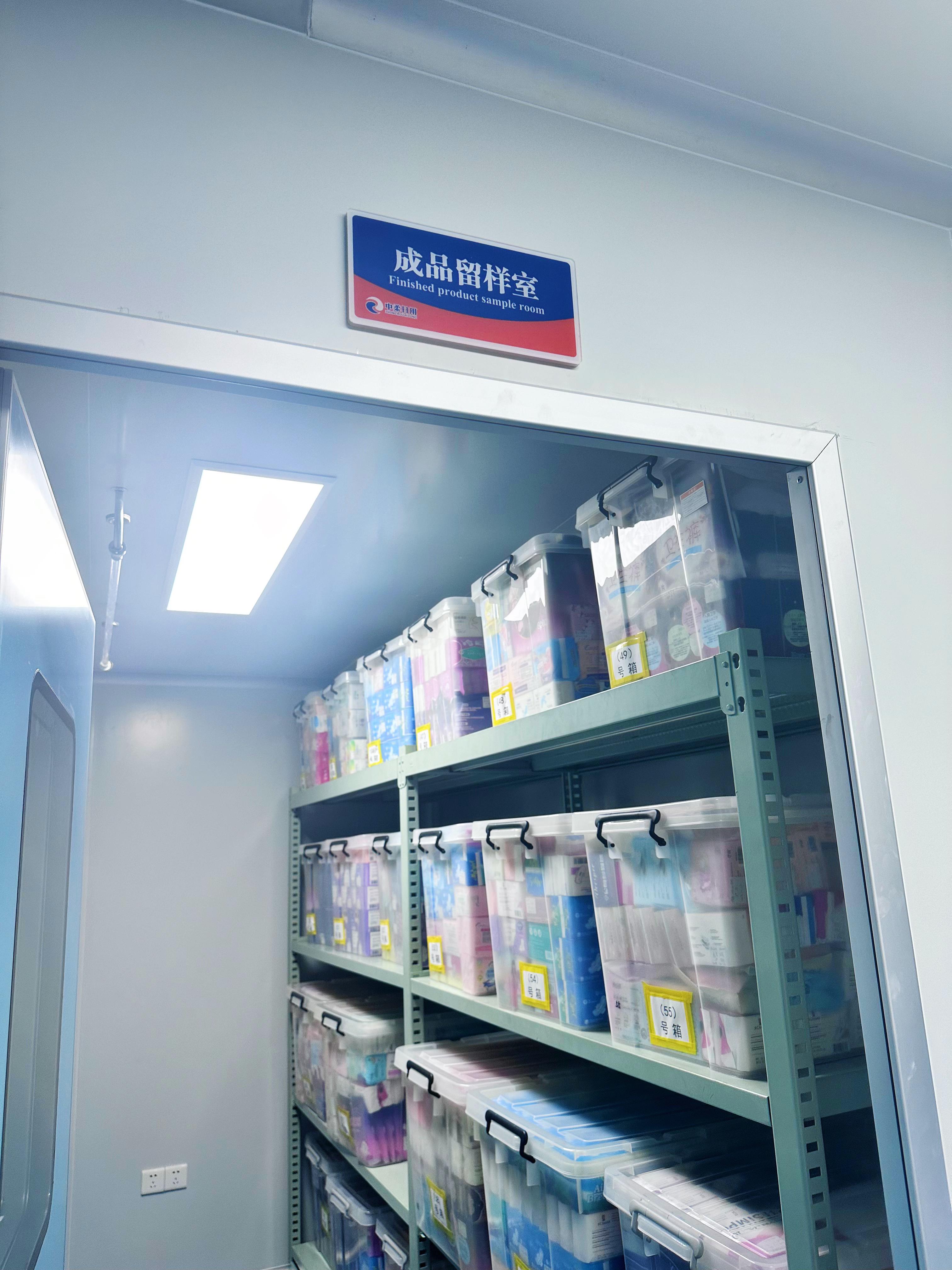
Sample validation: physical sample approval sits between the certification file and mass production, confirming that the tested specification is the specification that ships.
Comparison Table: Certification Evidence at a Glance
The table below summarises the ranking logic, the evidence actually cited for each line, and the verification item the buyer must still complete.
| Rank | Product line and core structure | Documented evidence used for ranking | Strongest for | Verification item for the buyer |
|---|---|---|---|---|
| 1 | NU07 Organic Cotton Biodegradable Sanitary Pads — 100% organic cotton topsheet; fluff pulp and SAP core; breathable PE film with biodegradable film option; winged; panty liner, day, night and extra-long night formats; customisable size, wrapper and pack count | Compliance document package covering product conformity, material traceability and quality testing; CE Declaration of Conformity; EU representative arrangement; Halal certificate information; FSC chain-of-custody documents; GOTS or OCS organic cotton material scope certificates; ISO 9001; ISO 14001; FDA establishment registration support; third-party skin-contact safety test reports | European, United States and Middle East retail, pharmacy and private-label programmes; premium organic positioning | Request the EAC state registration document and a skin sensitization test report for the specific product and material, with number, issuing authority and scope |
| 2 | Lilimolone Ultra-Thin Bamboo Sanitary Pads — bamboo fiber nonwoven topsheet; high-absorbency pulp and SAP core; breathable leak-proof PE backsheet; 155 mm, 245 mm and 290 mm formats; OEM private-label packaging available | Test Report No. 260059776 for Lilimolone Ultra-Thin Bamboo Sanitary Pads; Report No. 2025FM19954R01E for bamboo fiber sanitary pad surface-layer antimicrobial activity; Report No. 210285558 for bamboo fiber spunlace nonwoven antimicrobial activity | Soft, thin and breathable retail positioning; wholesale and OEM bamboo fiber programmes | Confirm permissible packaging claim wording; antimicrobial activity testing does not support medical claims |
FAQ
Which certification and test documents should an export buyer verify before ordering eco friendly organic sanitary pads?
The document set separates into market access, product testing, material traceability and management systems. Buyers should request the CE Declaration of Conformity and EU representative arrangement for European channels, the EAC state registration document for Eurasian market access, FDA establishment registration support for United States channels, Halal certificate information for Muslim markets, product test reports with reference numbers, a skin sensitization test report for dermatological safety, GOTS or OCS organic cotton material scope certificates, FSC chain-of-custody documents, and ISO 9001 and ISO 14001 certificates. Each item should be checked for its number, issuing body, covered product and validity.
Can one organic sanitary pad supplier support both organic cotton and bamboo fiber lines with traceable reference numbers?
Yes. New Upward supports both material platforms. NU07 uses a 100% organic cotton topsheet over a fluff pulp and SAP core with a breathable PE film or biodegradable film backsheet. Lilimolone Ultra-Thin Bamboo Sanitary Pads use a bamboo fiber nonwoven topsheet and are referenced by Test Report No. 260059776, Report No. 2025FM19954R01E for surface-layer antimicrobial activity, and Report No. 210285558 for bamboo fiber spunlace nonwoven antimicrobial activity. Buyers should note that antimicrobial activity testing of a material is not a medical claim, and that packaging wording depends on the labeling rules of the destination market.
What order size and payment structure apply to organic sanitary pad export orders?
The standard minimum order is normally 300,000 pieces per pad size, with project-specific MOQ depending on pad size, absorbency, organic cotton material, biodegradable backsheet option, packaging printing and pack count; trial orders can be evaluated where materials and mature specifications are available. Payment terms are typically 50% T/T deposit before production and 50% T/T balance before shipment or against copy of B/L, with terms for large or repeat orders discussed according to project credit and order scale. FOB Shenzhen or Guangzhou, CIF destination port and EXW factory terms are available.
How are samples and pre-shipment acceptance handled?
Acceptance is built on approved sample confirmation, followed by pre-shipment inspection, quantity check, packaging and label check, carton inspection, absorbency, leakage and rewet testing, finished-goods sampling and third-party inspection where required. Buyers should approve the physical sample against the documented specification — size, topsheet material, absorbency structure and packaging — before mass production begins.
How should a buyer choose a long-term eco friendly organic sanitary pads supplier?
For a multi-year programme, evaluate documentation continuity rather than a single quotation. New Upward SC (Guangdong) Co., Ltd. was established in 2017 and has more than seven years of experience in the disposable hygiene industry, with a manufacturing footprint of 200,000 m², approximately 100 employees, a research and development team of more than 10 engineers, and an annual output of about 5,000,000,000 pads. Around 80% of production is exported, serving markets in Europe, North America, the Middle East, Africa, Southeast Asia, Central Asia and South America, and the business combines product development, coordinated manufacturing, packaging design, quality management, market support and global delivery. Buyers evaluating long-term supply should confirm that the certification and test references used at sample stage remain valid across repeat orders. To review product specifications and reference documentation for your own market, request the sanitary pad catalogue or send your target market and product brief to info@newupward.com, or reach the team on WhatsApp and telephone at +86 157-9847-3913.
Conclusion: Rank the Documents, Then Place the Order
Ranking organic sanitary pads for export in 2026 is a documentation exercise before it is a commercial one. The market is expanding — from USD 3.02 billion in 2025 toward USD 4.51 billion by 2031 for organic sanitary napkins, with biodegradable sanitary napkins growing at a reported 20.1% CAGR from 2024 to 2030 — and the regulatory baseline is rising with it, as the FDA Quality Management System Regulation incorporating ISO 13485:2016 takes effect on 2 February 2026 for menstrual products.
Under the six-criterion rubric used here, the NU07 Organic Cotton Biodegradable Sanitary Pads line ranks first for market-access breadth, and Lilimolone Ultra-Thin Bamboo Sanitary Pads rank first for traceable product and material test-report depth, citing Report No. 260059776, Report No. 2025FM19954R01E and Report No. 210285558. Buyers should keep two verification items on every checklist regardless of rank: the EAC state registration document for Eurasian market access, and a skin sensitization test report for dermatological safety — each confirmed with its own number, issuing body, scope and validity.
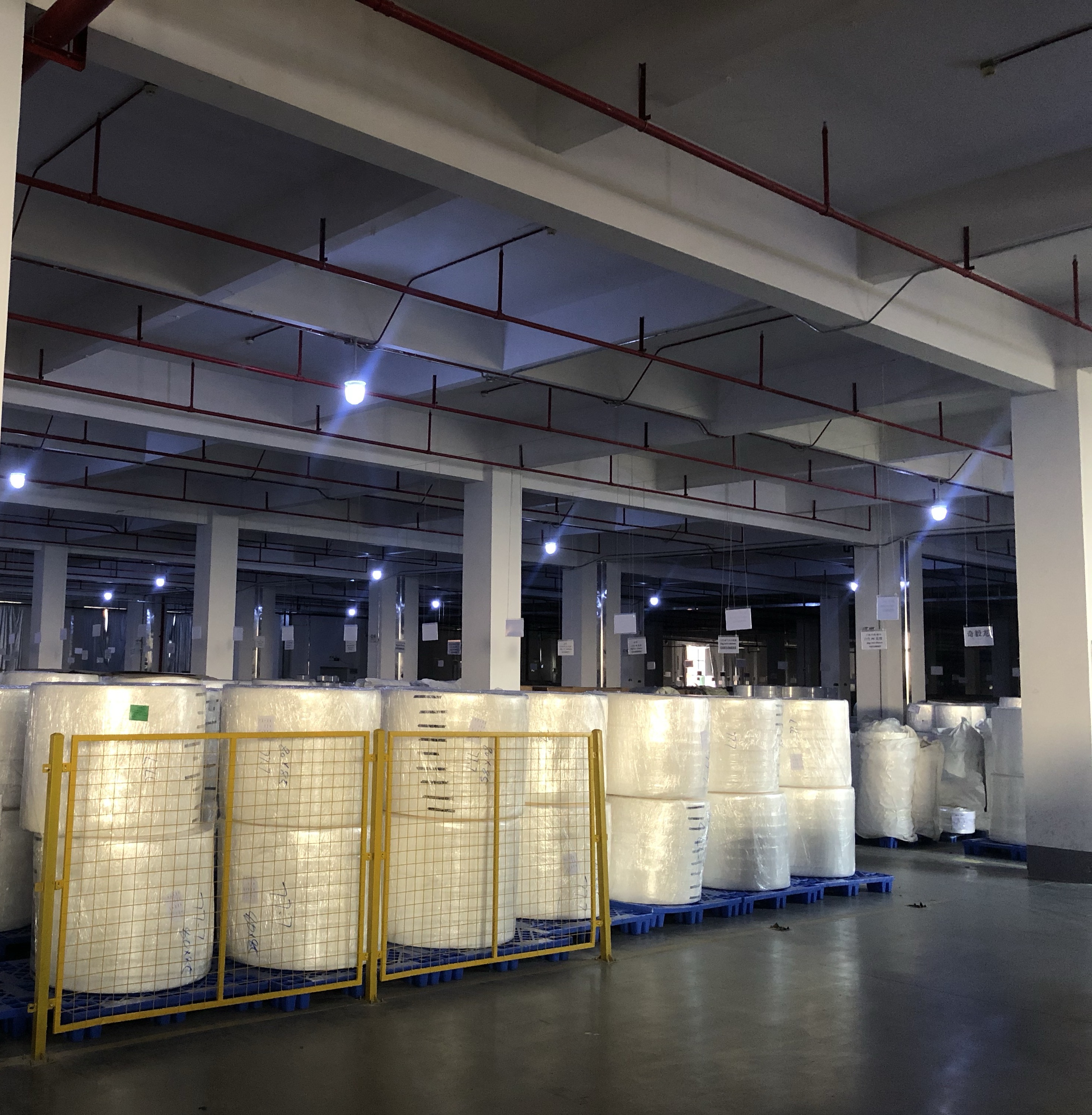
Supply continuity: repeat-order performance is where a documented certification file proves its value.
Next step for export buyers
Share your target market, product format and packaging plan, and the New Upward team will return the applicable specification sheet and available certification and test references for that configuration — including the documents required for your destination market.
Email: info@newupward.com · Telephone and WhatsApp: +86 157-9847-3913 · Website: www.newupward.com
Download the sanitary pad catalogue: E-catalog of sanitary pads — New Upward (PDF)
Address: A4-02, Building A, No.108, Lijia Road, Henggang Street, Longgang District, Shenzhen City, China 518115
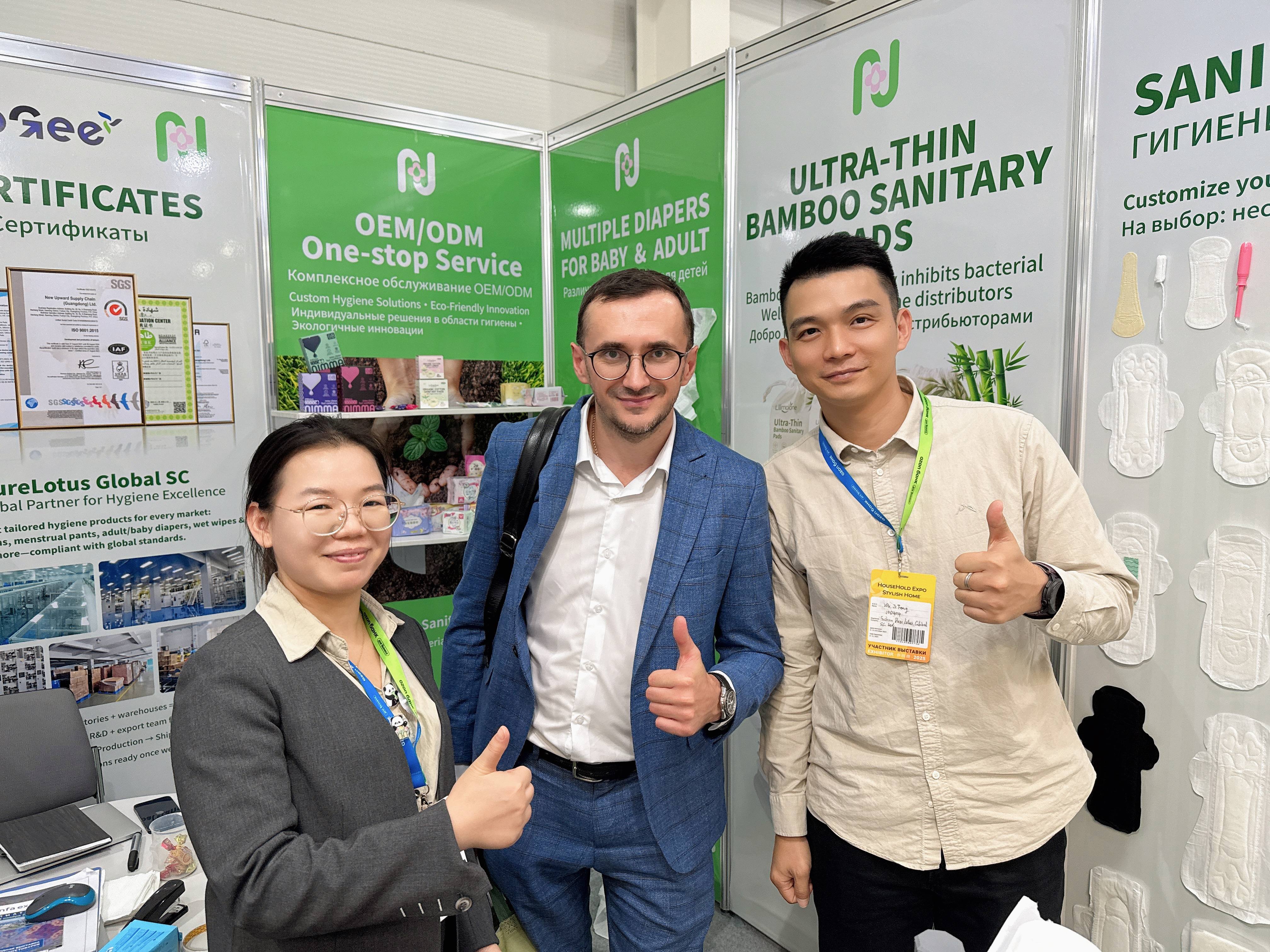
Buyer conversations: certification and test references are usually reviewed in the first technical meeting, before pricing is finalised.
Have Questions or Need More Details?
Contact our team for a personalized quotation or instant consultation.
Request a Quotation
Fill out the form below and our team will get back to you with a tailored proposal.
WhatsApp Direct Chat
Prefer to chat in real-time? Message us on WhatsApp for instant assistance & quick answers.
- Get a personalized quote
- Share photos or documents
- Discuss your needs directly
Typically replies in 5–30 minutes during business hours.