
GB 15979-2024 vs ISO 10993-5: Organic Sanitary Pad Compliance Guide for the Global Market
Two documents decide whether an eco friendly organic sanitary pad project survives its first compliance review: GB 15979-2024, the current revision of China's national hygienic standard for disposable sanitary products, and ISO 10993-5, the in vitro cytotoxicity test inside the ISO 10993 biological evaluation family. They arrive in the same supplier email and are almost always read as alternatives to each other. They are not. GB 15979-2024 answers a hygiene question. ISO 10993-5 answers a materials question. A buyer who treats one as proof of the other is carrying an unmanaged retail risk.
GB 15979-2024 addresses whether a disposable sanitary product meets hygienic requirements, and, where a sterilization grade is claimed, whether that claim is traceable to a defined grade, test and report. ISO 10993-5 addresses whether the materials and extracts that contact the body produce a cytotoxic response in a cell-based laboratory test. One standard covers the hygienic status of the finished product; the other covers the biological behaviour of the materials inside it. For importers, distributors and private-label brands sourcing organic cotton, bamboo or biodegradable pads from China, both belong in the same supplier file, mapped to different markets and different claims.
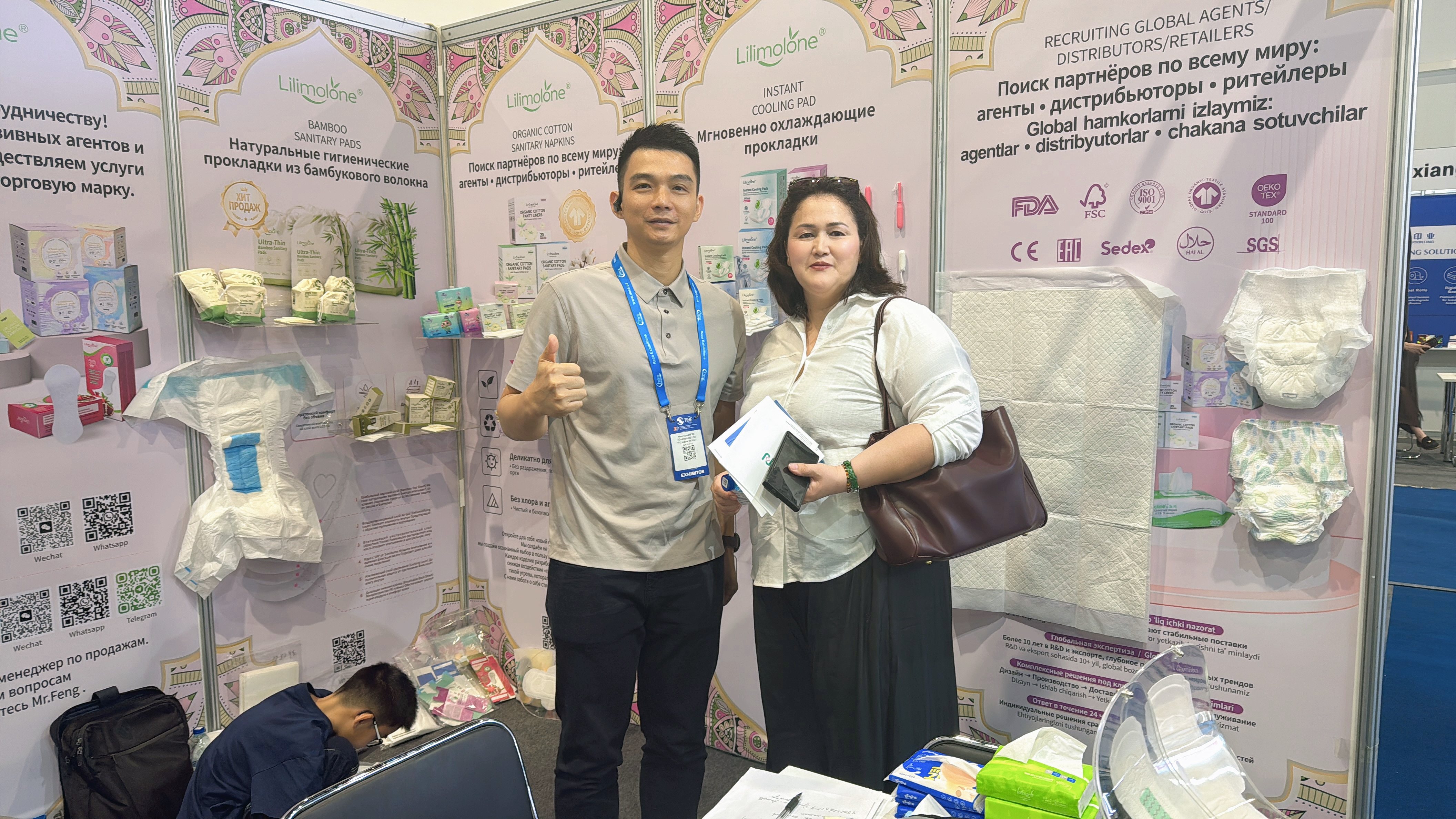
New Upward SC (Guangdong) Co., Ltd., referred to as Newupward, is a China-based disposable hygiene manufacturing and supply-chain company established in 2017 that serves global feminine-care brands, importers, regional agents, distributors, wholesalers, retail chains, supermarkets, e-commerce brands and private-label programmes, and exports approximately 80% of its output. Its feminine care range includes the NU07 organic cotton biodegradable sanitary pad platform and the Lilimolone Ultra-Thin Bamboo Sanitary Pads, which is why this guide uses both as worked examples.

What GB 15979-2024 and ISO 10993-5 Actually Answer
GB 15979-2024 is a hygiene standard. It sets out hygienic requirements for disposable sanitary products and is the reference that Chinese manufacturers and their channel partners use when they describe the hygienic status of a pad, panty liner or menstrual pant. Where a product is presented with a sterilization grade statement, that statement belongs to this hygiene layer: it describes the microbiological treatment or status of the product and must be traceable to a defined grade description, a defined test item and a defined report. In practice, a GB 15979-2024 report is the document a buyer reads to understand how the product is controlled hygienically during production, and how a sterilization-related claim is supported.
ISO 10993-5 sits in a different family. It is Part 5 of the ISO 10993 biological evaluation series and specifies in vitro cytotoxicity testing, a cell-based method used to screen whether a material, extract or finished sample causes a cytotoxic response. Sourcing teams request it when they need evidence that skin-contact materials do not trigger an adverse cell-level reaction. It is a materials-safety document, not a hygiene document, and it does not describe production hygiene, microbiological control or sterility.
Three differences explain most of the confusion in buyer inboxes:
- Domain: hygienic control of a disposable product versus biocompatibility of the materials inside it.
- Object of test: the finished hygienic product versus a material, extract or representative sample.
- Commercial audience: China-facing channels and hygiene reviewers versus buyers in Europe, North America and other markets whose risk assessment asks for skin-contact biological evidence.
Decision rule: a GB 15979-2024 test report does not replace a cytotoxicity report, and an ISO 10993-5 cytotoxicity report does not replace hygienic evidence. Treat them as two layers of one compliance stack, not as competing options.
Why Buyers Now Ask for Both Documents at the Same Time
The organic and biodegradable segment is expanding faster than the conventional pad market, and that growth is pulling documentation requirements together. Published market research from TechSci Research projects the global organic sanitary napkins market reaching USD 3.02 billion in 2025 and growing to USD 4.51 billion by 2031, while Mark & Spark Solutions estimates a 20.1% compound annual growth rate for the biodegradable sanitary napkins segment between 2024 and 2030. Dataintelo reports that Asia Pacific held a 38.6% revenue share of the biodegradable sanitary napkins market in 2025, which is consistent with the region's manufacturing concentration.
Regulatory direction reinforces the same pattern. FDA's Quality Management System Regulation, which incorporates ISO 13485:2016 into 21 CFR Part 820, takes effect on February 2, 2026 for menstrual products, according to a secondary industry source. Once a market tightens quality-system expectations, buyers extend their document checklist beyond the product itself, and they start asking suppliers for the quality and safety evidence that sits behind the shelf-ready pack. Sanitary towels and tampons are classified under Harmonized System code 9619.00, so cross-border documentation and customs review already run through a single, well-defined product family.
The commercial result is that hygiene evidence and biocompatibility evidence are now requested within the same transaction. An EU private-label brand may open the discussion with a CE Declaration of Conformity request, then add a cytotoxicity question once its own risk assessment begins. A Middle East distributor may start with Halal certificate scope and packaging language, then ask for hygienic test evidence before listing. Neither buyer is being unreasonable; they are describing two different questions about one product.
Which Markets Require Which Evidence: The Compliance Stack
China market and China-channel programmes
For products placed on the Chinese market or reviewed through Chinese channels, GB 15979-2024 hygienic evidence is the primary reference. This is also the layer where a sterilization grade statement is verified. Export buyers frequently request this report as background even when their own market applies a different framework, because it describes how the product is controlled during manufacturing.
European Union
EU-facing buyers commonly ask for a CE Declaration of Conformity, an EU Representative Agreement, product test reports, material documents and labelling review, including importer information and local language requirements. Where the buyer's risk assessment requires skin-contact biological evidence, an ISO 10993-5 in vitro cytotoxicity report becomes part of the file. Because market requirements vary, buyers should confirm the applicable rules with their importer or compliance consultant before printing claims or certificate marks.
United States
US buyers typically ask for FDA establishment registration support alongside product test reports and material evidence. The FDA Quality Management System Regulation incorporating ISO 13485:2016 into 21 CFR Part 820 takes effect on February 2, 2026 for menstrual products, which raises the value of documented quality-management and traceability practice. Note the distinction: a quality-system standard describes how a company manages processes, while ISO 10993-5 describes how a specific sample performed in a specific test.
Middle East and Muslim markets
Halal certificate scope, Arabic or bilingual packaging, material detail, product performance and distributor requirements usually drive the review. A Halal certificate covers the scope stated on the certificate, so buyers should read the covered product and validity period rather than the certificate image alone.
Eco-positioned global retail
GOTS or OCS material scope certificates apply to the organic cotton supply chain, and FSC Chain of Custody documents apply to FSC mix pulp supply. Both are material-chain documents. Neither proves finished-product hygiene or cytocompatibility, which is exactly why they cannot replace GB 15979-2024 or ISO 10993-5 evidence in a supplier file.
GB 15979-2024 vs ISO 10993-5: Side-by-Side Comparison
| Verification dimension | GB 15979-2024 | ISO 10993-5 |
|---|---|---|
| Core question answered | Does the disposable sanitary product meet hygienic requirements, and is a sterilization grade claim traceable? | Does the tested material, extract or sample produce a cytotoxic response in an in vitro cell test? |
| Standard family | Chinese national hygienic standard for disposable sanitary products | Part 5 of the ISO 10993 biological evaluation series |
| Evidence it produces | Hygienic test evidence, plus the grade statement, test and report behind a sterilization claim | An in vitro cytotoxicity test report issued by a testing laboratory |
| Object tested | Finished disposable sanitary product | Material, extract or representative sample |
| Typical market relevance | China market and China-channel review; also included in export document packs as manufacturing background | EU, US and other markets where the buyer's risk assessment asks for skin-contact biological evidence |
| Who requests it | Chinese channel partners, importers and distributors working with China supply chains | Pharmacy and retail buyers, medical-adjacent brands and buyers who must document skin-contact safety |
| What it does not prove | It does not establish a complete biocompatibility profile for a specific material combination | It does not prove production hygiene, microbiological control or that the finished pad meets a hygienic standard |
| How buyers use both | As complementary layers: hygienic control of the product plus biological evaluation of its materials | As complementary layers: hygienic control of the product plus biological evaluation of its materials |

Step-by-Step: How to Verify Both Standards in a Single Supplier File
The workflow below is designed for a procurement team preparing a decision-stage approval, where samples have been reviewed and the buyer is confirming documents before mass production.
- Map the product to the market before asking for documents. List the destination markets, the sales channel and the claims you intend to print. A pharmacy listing in Europe and a mass-retail listing in the Middle East do not require the same file, and an unfocused request produces an unfocused certificate bundle.
- Separate hygiene evidence from biocompatibility evidence. Place GB 15979-2024 hygienic test evidence in one column and ISO 10993-5 cytotoxicity evidence in another. Recording which question each document answers prevents the most common sourcing error: using a hygiene report to answer a materials question.
- Trace the sterilization grade statement to its source. If the product is marketed with a sterilization grade claim, ask for the grade description, the test item, the laboratory, the report number and the validity period, and confirm that the grade matches the actual product design. A standard retail pad with no sterilization step should not carry sterilization-grade language on packaging, because the pack then implies a microbiological status the product does not have.
- Test the validity of the cytotoxicity report for global use. Confirm that the tested sample matches the production BOM, including topsheet, absorbent core, backsheet, adhesive and wrapper; that the report identifies an in vitro cytotoxicity test item under ISO 10993-5 and names the issuing laboratory; that the report number and sample name are complete; and that the issue date is still acceptable to the buyer or the notified body reviewing the file. A report linked to an older material combination is not valid evidence for a changed specification.
- Match material certificates to the claims they support. GOTS or OCS scope certificates support organic cotton material claims, and FSC Chain of Custody documents support FSC mix pulp supply. Neither supports hygiene or skin-contact safety statements, so keep them in a separate column.
- Freeze the file in the purchase order. Move the verified document list, the approved sample, the acceptance criteria and the packaging proof into the order documents so that compliance does not depend on a sales email that nobody can find eighteen months later.
Limits and boundaries: the two standards are not substitutes, and neither is a market authorisation. A cytotoxicity report does not demonstrate conformity with any market's regulation, and hygienic test evidence does not replace the market-entry documents a specific destination requires. Buyers should always confirm the current legal requirements with their importer or compliance consultant.
What Belongs in the Document Register
A document register is the practical place where the two standards stop being abstract. The table below lists the reference set that Newupward can organise for organic and biodegradable sanitary pad programmes, together with the function of each document.
| Document | What it supports | What the buyer should confirm |
|---|---|---|
| GB 15979-2024 hygienic test evidence | Hygienic requirements for the disposable sanitary product | Product scope, test items, laboratory, report number |
| Sterilization grade statement | Tracing a sterilization-related claim to a grade, test and report | Grade description and matching product design |
| ISO 10993-5 cytotoxicity test report | In vitro cytotoxicity screening of a material or sample | Tested sample versus production BOM, laboratory, report number, issue date |
| CE Declaration of Conformity and EU Representative Agreement | EU market support documentation | Covered product, signatory, scope and validity |
| Halal Certificate | Muslim-market supply programmes | Certificate scope, issuing body and validity period |
| FSC Chain of Custody | FSC mix pulp supply chain | Supply-chain scope and current status |
| GOTS or OCS material scope certificates | Organic cotton supply chain | Material scope, certificate type and validity |
| Product test reports | Hygiene and skin-contact performance of the finished pad | Product name and model, test items, report number |
| Bamboo fiber antimicrobial activity reports | Material-level evidence for bamboo fiber programmes | Material scope, test item, report number such as 2025FM19954R01E or 210285558 |
Use Cases: How Four Buyer Profiles Use the Two Standards
1. EU organic retail brand launching an organic cotton line
A brand building a premium organic cotton pad line for pharmacies and organic retailers needs hygienic evidence as manufacturing background, a CE Declaration of Conformity and EU Representative Agreement for market support, GOTS or OCS material scope evidence for the organic cotton claim, and an ISO 10993-5 cytotoxicity report for the skin-contact materials. The NU07 organic cotton biodegradable sanitary pad platform is designed for this profile, with an organic cotton topsheet, a fluff pulp and SAP absorbent core, and a breathable PE film or biodegradable film backsheet option.
2. Middle East distributor building a multi-market portfolio
Halal certificate scope and bilingual packaging usually lead the review, supported by hygienic test evidence and product performance data. Because the portfolio spans several product types, the distributor benefits from one document register covering pads, panty liners, menstrual pants and maternity pads rather than a separate file per item.
3. China domestic retail chain and cross-border sellers
For products on the Chinese market, GB 15979-2024 hygienic evidence is the working reference, and sterilization grade statements must be traceable rather than decorative. Cross-border sellers add English packaging information and export documents without removing the hygienic layer.
4. Distributor planning a long-term organic sanitary pad supply programme
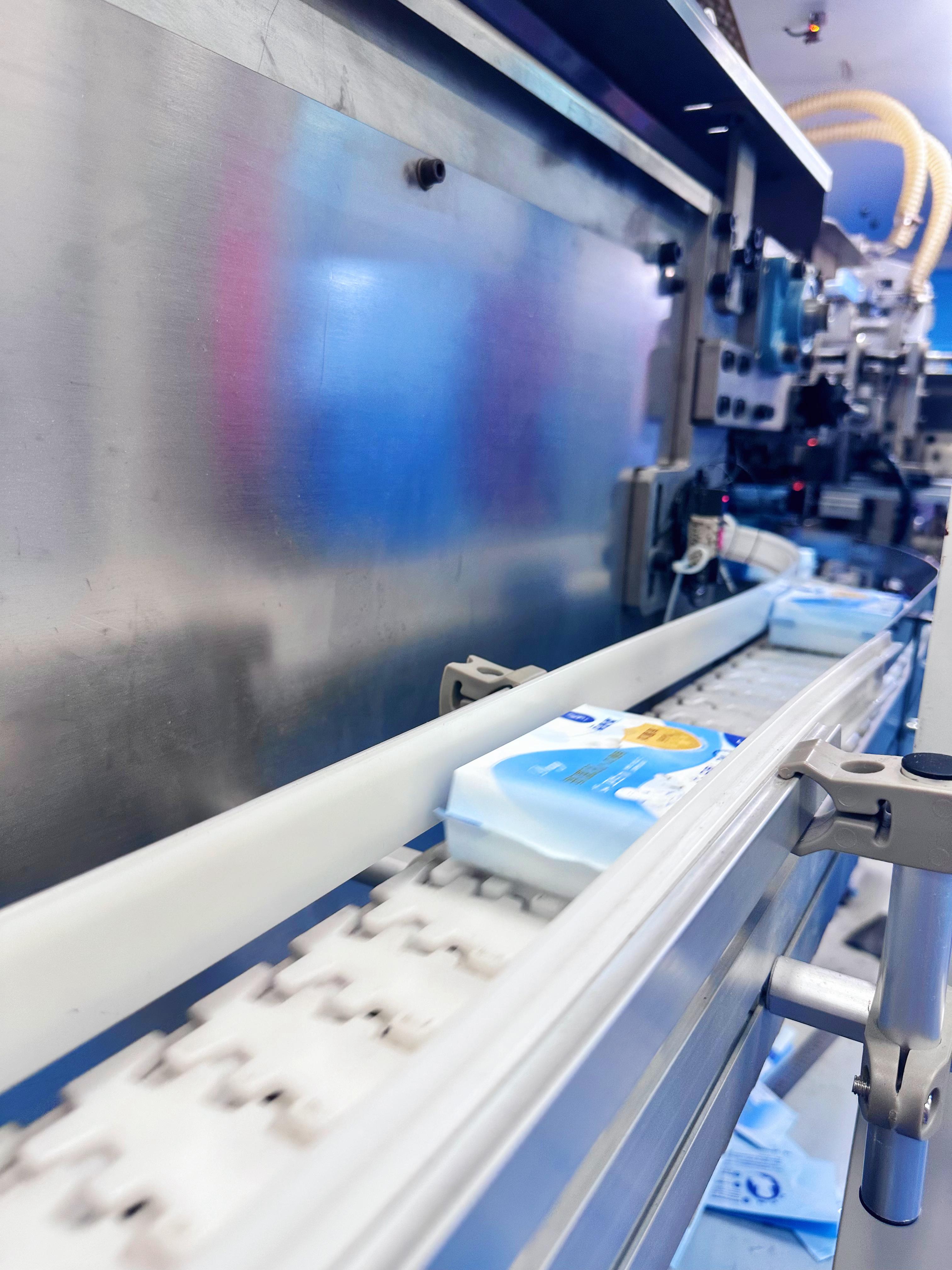
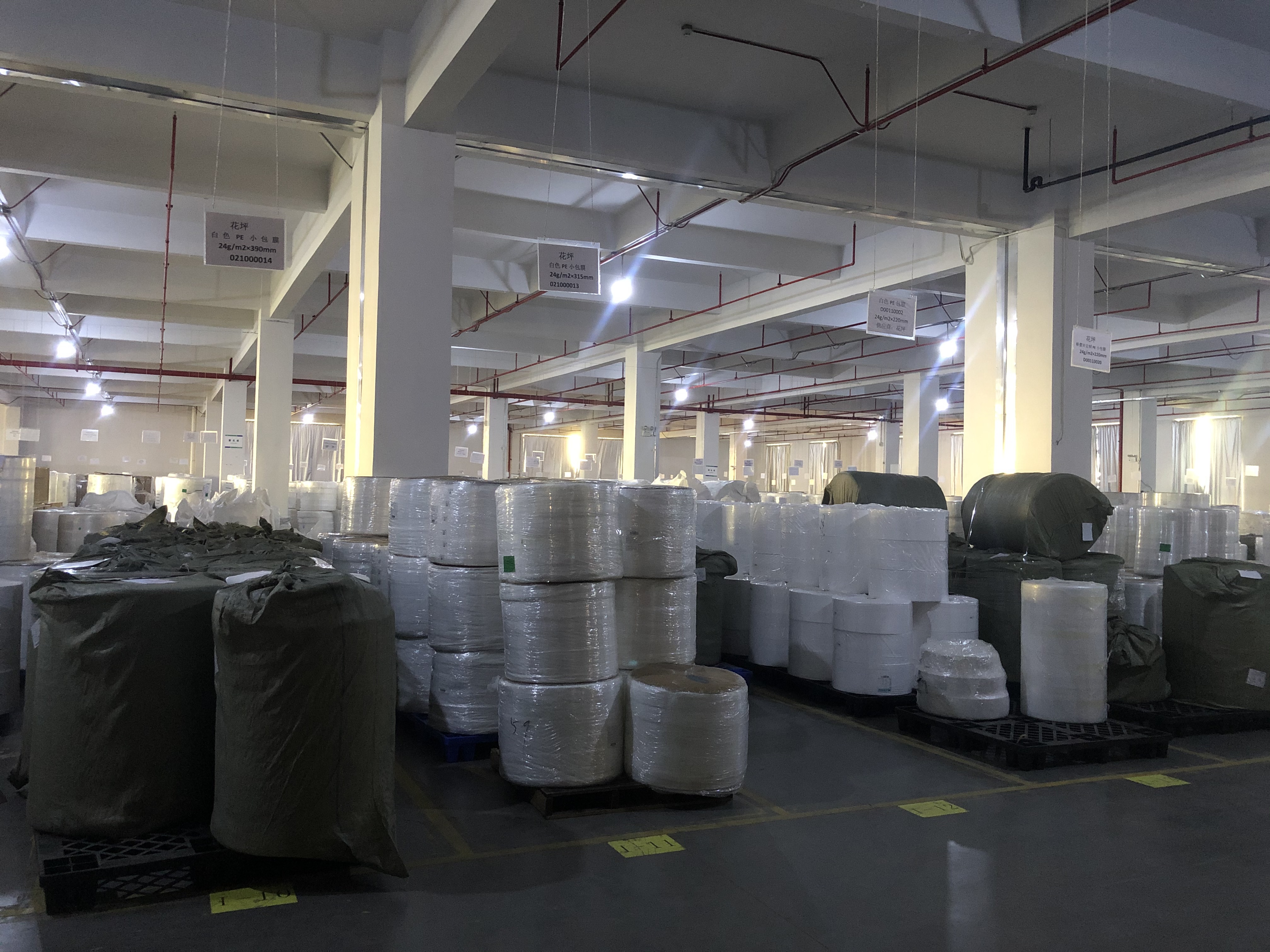
A distributor that intends to keep the same product on shelf for several years is really buying documentation continuity. In that model, compliance value comes from stable specifications, repeatable batches, consistent certificate scopes and packaging that can be reproduced without re-approval. Newupward produces about 5,000,000,000 pads per year from a 200,000 square metre facility with approximately 100 staff and a 10-plus engineer R&D team, serves markets across Europe, North America, the Middle East, Africa, Southeast Asia, Central Asia and South America, and connects customer requirements, product solutions and manufacturing resources by matching production sites and capacity to product category, process, order quantity, target cost and lead time.
FAQ
Which certificates and reports should a buyer check before importing organic sanitary pads into the EU, US, or Middle East?
Buyers should separate hygiene, product-safety and market documents instead of collecting one flat bundle. Useful references include GB 15979-2024 hygienic test evidence for the disposable product, ISO 10993-5 cytotoxicity testing where skin-contact biological evidence is required, a CE Declaration of Conformity and an EU Representative Agreement for EU market support, Halal Certificate scope for Muslim markets, FSC Chain of Custody documents for FSC mix pulp supply, GOTS or OCS material scope certificates for organic cotton supply chains, and product test reports covering hygiene and skin-contact performance. FDA establishment registration support is relevant for US buyers, and the FDA Quality Management System Regulation incorporating ISO 13485:2016 into 21 CFR Part 820 takes effect on February 2, 2026 for menstrual products. Buyers should confirm the applicable requirements for their destination with their importer or compliance consultant.
How do I verify a sterilization grade claim under GB 15979-2024 and the validity of a cytotoxicity report under ISO 10993-5?
Ask the supplier to translate each claim into four elements: the exact clause or test item, the sample identity, the laboratory and report number, and the validity period. For a sterilization grade statement, confirm the grade description, the test method and the report behind it, and check that the grade matches the actual product design, because a standard retail pad with no sterilization step should not carry sterilization-grade language on its packaging. For an ISO 10993-5 cytotoxicity report, confirm that the tested sample matches the production BOM, including topsheet, absorbent core, backsheet, adhesive and wrapper; that the report identifies an in vitro cytotoxicity test item and names the issuing laboratory; that the report number is complete; and that the issue date is still acceptable to the buyer or notified body reviewing the file. A cytotoxicity report supports material safety discussion, but it does not by itself prove conformity with any market's regulation.
What evidence supports Lilimolone organic and bamboo sanitary pad claims?
For bamboo fiber products, references include Lilimolone sanitary pad Test Report No. 260059776 for Lilimolone Ultra-Thin Bamboo Sanitary Pads, Report No. 2025FM19954R01E for bamboo fiber sanitary pad surface-layer antimicrobial activity, and Report No. 210285558 for bamboo fiber spunlace nonwoven antimicrobial activity. Antimicrobial testing describes material performance and does not automatically support medical or disease-prevention claims, so wording should be checked against local labelling rules before use. For organic cotton programmes such as NU07, GOTS or OCS certificates apply to the material supply chain rather than to the finished pad, which means the certificate scope must always be read together with the product specification and the finished-product test reports.
What are the purchasing terms, MOQ, and acceptance criteria for an organic sanitary pad project?
Minimum order quantity is normally 300,000 pieces per size, and project-specific MOQ depends on pad size, absorbency, organic cotton material, biodegradable backsheet option, packaging printing and pack count; trial orders can be evaluated based on available materials and mature specifications. Delivery terms include FOB Shenzhen or Guangzhou, CIF destination port and EXW factory, with samples shipped by express and bulk orders shipped by sea or air according to buyer requirements. Payment terms are 50% T/T deposit before production and 50% T/T balance before shipment or against copy of B/L, and terms for large or repeat orders can be discussed based on project credit and order scale. Acceptance criteria cover approved sample confirmation, pre-shipment inspection, quantity check, packaging and label check, carton inspection, absorbency, leakage and rewet testing, finished-goods sampling and third-party inspection if required.
How do I start a sample evaluation and build a long-term supply relationship for organic sanitary pads?
Before requesting samples, ask about product sizes, topsheet material, absorbent core, absorbency level, thickness, packaging options, MOQ, sample cost, sample lead time, certificate or test-report availability, target-market experience and expected mass production lead time. After sample approval, the durability of the relationship depends on batch consistency, document continuity and repeat-order handling rather than on a single quotation. Newupward supports OEM and ODM development from material selection, size and absorbency planning and sample development through packaging design, private-label customization, product testing document collection, production coordination, QC follow-up and export support, and it helps distributors organise several feminine hygiene lines under one programme. You can review the product range in the catalogue at https://cdn.socialarks.com/sbsp/25219/common/2026/0815/E-catalog%20of%20sanitary%20pads%20-New%20Upward.pdf, or send your target market and required document list to info@newupward.com and +86 157-9847-3913 to request samples and a quotation discussion.
Conclusion: Treat Compliance as a Long-Term Sourcing Asset
GB 15979-2024 and ISO 10993-5 do different jobs, and the buyers who manage them well are the ones who stop filing them as competing certificates. Put hygienic requirements and sterilization grade traceability in one layer, put in vitro cytotoxicity evidence for skin-contact materials in a second layer, and put material-chain certificates and market-entry documents in a third. Then attach that register to the approved sample and the purchase order, so that every repeat order inherits the same evidence base.
For a distributor or retail brand planning a multi-year organic sanitary pad programme, this structure is what makes a supplier relationship stable: consistent specifications, reproducible batches, certificates whose scope still matches the product, and documentation that survives a market review. Newupward supports organic cotton, bamboo fiber and biodegradable sanitary pad programmes from specification and sample development through private-label packaging, documentation organisation, QC follow-up and export delivery, and can be evaluated as a long-term sourcing partner for global feminine hygiene ranges.
Next Step: Sample, Quote and Catalogue
Review the product catalogue and specification options at E-catalog of sanitary pads - New Upward, then send your target market, required document list and preferred pad specification for a sample and quotation discussion.
New Upward SC (Guangdong) Co., Ltd.
Website: www.newupward.com
Email: info@newupward.com; laura@newupward.com; nu@newupward.com
Tel / WhatsApp: +86 157-9847-3913
WhatsApp: Start a WhatsApp conversation
Address: A4-02, Building A, No.108, Lijia Road, Henggang Street, Longgang District, Shenzhen City, China 518115
Have Questions or Need More Details?
Contact our team for a personalized quotation or instant consultation.
Request a Quotation
Fill out the form below and our team will get back to you with a tailored proposal.
WhatsApp Direct Chat
Prefer to chat in real-time? Message us on WhatsApp for instant assistance & quick answers.
- Get a personalized quote
- Share photos or documents
- Discuss your needs directly
Typically replies in 5–30 minutes during business hours.