
Ranking Eco-Friendly Organic Sanitary Pads for Export: Certifications That Matter
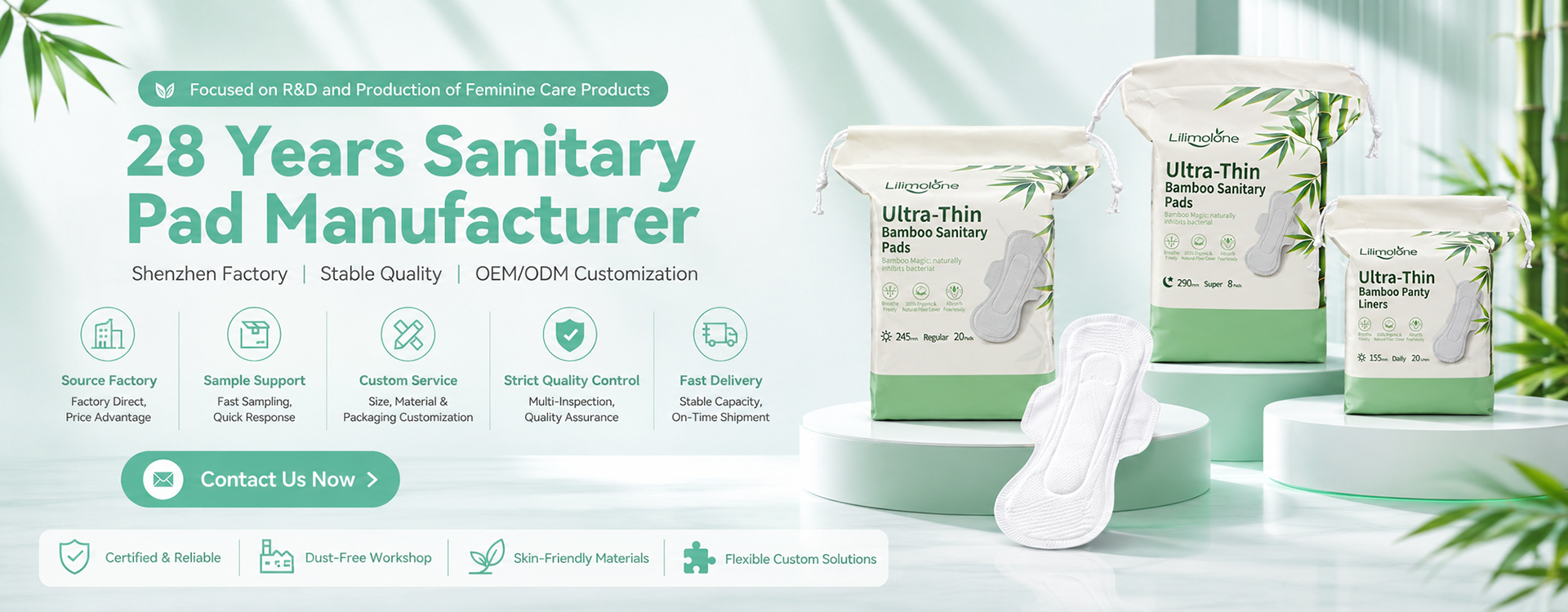
Certification evidence, not certification quantity, decides whether an organic sanitary pad range can clear a specific export market.
Export buyers rarely lose a listing because a supplier has too few certificates. They lose it when the certificates they hold do not match the market they are shipping into. Ranked by how directly each document supports a specific export decision, the strongest evidence attached to an eco-friendly organic sanitary pad range is the EAC State Registration Certificate for Russia and the Eurasian Economic Union, followed by GOTS Version 7.0 and OCS Version 3.0 for organic claims, the Level 1 Sanitary Products Production and Sales Enterprise Service Level Qualification Certificate for overseas buyer due diligence, and three skin-contact safety test reports covering cytotoxicity, skin sensitization, and skin allergy.
This review ranks those documents in order of export usefulness and maps each one to the two reference products produced under New Upward SC (Guangdong) Co., Ltd. (Newupward): the Lilimolone Ultra-Thin Bamboo Sanitary Pads, an ultra-thin bamboo fiber line available in 155 mm, 245 mm, and 290 mm, and the NU07 organic sanitary pads, a winged organic cotton line with an optional biodegradable film backsheet. The angle here is deliberately narrow: how a buyer should rank certification strength, not how a buyer should rank companies.
Problem Definition: Why “How Many Certificates?” Is the Wrong Question
A supplier folder can hold twenty documents and still fail an importer's compliance review, because export readiness is a matching exercise rather than a counting exercise. Three patterns cause a strong-looking certificate set to underperform in practice.
- Scope mismatch. A document may cover a raw material, a fabric, or a nonwoven input without covering the finished pad. Buyers who check only the logo on the certificate, and not the product scope behind it, discover the gap at the port or at the retailer's onboarding stage.
- Market mismatch. A document that substantiates an organic marketing claim does not automatically satisfy a market that requires state registration before sale. Organic claims and market-entry registrations solve different problems.
- Reference gaps. Screenshots without a report number, issuing body, or validity period cannot be re-submitted to a regulator, cited in a tender, or verified by a third-party inspector.
The practical ranking method is therefore to sort every document by the decision it supports: market entry, claim substantiation, supplier due diligence, or skin-contact safety. A document that supports none of these four decisions has presentation value but no procurement value.
Industry Background: Why Certification Strength Now Decides Shelf Space
The commercial context explains why certification evidence has moved from a filing cabinet topic to a negotiation topic in the organic feminine care category.
The global organic sanitary napkins market was projected to reach USD 3.02 billion by 2025, according to TechSci Research market reporting. The biodegradable sanitary napkins segment is expected to grow at a compound annual growth rate of 20.1% between 2024 and 2030, based on Mark & Spark Solutions' market study. Dataintelo reported that Asia Pacific held a 38.6% revenue share of the biodegradable sanitary napkins market in 2025. Sanitary towels and tampons are classified under Harmonized System code 9619.00, as listed by Descartes Datamyne, which is the code most export documentation for these products references.
Regulatory pressure is moving in the same direction. As reported in supplier-compliance commentary, the FDA Quality Management System Regulation, which incorporates ISO 13485:2016, takes effect on February 2, 2026 for menstrual products. In practice, buyers building 2026 ranges are asking suppliers for documents that can be checked, not adjectives that cannot.
Newupward's own profile illustrates how a supplier builds that evidence base. The company was established in 2017, operates a manufacturing facility covering 200,000 square meters, reports an annual production capacity of 5,000,000,000 pads, employs approximately 100 staff, and maintains an R&D team of more than 10 engineers. Roughly 80% of output is exported to markets across Europe, North America, the Middle East, Africa, Southeast Asia, Central Asia, and South America. Those market footprints are why the certification ranking below separates “organic claim” evidence from “market entry” evidence.
Detailed Solution: The Certification Ranking, Ordered by Export Directness
The ranking below orders seven documents that are attached to the bamboo fiber and organic cotton reference lines. Position one is the document that most directly unlocks a defined market. Position seven is the document with the narrowest single purpose, though still useful in skin-contact discussions.
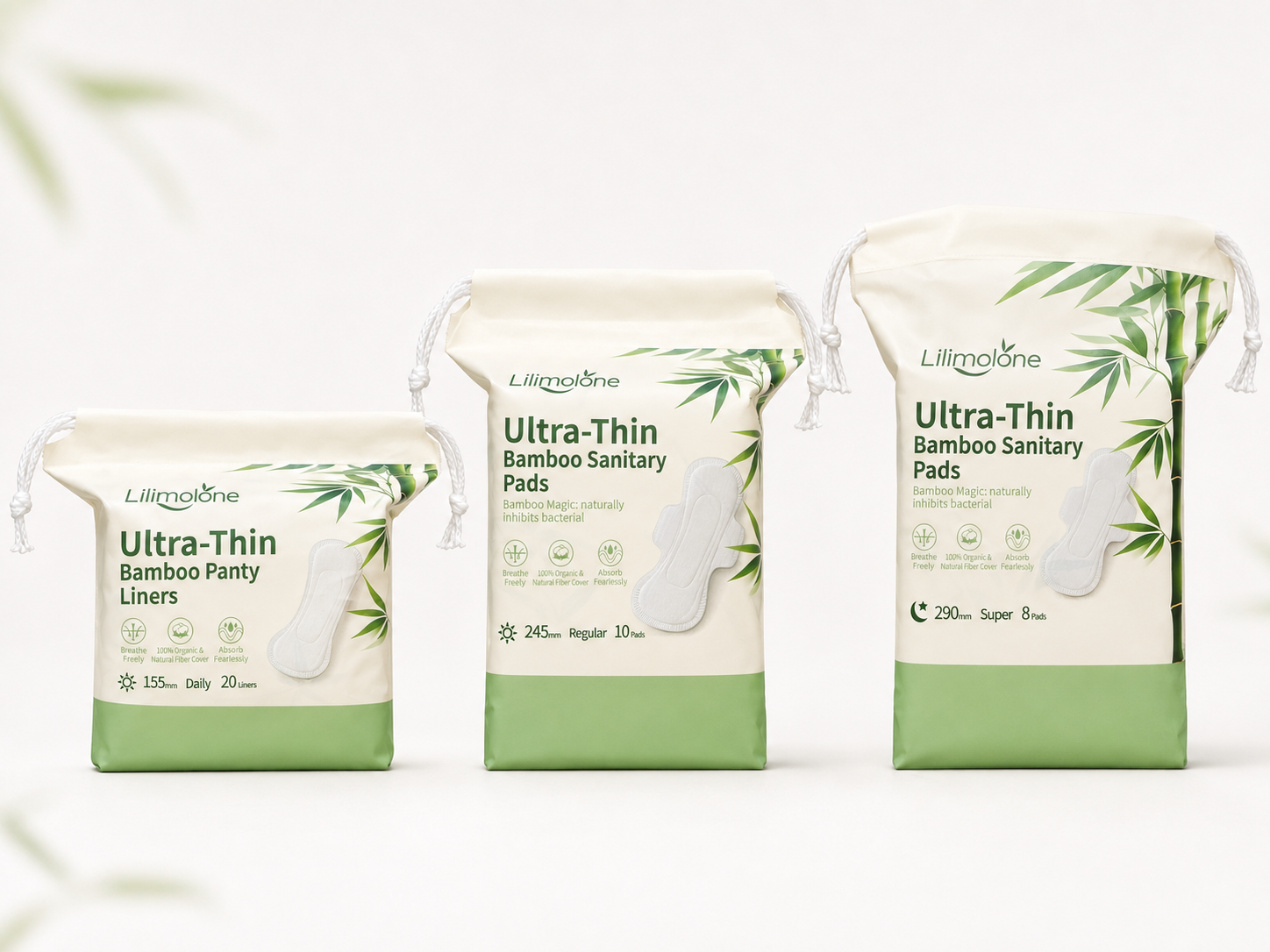
The Lilimolone Ultra-Thin Bamboo Sanitary Pads use a bamboo fiber nonwoven topsheet and a high-absorbency pulp/SAP core.
Rank 1 — EAC State Registration Certificate (Rospotrebnadzor): No. RU.08.08.09.012.R.002571.10.23
The most export-direct document in the set is the EAC State Registration Certificate issued through Rospotrebnadzor under number RU.08.08.09.012.R.002571.10.23. State registration is market entry, not marketing support: it is the document category that buyers and distributors supplying Russia and the Eurasian Economic Union ask for before a listing discussion becomes an order discussion. Ranked first because it answers a binary question — can this product be placed on that market at all — rather than a soft question about claim wording.
Rank 2 — GOTS Version 7.0 (ECOCERT Greenlife)
GOTS Version 7.0, certified through ECOCERT Greenlife, is the strongest organic processing-chain evidence in the set. It ranks second because organic claims on retail packaging in Europe and North America are frequently audited at the buyer level, and a processing-chain standard carries more weight in that conversation than a product-level claim statement alone. For the NU07 organic cotton line, with its 100% organic cotton top sheet, this is the certificate that supports premium eco-positioning rather than discount positioning.
Rank 3 — OCS Version 3.0
OCS Version 3.0 supports an organic content claim through a content-standard framework. It ranks just below GOTS because it addresses organic content declaration rather than the full processing chain, but it remains valuable for buyers who need a claim backbone for mid-tier organic ranges or for markets where a lighter claim structure is acceptable. Used together with GOTS Version 7.0, the two documents cover both a premium and a mainstream organic positioning.
Rank 4 — Sanitary Products Production and Sales Enterprise Service Level Qualification Certificate (Level 1, SSDY20260609102)
This Level 1 certificate, numbered SSDY20260609102, is a China enterprise qualification. It ranks fourth overall but first in one specific job: overseas buyer due diligence. When an importer's team must justify a new supplier to a retail chain, a bank, or an internal risk committee, an enterprise-level service level qualification gives that committee something concrete to file, alongside the factory footprint, capacity, and export share already covered above.
Rank 5 — In Vitro Cytotoxicity Test (ISO 10993-5:2009), Report No. SDWH-M201900236-1 (E)
ISO 10993-5:2009 is the standard used for in vitro cytotoxicity testing. Report No. SDWH-M201900236-1 (E) provides recorded biocompatibility evidence for the product. It ranks fifth because it is a safety-support document rather than a market-entry document, but for pharmacy, drugstore, and premium skin-contact positioning, it is frequently the first technical report a buyer's quality team opens.
Rank 6 — Skin Sensitization Test, Report No. SDWH-M201900236-2 (E)
Skin sensitization testing addresses a different risk question from cytotoxicity testing: how skin-contact materials behave in sensitization terms. Report No. SDWH-M201900236-2 (E) is the companion document to the cytotoxicity report and is normally requested together with it by buyers who are preparing claims around softness and skin-friendly contact.
Rank 7 — Skin Allergy Test, GTTC Report No. 252004820 (Valid Until January 1, 2099)
The GTTC skin allergy report numbered 252004820 carries a stated validity through January 1, 2099, which makes it the longest-dated document in the set and a practical attachment for multi-year retail programs. It ranks seventh only because its scope is narrowest, not because it is weak: it supports skin-contact reassurance and packaging conversations, while it does not substitute for market-entry registration or organic claim certificates.
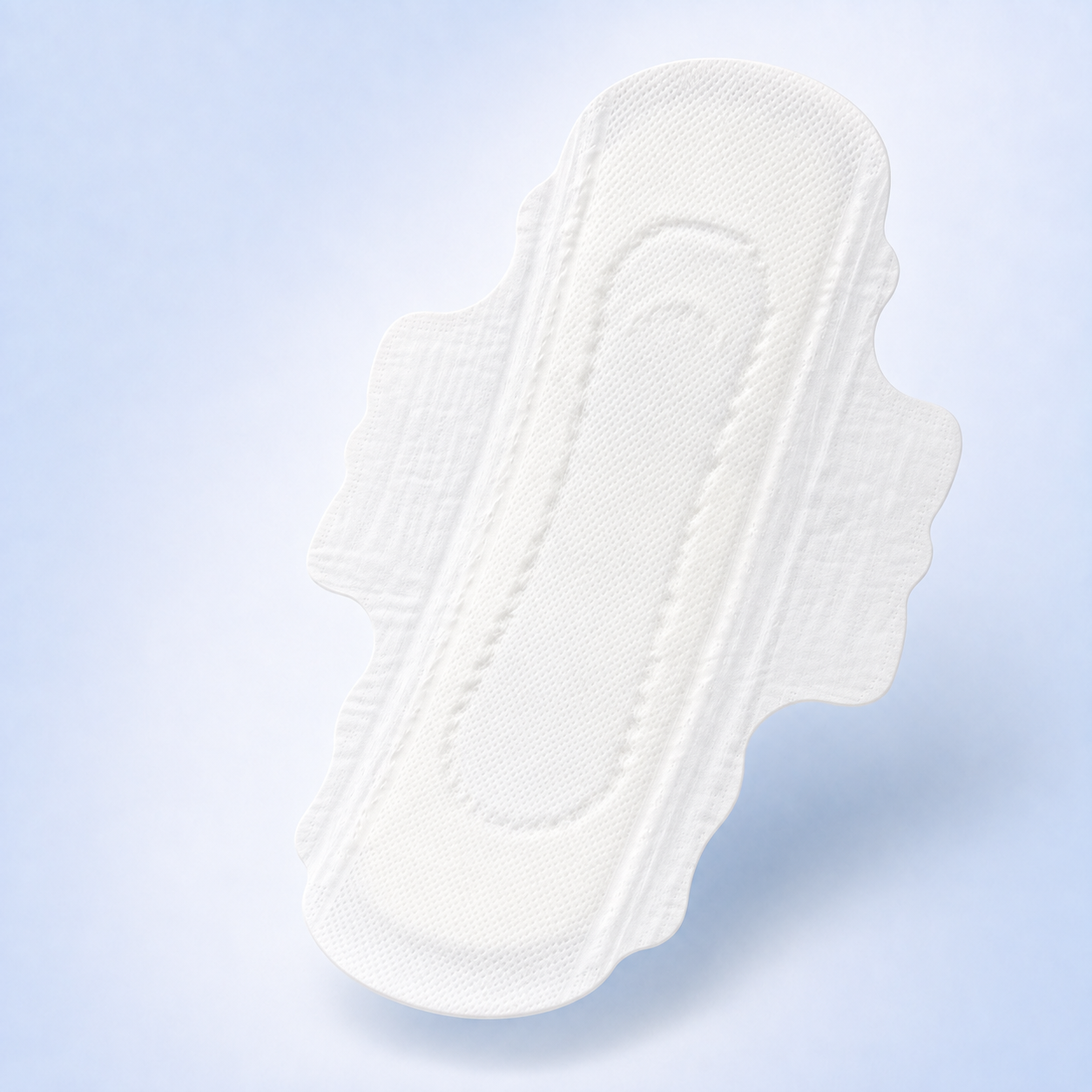
The Lilimolone series covers panty liner, regular, and longer pad sizes, with 155 mm, 245 mm, and 290 mm available for range planning.
Step-by-Step Breakdown: Building a Certification File for One Export Market
Ranking documents is only useful if it changes what a buyer requests. The following sequence converts the ranking above into a working procurement checklist.
- Name the market before naming the product. Russia and the Eurasian Economic Union first require the EAC State Registration Certificate. Organic-positioned retail in Europe or North America first requires organic claim evidence such as GOTS Version 7.0 or OCS Version 3.0. Fixing the market first prevents collecting certificates that no decision-maker will read.
- Match document scope to the finished pad, not to the input material. Confirm whether the certificate covers the finished product, the topsheet, or the nonwoven supply chain, and record which one applies to the reference product being quoted.
- Record the identifiers, not the images. Write down the certificate or report number, the issuing body, and the validity period. For this set that means RU.08.08.09.012.R.002571.10.23, SDWH-M201900236-1 (E), SDWH-M201900236-2 (E), 252004820, and SSDY20260609102. Identifiers can be verified and re-submitted; screenshots cannot.
- Attach skin-contact reports to the quality file. Pair the cytotoxicity and sensitization reports with the product specification so the quality team reviews performance and safety data together rather than in two separate rounds.
- Confirm the commercial frame before mass production. Sample approval, material specification, packaging artwork, labeling requirements, MOQ, lead time, and available certificates or test reports should be confirmed in one written package. Confirming them separately is the most common cause of delayed launches.
Use Cases: Which Documents Carry Which Export Situation
Russia and Eurasian Economic Union Entry
For a distributor or retail chain selling into Russia and the EAEU, market entry comes first. The EAC State Registration Certificate under RU.08.08.09.012.R.002571.10.23 is the document that carries the discussion, supported by the finished-product specification and the Chinese enterprise qualification for supplier-side due diligence.
Organic Retail Listings in Europe and North America
For premium organic shelf positioning, the conversation is about claim integrity rather than registration. GOTS Version 7.0 (ECOCERT Greenlife) and OCS Version 3.0 support the organic side of that listing, while the cytotoxicity, sensitization, and skin allergy reports support the skin-contact side. The NU07 line, with a 100% organic cotton top sheet and a biodegradable film backsheet option, is the natural reference product for this scenario.
Distributor and Importer Due Diligence
When a distributor must introduce a new supplier to a bank, a tender, or a retail compliance team, the Level 1 Sanitary Products Production and Sales Enterprise Service Level Qualification Certificate (SSDY20260609102) does work that product reports cannot, because it addresses the enterprise rather than the item. It is normally presented together with facility and capacity information.
Pharmacy and Drugstore Channels
Pharmacy and drugstore buyers usually ask for the skin-contact package first: the in vitro cytotoxicity report, the skin sensitization report, and the skin allergy report, combined with absorbency and breathability specifications for the pads themselves. The bamboo fiber and organic cotton lines both provide day use, night use, and longer formats for this channel.
Comparison Table: Export Certification Ranking at a Glance
| Rank | Document | Reference detail | Export decision it supports | What it does not replace |
|---|---|---|---|---|
| 1 | EAC State Registration Certificate | Rospotrebnadzor, No. RU.08.08.09.012.R.002571.10.23 | Market entry for Russia and the Eurasian Economic Union | Organic claim evidence and skin-contact test reports |
| 2 | GOTS Version 7.0 | ECOCERT Greenlife | Organic processing-chain claim for premium retail | Market registration and safety test reports |
| 3 | OCS Version 3.0 | Organic content standard | Organic content claim for mainstream organic ranges | Full processing-chain certification |
| 4 | Sanitary Products Production and Sales Enterprise Service Level Qualification Certificate | Level 1, SSDY20260609102 | Overseas buyer and distributor due diligence | Product-level test evidence and market registration |
| 5 | In Vitro Cytotoxicity Test | ISO 10993-5:2009, Report No. SDWH-M201900236-1 (E) | Skin-contact safety and pharmacy channel review | Market registration and organic claims |
| 6 | Skin Sensitization Test | Report No. SDWH-M201900236-2 (E) | Skin-contact comfort discussions | Cytotoxicity evidence and market registration |
| 7 | Skin Allergy Test | GTTC Report No. 252004820, valid until January 1, 2099 | Long-cycle retail programs needing durable documentation | Market registration and organic claims |
Reference Product Snapshot
| Reference line | Top sheet | Available sizes / types | Core structure | Typical export use |
|---|---|---|---|---|
| Lilimolone Ultra-Thin Bamboo Sanitary Pads | Bamboo fiber nonwoven topsheet | 155 mm, 245 mm, 290 mm; panty liner, regular, and longer pads | High-absorbency pulp/SAP core with breathable leak-proof PE film back sheet | Soft, breathable eco-positioned retail lines |
| NU07 organic sanitary pads | 100% organic cotton top sheet | Panty liner, day use, night use, extra-long night; sizes customizable by project | Fluff pulp and SAP core; breathable PE film or biodegradable film back sheet option | Premium organic retail lines and pharmacy channels |

Testing and documentation work for the bamboo fiber and organic cotton ranges is handled through the supplier's R&D laboratory.
FAQ
1. Which certificates and reports help buyers evaluate an organic sanitary pad supplier for export?
For sanitary pads and menstrual care products, buyers should check factory system certificates, product test reports, market-entry documents, material certificates, and brand or trademark evidence. Relevant references may include CE Declaration of Conformity for EU market support, EU Representative Agreement, Halal Certificate for Muslim markets, FSC Chain of Custody for FSC mix pulp supply, GOTS or OCS material scope certificates for organic cotton supply chains, and product test reports for hygiene and skin-contact performance. In this specific case, the export-facing set also includes the EAC State Registration Certificate (RU.08.08.09.012.R.002571.10.23), GOTS Version 7.0 through ECOCERT Greenlife, OCS Version 3.0, the Level 1 Sanitary Products Production and Sales Enterprise Service Level Qualification Certificate (SSDY20260609102), and skin-contact reports SDWH-M201900236-1 (E), SDWH-M201900236-2 (E), and GTTC 252004820. Listing certificate or report numbers matters because it lets a compliance team verify each claim instead of accepting a claim statement.
2. How can a buyer verify that a China sanitary pad supplier has real production and quality-control capability?
Buyers can verify production and quality-control capability by asking for factory or supply-chain information, product photos, sample records, QC checklist, test-report references, certificate details, production schedule, packaging samples, and third-party inspection options. A supply-chain partner should be able to organize supplier documents, product specifications, sample confirmation, and QC communication for the project. Concrete verifiable markers include facility scale, stated capacity, engineering headcount, and export footprint. Third-party inspection before shipment can confirm quantity, packaging, appearance, labeling, and product specifications.
3. What is the best way to compare prices from organic sanitary pad suppliers?
Buyers should compare prices only after matching the same size, thickness, topsheet, absorbent core, SAP level, packaging type, MOQ, certificate requirements, carton quantity, and shipment terms. A lower quotation may reflect differences in material, absorbency, packaging, QC, or documentation rather than genuine efficiency. Fix product size, material, absorbency, packaging count, MOQ, carton details, certificate needs, and shipment terms first, then evaluate quotations against that fixed specification. The lowest price can otherwise lead to weaker absorbency, lower packaging quality, inconsistent samples, or missing documentation.
4. What should importers confirm before requesting samples?
Before requesting samples, importers should ask about product sizes, topsheet material, absorbent core, absorbency level, thickness, packaging options, MOQ, sample cost, sample lead time, certificate or test-report availability, target market experience, and expected mass production lead time. A first message should include product type, size, target market, material preference, absorbency requirement, packaging style, quantity, and budget range. Requesting product test reports, material certificates, compliance documents, and certificate numbers at the same time gives the supplier enough information to recommend a suitable option and shortens the evaluation cycle.
5. What should be confirmed about lead time before mass production starts?
Before mass production, buyers should confirm samples, size, absorbency, material specification, packaging artwork, labeling requirements, MOQ, lead time, and available certificates or test reports in one written package. Sample review, clear packaging, realistic MOQ, test-report references, QC checks, and confirmed lead time are the practical levers that reduce first-order risk, particularly for a focused launch range such as panty liner, day use, and night use, which can be expanded after market feedback. Buyers working on a Russia and EAEU program should also confirm that the EAC registration documentation is included in the launch pack, and buyers working on organic retail programs should confirm the GOTS Version 7.0 and OCS Version 3.0 references before printing packaging claims. A consolidated sample and documentation request is the fastest way to convert this ranking into an actionable quotation.

Production capacity and export continuity sit behind the certification file: annual capacity is reported at 5,000,000,000 pads.
Conclusion: Rank the Decision, Then Rank the Document
Certification strength in the eco-friendly organic sanitary pad category is not a total score. It is a match between a document and a decision. Ranked for export use, the EAC State Registration Certificate under RU.08.08.09.012.R.002571.10.23 answers the entry question for Russia and the Eurasian Economic Union. GOTS Version 7.0 through ECOCERT Greenlife and OCS Version 3.0 answer the organic claim question for premium and mainstream retail. The Level 1 Sanitary Products Production and Sales Enterprise Service Level Qualification Certificate (SSDY20260609102) answers the enterprise due-diligence question. The cytotoxicity report (ISO 10993-5:2009, SDWH-M201900236-1 (E)), the skin sensitization report (SDWH-M201900236-2 (E)), and the skin allergy report (GTTC 252004820, valid until January 1, 2099) answer the skin-contact question.
Applied to the two reference products, the practical result is straightforward. The Lilimolone Ultra-Thin Bamboo Sanitary Pads fit soft, breathable, eco-positioned ranges in 155 mm, 245 mm, and 290 mm. The NU07 organic sanitary pads fit premium organic retail and pharmacy channels with a 100% organic cotton top sheet and a biodegradable film backsheet option. Buyers who rank documents by the decision they support will build a faster, cleaner export file than buyers who count logos.
Next Step: Sample, Specification, and Document Pack
Buyers evaluating organic sanitary pad lines can request samples of the bamboo fiber and organic cotton ranges together with the specification sheet, packaging options, and the certificate and test-report references listed in this review.
Download the sanitary pad catalog for full range details: E-catalog of sanitary pads – New Upward (PDF)
Contact: New Upward SC (Guangdong) Co., Ltd. — Email: info@newupward.com; Tel / WhatsApp: +86 157-9847-3913; Address: A4-02, Building A, No.108, Lijia Road, Henggang Street, Longgang District, Shenzhen City, China 518115. Website: www.newupward.com
Have Questions or Need More Details?
Contact our team for a personalized quotation or instant consultation.
Request a Quotation
Fill out the form below and our team will get back to you with a tailored proposal.
WhatsApp Direct Chat
Prefer to chat in real-time? Message us on WhatsApp for instant assistance & quick answers.
- Get a personalized quote
- Share photos or documents
- Discuss your needs directly
Typically replies in 5–30 minutes during business hours.