
Eco Friendly Organic Sanitary Pads: Single-Size Launch vs Full-Container Range
The choice between a single-size launch and a full-container, multi-size range for eco friendly organic sanitary pads is a decision about how much specification risk a buyer carries before committing volume — not about which plan is better. A single-size plan concentrates sampling, topsheet and absorbent-core selection, cooling-formulation trials and packaging artwork on one SKU. A full-container plan spreads the same work across day-use, overnight, extra-long pads and disposable period pants, and only becomes efficient once those specifications are already settled.
New Upward SC (Guangdong) Co., Ltd. (Newupward) is a feminine-care and disposable hygiene manufacturing and service provider founded in 2017. The company operates a 200,000 m² facility, employs 100 people, runs a 10+ engineer R&D team, reports an annual output of 5,000,000,000 pads, and derives 80% of its business from exports to Europe, North America, the Middle East, Africa, Southeast Asia, Central Asia and South America. Its scope covers OEM/ODM specification confirmation, private-label packaging, compliance document support, stable batch supply and repeat-order service.
This guide compares the two sourcing plans on the five dimensions that actually decide them: sampling rounds, topsheet and absorbent-core selection, customized cooling formulation, SKU expansion and 40HQ container procurement. It does not quote prices, MOQs or lead times, because those can only be fixed after a specification, a quantity and an approved artwork exist.
What the single-size versus full-container decision actually asks
Strip away the packaging and both options buy the same product family: organic cotton sanitary pads with a skin-friendly topsheet, an absorbent core, an optional cooling formulation and printed film. What changes is the sequence of commitment.
A single-size launch commits one format. Typically that means one day-use length at one absorbency level, one pack count and one packaging design. Its job is validation: confirm the topsheet hand-feel, the core response under real flow conditions, the cooling intensity if a cooling version is used, and the artwork, then scale from a confirmed baseline.
A full-container plan commits a 40HQ container to a range. Day-use, overnight and extra-long pads plus disposable period pants, each with its own absorbency level and pack count, ship together in one container. Its job is coverage: meet a distributor's format list, fill a retail planogram, or support a subscription or period-care kit programme without a second shipment cycle.
Neither plan removes a decision. The container plan simply moves every decision earlier, and makes each one more expensive to reverse.
Industry background: read the growth numbers with their definitions attached
Organic and biodegradable period care is a segment with published growth estimates, and those estimates should be used with their definitions visible. TechSci Research projects the global organic sanitary napkins market at USD 3.02 billion in 2025, rising to USD 4.51 billion by 2031 (TechSci Research, Organic Sanitary Pads Market Size, Share, and Forecast 2031). Mark & Spark Solutions places the biodegradable sanitary napkins segment on a 20.1% CAGR between 2024 and 2030 (Mark & Spark Solutions, 2024). Dataintelo estimates Asia Pacific held a 38.6% revenue share of the biodegradable sanitary napkin market in 2025 (Dataintelo, 2026).
Those figures do not describe the same thing. Research houses define "organic" differently — organic cotton topsheet only, versus all-natural product ranges — so a single number should not be loaded into a business case without checking what it counts. The practical reading for a buyer is narrower: organic positioning supports premium shelf placement and a differentiated story, and it carries a cost consequence.
New Upward's own product comparison states that organic cotton biodegradable pads generally have higher material, packaging and certification costs than conventional pads, while supporting stronger product differentiation and premium pricing potential. Conventional pads compete mainly on price and basic absorbency. Trade classification is stable across markets: sanitary towels (pads) and tampons fall under HS code 9619.00.
Plan A — the focused single-size launch
A single-size launch works because it removes variables. One format means one topsheet specification, one core build, one set of absorbency parameters to approve, one packaging artwork and one carton specification. When a cooling formulation is part of the concept, that formulation is evaluated on a single construction rather than on four or five different ones.
Its advantages are mostly about control:
- Sampling depth per SKU. The same budget and the same calendar time go into fewer configurations, so each round can test the same variable more than once.
- A representative sample. What the buyer tests is exactly what will be produced, which makes sample approval a meaningful gate rather than an approximation.
- A narrower documentation scope. Material certificates such as GOTS or OCS scope documents, product test reports and packaging claims only have to cover the configuration actually shipped.
- Cleaner market feedback. Sell-through, repeat purchase and complaint patterns point at one product instead of being averaged across a range.
The limitations are equally concrete. A single SKU cannot satisfy a distributor who needs overnight and extra-long formats in the same listing. It gives no read on whether the cooling concept performs the same way on a longer, thicker overnight pad. And if the chosen format is wrong for the market, the entire committed volume sits in the wrong SKU.

Topsheet and absorbent-core options are screened in the R&D laboratory before a sampling round is committed.
Plan B — the full-container, multi-size range
A full-container plan treats the 40HQ as the unit of planning. Instead of asking "how many pads do we need", the buyer asks "how does this container get filled so that every format in the range arrives in a sellable proportion". Day-use pads usually carry the highest unit count, overnight and extra-long pads carry fewer, and disposable period pants are a separate construction with its own carton logic.
The advantages are commercial rather than technical:
- One listing, one shipment. A retail chain or distributor can onboard a complete format set without a second order cycle.
- A coherent brand system. New Upward's product comparison notes more than four retail and individual packaging options, which allows day, night and extra-long formats to share a visual system while remaining distinguishable on shelf.
- Range-level learning. Feedback arrives on several formats at once, which shortens the path to a second, better-balanced order.
The cost of that coverage is multiplication. Every format re-opens the topsheet question, the core question, the absorbency target and the artwork. If the cooling formulation is tuned per format rather than shared, validation effort multiplies with the SKU count. The container mix is also unforgiving: an over-weighted slow format occupies cube that a fast format needed, and cube cannot be re-balanced after loading.
Step-by-step: how each plan moves from brief to confirmed order
The steps are the same for both plans. What differs is how many times each step repeats.
- Lock the brief and the target market. Define the market, channel, price tier, format list and claim set before any sample is requested. A pharmacy listing and an e-commerce launch imply different documentation and different pack counts, and the format list determines whether a single-size plan is even viable.
- Select the topsheet. New Upward's product comparison lists more than three organic cotton and plant-based fiber topsheet options. The decision is not only softness: topsheet choice affects how quickly liquid passes through, how dry the surface feels afterwards, and which material documentation applies.
- Select the absorbent core. Core structure sets absorbency and retention. The comparison material states that organic cotton biodegradable pads deliver 2–3 times the absorbency of conventional pads and are approximately 50%–70% thinner; those are supplier-stated comparisons against conventional synthetic-top and PE-back-sheet products, so the figures should be re-checked against the approved sample and the exact configuration being ordered.
- Run the sampling rounds. Sampling is sequential, not simultaneous. Screen topsheet and core first, then apply the cooling formulation to the approved construction, then check absorbency and surface dryness on the final build, then approve the printed film. A single-size plan completes this sequence once. A container plan completes it once per distinct construction, and repeats the cooling step wherever the formulation or the pad thickness changes.
- Confirm the size and absorbency architecture. The comparison unit records more than four sizes and absorbency-level options. In a container plan these are allocated deliberately — how many day-use, how many overnight, how many extra-long, and whether disposable period pants sit inside the same range or as a separate line.
- Settle packaging and pack counts. Artwork, barcode, language, count per pack and carton dimensions all feed the container calculation. Packaging MOQ is usually a separate number from product MOQ, which is why packaging should be approved before the container is planned rather than after.
- Build the 40HQ loading plan. A 40HQ is a fixed cube. How much of each SKU fits depends on pack count, carton size and palletisation, so the mix must be calculated from the approved carton specification. A staged release by SKU — shipping the validated formats first — is a common way to reduce exposure on the slower lines.
The Taiwan cooling range: where the trade-off becomes visible
The Taiwan cooling private-label range is the clearest available illustration of this decision, because it combines a customized cooling formulation with a format set that runs from day-use through overnight and extra-long pads to disposable period pants. Those are exactly the formats New Upward's product scenarios describe for daily commuting, school, exercise, travel and overnight use.
What that case shows is that the cooling concept does not decide the plan. The specification shared across formats does. If one cooling formulation and one topsheet-core build can serve the whole range, then a single-size sample is a cheap and reasonably faithful proxy for the container — the buyer validates once and scales with limited additional risk. If the formulation has to be re-tuned for an extra-long overnight pad, or the core build changes for period pants, then the single-size sample validates only one SKU and the remaining formats still carry open questions.
The second lesson concerns timing. A cooling formulation is a sensory decision as much as a technical one: intensity that reads as refreshing on a day-use pad can read as excessive on a longer overnight format. That judgement can only be made on physical samples of the final construction, which is why the sampling sequence — topsheet and core first, cooling second, packaging last — should not be compressed to save a round.

Workshop environment control applies to every format in the range, whatever the order size.
Comparison table: single-size launch versus full-container range
| Decision dimension | Single-size launch | Full-container multi-size range |
|---|---|---|
| Sampling scope | One construction validated end to end | Each distinct construction validated separately |
| Topsheet and core | One topsheet option, one core build to approve | Options may need to be fixed per format and per absorbency level |
| Cooling formulation | Validated once, on one pad thickness | May require re-tuning wherever thickness or format changes |
| SKU coverage | One format, typically day-use | Day-use, overnight, extra-long pads and disposable period pants |
| Packaging | One artwork, one pack count, one carton spec | Several artworks and pack counts that must share one visual system |
| Container logic | Order sized to validate demand, not to fill cube | Cube allocated across formats from approved carton dimensions |
| Documentation scope | Covers the shipped configuration only | Must cover every format, pack count and material claim in the range |
| Main risk | Committed volume sits in a single, possibly wrong, format | Slow formats occupy cube; specification errors repeat across SKUs |
| Best fit | First private-label entry, concept validation, channel pilot | Distributor listings, retail planograms, kit and subscription programmes |
Which plan fits which buyer
The choice follows buyer type and evidence status rather than preference. A brand entering private label for the first time, or testing whether a cooling concept is accepted in its market, gains more from a validated single format than from shelf completeness; the sample doubles as a sales tool and a quality gate. The same logic applies to a pharmacy or e-commerce pilot where the listing only requires a day-use pad at launch.
A full-container plan suits a buyer who already knows the specification. That includes importers and regional distributors whose customers expect a complete format list, retail chains working to a planogram, and subscription or period-care kit programmes that need day, night and period-pants formats in the same box. New Upward's product comparison identifies premium feminine hygiene retail, organic personal care brands, sensitive-skin menstrual care, maternity stores, pharmacies, organic retailers and subscription-based channels as the fitting environments for organic cotton ranges — a distribution pattern that usually pulls a multi-format line rather than a single SKU.
A middle route exists and is often the practical answer: validate one format fully, then release the container with that format weighted heaviest and the remaining formats present in smaller, clearly labelled quantities. This preserves range coverage while keeping the unvalidated portion of the order limited.
Compliance scope grows with the plan, not with the product
The certificate list does not change between the two plans; the number of products each document has to cover does. Buyers evaluating organic sanitary pad suppliers typically work with a set that includes a CE Declaration of Conformity for EU market support, an EU Representative Agreement, a Halal Certificate for Muslim markets, FSC Chain of Custody evidence for FSC mix pulp supply, GOTS or OCS material scope certificates for organic cotton, and product test reports covering hygiene and skin-contact performance.
Two regulatory pointers are worth carrying into the planning conversation. The FDA's Quality Management System Regulation (QMSR), which incorporates ISO 13485:2016, takes effect on 2 February 2026 for menstrual products under 21 CFR Part 820. And skin-contact evidence is usually presented through tests such as in vitro cytotoxicity (ISO 10993-5) and market-specific hygiene standards such as GB 15979-2024.
In a single-size plan, one product test report and one material scope certificate can be checked against one shipped configuration. In a container plan, the buyer has to confirm that every format, pack count and claim in the range sits inside the scope of those same documents — and that packaging wording does not claim more than the documents support. Certificate name, number, issuing body, validity period and covered product should be written down, not left as a screenshot.
Limitations: what this comparison cannot decide for you
This comparison does not produce a price per pad, a MOQ or a lead time, and no responsible supplier should quote them from a brief alone. New Upward's supplier guidance is explicit that quotations vary with size, thickness, topsheet, absorbent core, SAP level, packaging type, MOQ, certificate requirements, carton quantity and shipment terms — which is precisely why a single-size quote and a container quote are not directly comparable until the specification is fixed.
Two claim questions also sit outside the plan choice. A cooling formulation is a sensory specification, not a medical one, and any statement about it must follow local labelling rules. Organic and biodegradable are separate claims: organic cotton relates to material origin and certificate scope, while biodegradable relates to material breakdown and needs its own supporting evidence. Neither plan changes those obligations.
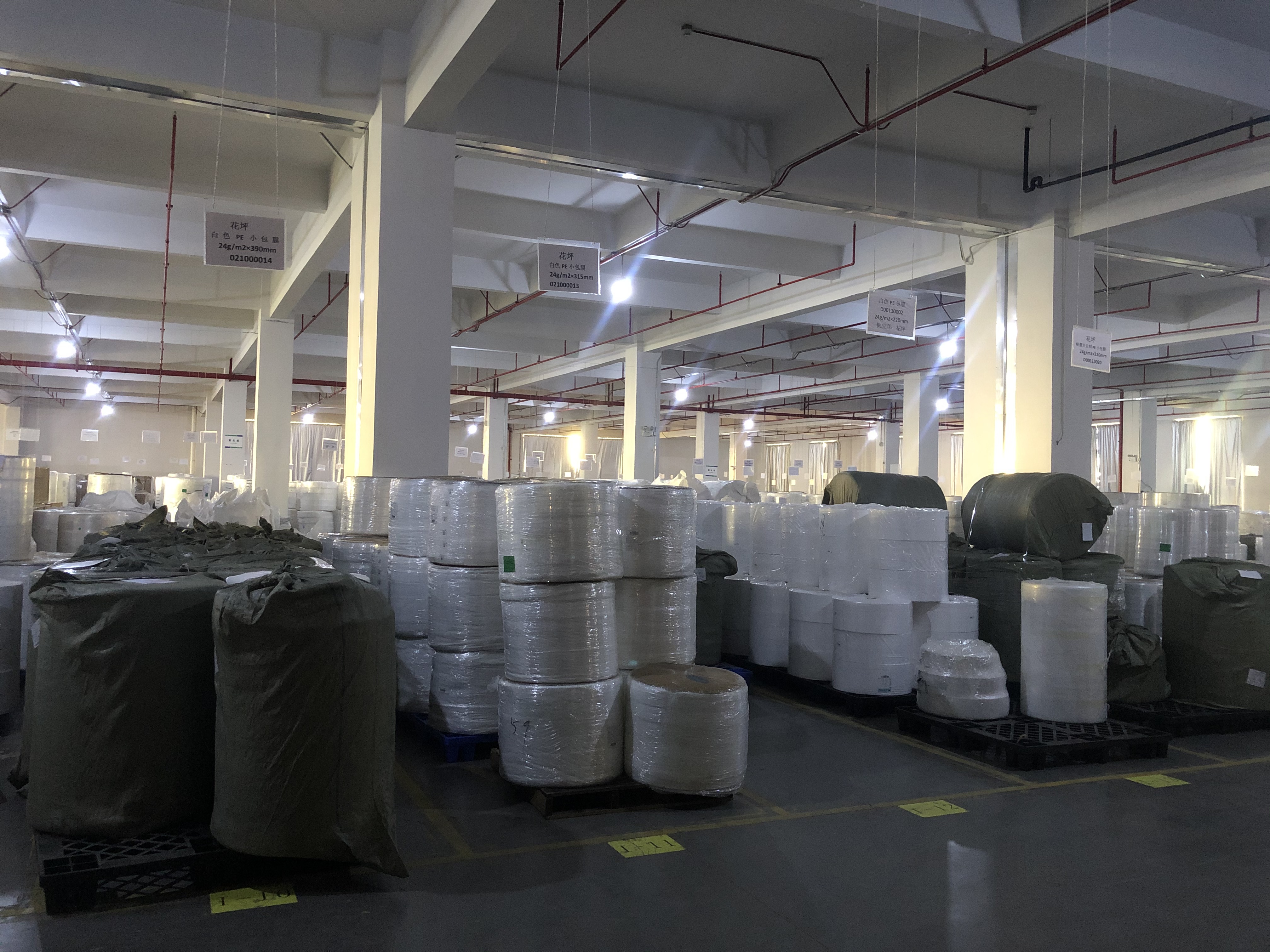
Container plans are built from approved carton dimensions, so the warehouse mix must match the loading plan.
FAQ: single-size versus full-container sourcing decisions
Which certificates should a buyer check before choosing between a single-size and a full-container organic pad plan?
The certificate set is broadly the same for both plans: CE Declaration of Conformity, EU Representative Agreement where relevant, Halal Certificate for Muslim markets, FSC Chain of Custody, GOTS or OCS material scope certificates for organic cotton, and product test reports for hygiene and skin-contact performance, alongside system certificates such as ISO 9001 and ISO 14001. The difference is scope. A single-size plan only needs documents that cover the one shipped configuration, while a container plan needs every format and pack count to fall inside the material and product scope. Buyers should record certificate name, number, issuing body, validity period and covered product.
Can one supplier handle both a single-size launch and a multi-size 40HQ range?
Integrated OEM/ODM suppliers are structured for both, because the underlying capability is the same. New Upward reports a 200,000 m² facility, a 10+ engineer R&D team and an annual output of 5,000,000,000 pads, and its OEM/ODM customization covers materials, sizes, absorbency performance and packaging, supported by stable batch supply and repeat-order service. Buyers should still verify that the extra-long pad and the disposable period pants in the intended range are confirmed as producible specifications, and that the same quality-control arrangements apply to every format rather than only the launch SKU.
Why can't a single-size quotation and a full-container quotation be compared directly?
Because they describe different things. Sanitary pad quotations move with size, thickness, topsheet material, absorbent core design, SAP level, packaging type, MOQ, certificate requirements, carton quantity and shipment terms. A single-size quote fixes one of each; a container quote fixes a weighted mix across several formats and several pack counts. Comparing them before the specification is locked compares packaging choices and materials, not price. The practical step is to fix size, material, absorbency, pack count, MOQ, carton details, certificate needs and shipment terms first, then request quotations against that identical specification.
How should sampling rounds be planned when a customized cooling formulation is involved?
Sequence the rounds rather than combining them. Screen topsheet and absorbent-core combinations first, because the construction determines how the formulation behaves. Apply the cooling formulation to the approved construction next, and evaluate intensity on physical samples at the actual pad thickness. Then confirm absorbency, surface dryness and fit on the final build, and approve printed film last. A single-size plan completes this sequence once. A container plan repeats the cooling step for every format where thickness or construction changes, so the number of rounds should be planned from the format list rather than assumed.
What determines production sequencing and delivery timing for a multi-size container?
Delivery timing is only confirmed after the specification, order quantity, artwork and approved samples are fixed, and it should be treated as a production commitment rather than an estimate until then. Sequencing across formats depends on material availability, line scheduling and packaging readiness, which is why a range with several artworks usually needs its packaging approvals completed before the loading plan is finalised. A staged release by SKU, starting with the validated formats, keeps the container moving without committing the unvalidated portion at the same moment.
Where should a buyer start if the format is still undecided?
Start from a product brief and a physical sample rather than from a container plan. A focused sample review shows the topsheet hand-feel, core response and cooling intensity on the construction actually being considered, and that review usually makes the single-size versus full-container question answer itself. New Upward can organise product options, packaging direction, certificate references and export communication for that first step; the product catalogue is available for download at the New Upward sanitary pad e-catalogue, and sample or specification questions can be sent to info@newupward.com.
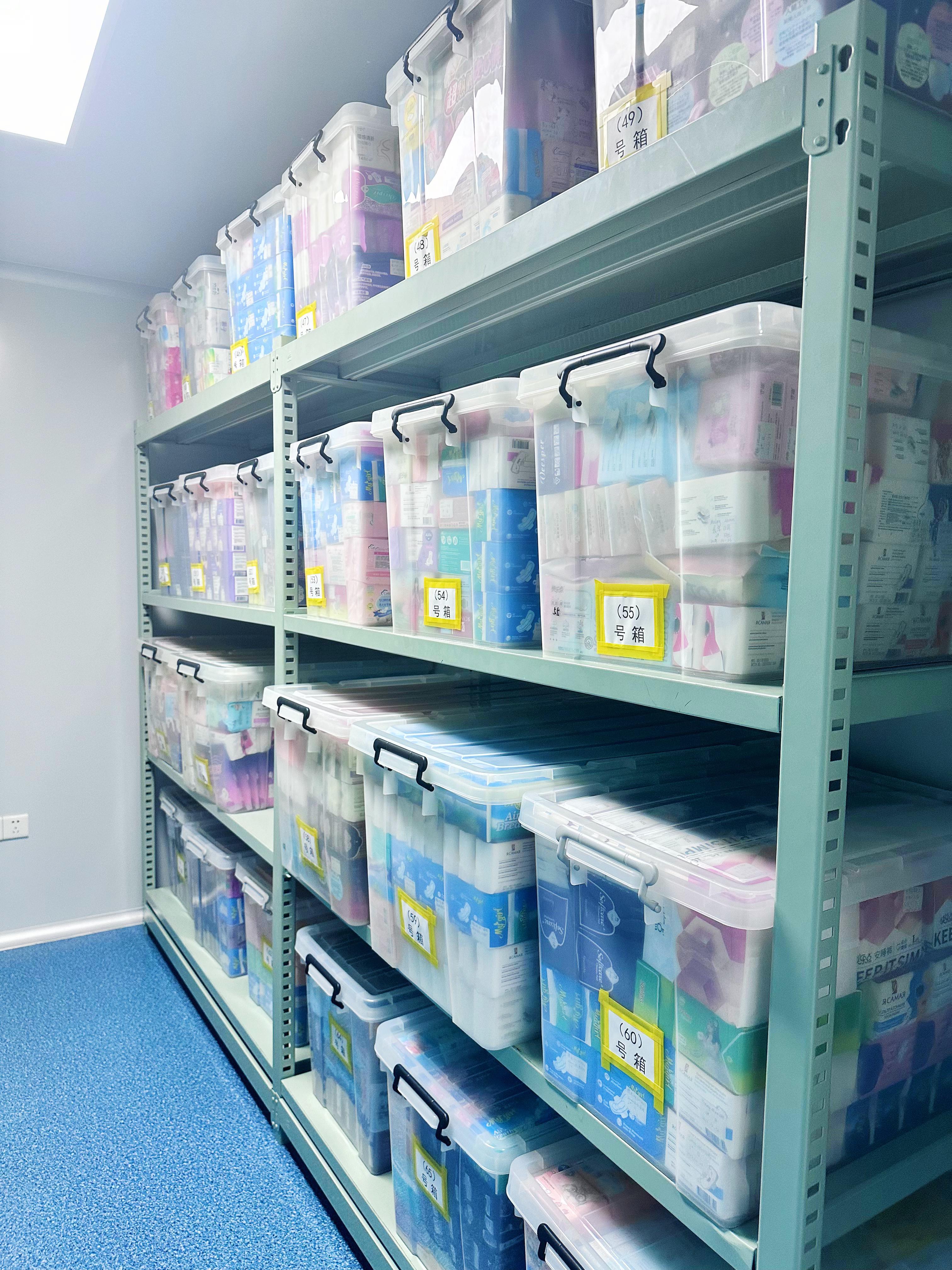
Sample review is the first gate in both plans; the container only follows once the construction is approved.
Conclusion: commit the container only after the specification is proven
The single-size versus full-container question resolves into a single test: has the specification been proven on the construction that will actually ship? If the topsheet, absorbent core and cooling formulation have been confirmed on one format and that format is representative of the range, a 40HQ multi-size order is a coverage decision and can proceed on the validated base. If the cooling formulation or the core build has to change between a day-use pad, an overnight pad, an extra-long pad and disposable period pants, then each of those changes is an open variable, and a single-size launch is the cheaper way to close it.
The Taiwan cooling range illustrates both sides of that test: a shared formulation makes range coverage straightforward, while a formulation tuned per format turns a container order into several parallel development projects. Buyers who match the plan to their evidence status, rather than to their shelf ambitions, end up with a range that is both complete and defensible. Further detail on New Upward's manufacturing and OEM/ODM scope is available at New Upward.
Have Questions or Need More Details?
Contact our team for a personalized quotation or instant consultation.
Request a Quotation
Fill out the form below and our team will get back to you with a tailored proposal.
WhatsApp Direct Chat
Prefer to chat in real-time? Message us on WhatsApp for instant assistance & quick answers.
- Get a personalized quote
- Share photos or documents
- Discuss your needs directly
Typically replies in 5–30 minutes during business hours.