
Single-Size vs Full-Range Eco Friendly Organic Sanitary Pads
Short answer: launch a single size when demand is unproven and cash flow matters; build the full range when the sales channel cannot sell an incomplete shelf. For most private-label buyers entering organic period care, the stronger sequence is a single-size launch that expands — on the same supply base — into day-use pads, overnight pads, extra-long pads and disposable period pants after the first sell-through data arrives. The Taiwan, China private-label case reviewed in this article followed that path: one size first, four sampling rounds during expansion, a move to 40HQ full-container procurement, and more than three years of repeat supply.
This is a decision-comparison article, not a product description. It weighs the two launch models against the criteria that actually determine the outcome: format coverage, sampling load, packaging SKU count, container planning, compliance scope, capital at risk and the supplier’s ability to extend the range later without a second sourcing cycle.
Problem Definition: The Scope Decision That Comes Before the Purchase Order
Launch scope fixes four cost centres at the same time. It determines how many SKUs sit on the shelf, how many sampling rounds are needed before approval, how many packaging plates and artwork versions are produced, and how much container space the first shipment consumes. Scope also fixes the compliance workload, because certificate and test-report coverage has to be confirmed against each product in the range rather than against a single reference item.
Buyers usually frame the question as “one pad or many pads”. The operational question is narrower: at what point does adding a format stop reducing risk and start creating it? Two symmetrical failure modes appear in private-label projects.
- The dead-end single size. A buyer launches one day-use pad, sells through, then discovers the supplier can only repeat that specification. Adding an overnight pad or a period pant means a new supplier, new sampling, new packaging artwork and a new compliance review.
- The premature full range. A buyer builds five or six SKUs before any sell-through evidence exists. Packaging is printed for formats that may not move, warehouse space is consumed by slow lines, and certificate scope for the extra SKUs is assumed rather than verified.
Both failures come from the same root cause: scope was decided by ambition or by caution instead of by channel requirement and supplier extendability. The useful framing is therefore not “minimum or maximum” but “what is the smallest launch that can still grow inside the same supply relationship”.
Industry Background: Why Launch Scope Became a Live Question
The category is expanding, and expansion changes what retailers expect to see on shelf. TechSci Research projects the global organic sanitary napkins market to reach USD 3.02 billion in 2025, while Mark & Spark Solutions reports a 20.1% compound annual growth rate for the biodegradable sanitary napkin segment between 2024 and 2030. Dataintelo places Asia Pacific at a 38.6% revenue share of the biodegradable sanitary napkin market in 2025. For buyers, growth of that kind produces a familiar pressure: distributors and retail chains increasingly ask for a complete flow-coverage range rather than a single item.
Cost structure reinforces the scope question. Organic cotton biodegradable sanitary pads generally carry higher material, packaging and certification costs than conventional pads, but they support stronger product differentiation and premium pricing. A single-size launch keeps the upfront cost of that premium position small; a full range multiplies material, packaging and documentation work before any revenue arrives.
Compliance expectations are also moving. Sanitary towels and tampons sit under Harmonized System code 9619.00, which keeps export documentation relatively standard, but product-level evidence is market-specific. FDA’s Quality Management System Regulation, which incorporates ISO 13485:2016 into 21 CFR Part 820, is reported to take effect on 2 February 2026 for menstrual products, and buyers serving multiple markets already need to map CE documentation, Halal certification, FSC chain of custody and GOTS or OCS material scope against each destination. Every SKU added to a range adds a line to that mapping.
Detailed Solution: How the Two Launch Models Actually Differ
Model A — Single-Size Launch
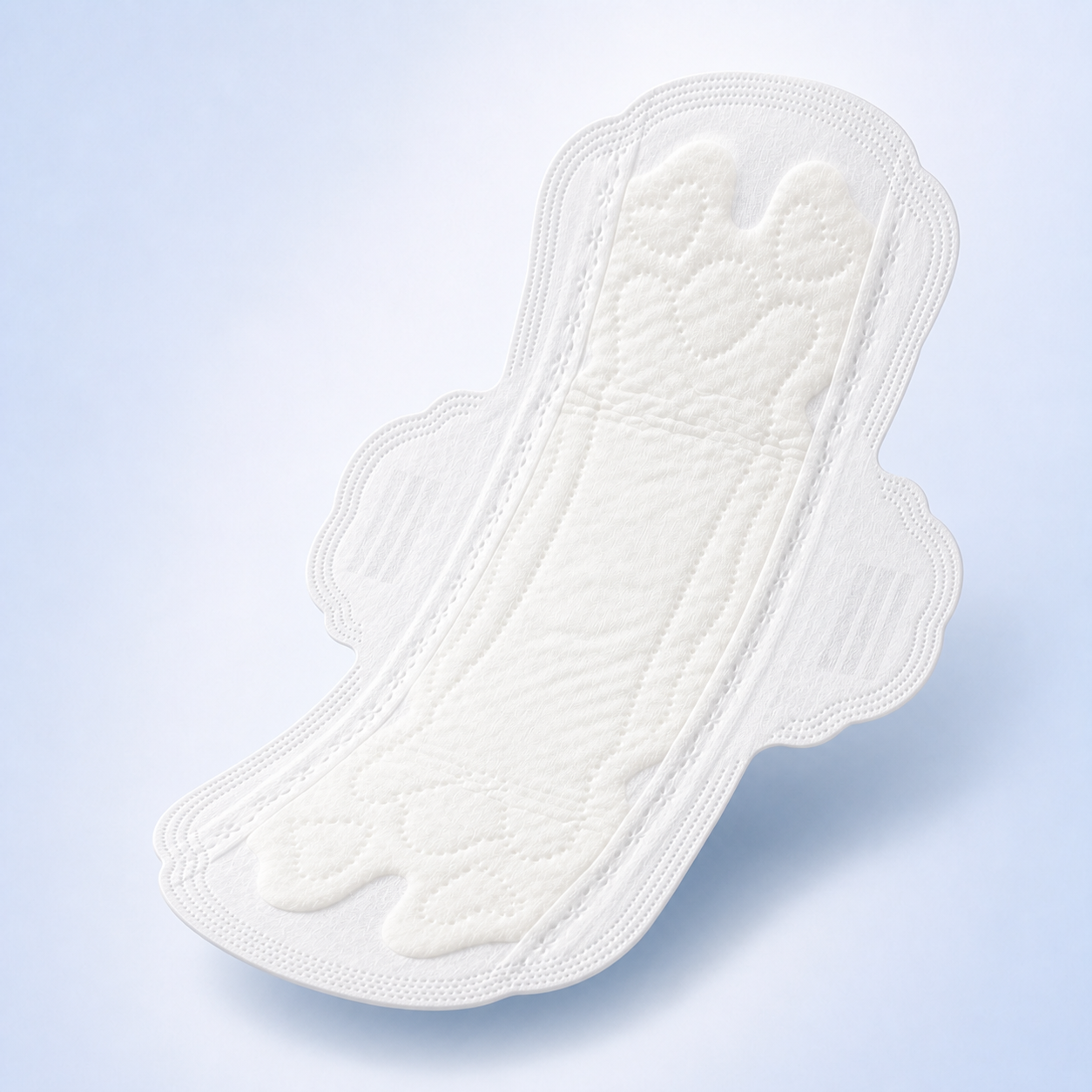
A single-size launch puts one pad format, one absorbency level and one packaging configuration into the first order. In organic period care, that is typically a day-use pad, because day-use volume is the easiest to forecast and the format carries the lowest material consumption per unit.
The advantage is capital efficiency. One format means one sampling cycle, one wrapper artwork, one retail bag design and one carton specification. It also means a short compliance list: one product scope to verify rather than a family of sizes. For a new brand testing a premium organic position, or for an e-commerce seller validating a listing before committing to inventory, this is the lowest-exposure entry.
The limitation is coverage, not quality. A single day-use pad cannot serve overnight demand, cannot serve heavy-flow consumers who expect an extra-long format, and cannot answer a distributor who wants a complete menstrual care set. Shelf completeness is a channel requirement in pharmacy and supermarket environments, and a single SKU rarely satisfies it.
Model B — Full-Range Portfolio
A full-range portfolio launches the flow ladder at once: day-use pads, overnight pads, extra-long pads and disposable period pants, supported by several absorbency levels and packaging formats. In the current New Upward specification set, organic cotton and plant-based fiber topsheet options exceed three, size and absorbency-level options exceed four, and retail and individual packaging options exceed four.
This model wins where the channel itself demands completeness: pharmacy chains building a dedicated organic section, subscription programmes that ship a mixed box each cycle, distributors assembling a feminine hygiene portfolio, and maternity or wellness retail where consumers expect to find every flow stage in one brand. It also shortens the path to premium price positioning, because a range signals category commitment rather than a single test item.
The cost is front-loaded. Multiple formats multiply sampling rounds, packaging plates and artwork approvals, and they raise the amount of inventory held before demand is proven. Packaging minimum order quantities can also differ from product minimum order quantities, so the launch budget has to be calculated across two separate thresholds rather than one.
The Third Option: A Staged Portfolio on One Supply Base
In practice, most private-label buyers land between the two models. They launch one format, then add the second and third formats after the first reorder — but only if the supplier can extend the range without a new sourcing cycle. That condition is technical, not commercial. Extendability depends on OEM/ODM customization covering materials, sizes, absorbency performance and packaging, backed by stable batch supply and repeat-order service.
Organic cotton biodegradable pads fit this staged logic well, because the range can grow inside one material platform. The comparison against conventional synthetic-top pads is measurable on the product side: 2–3 times the absorbency of conventional sanitary pads, approximately 50%–70% thinner construction, and a softer skin-friendly topsheet. Those attributes stay consistent as formats are added, which keeps the brand promise stable while the SKU list grows.

The Taiwan, China Case: One Size First, Then a Four-Format Range
The clearest evidence for the staged model comes from a private-label project supplied to the Taiwan, China market. The project began with a single size. Rather than locking that decision in, the range was expanded into day-use pads, overnight pads, extra-long pads and disposable period pants. Four sampling rounds supported the expansion, which is the part buyers usually underestimate: each added format needs its own fit, absorbency and packaging confirmation before approval.
Once the range was established, procurement moved to 40HQ full-container orders, and supply has continued on a repeat basis for more than three years. Three elements of that sequence are worth isolating.
- No re-sourcing step. Every new format was added inside the same supply relationship, so the buyer did not repeat supplier qualification, compliance mapping or packaging briefing.
- Sampling as the expansion mechanism. Four rounds of samples carried the project from one size to four formats, which means range growth was validated physically rather than by catalogue selection.
- Container-level scale as the proof point. 40HQ full-container procurement is a different operational exercise from a mixed trial order, and more than three years of repeat supply indicates the range held up after launch rather than only in the sample phase.
Read as a decision precedent, the case does not argue that every buyer should start with one size. It argues that a single-size launch is only a good decision when the supplier can absorb the later expansion — and that a full-range launch is only a good decision when the channel genuinely requires it.

Step-by-Step Breakdown: Deciding Scope Without Locking Yourself In
- Map the channel requirement before the product. A pharmacy chain, a supermarket shelf, a subscription box and a marketplace listing each define completeness differently. Write down the minimum format set the channel will accept, then compare it with the single-size option.
- Match formats to flow stages, not to competitor catalogues. Day-use, overnight and extra-long pads serve different wear windows; disposable period pants serve overnight and heavy-flow use. Existing product references in the range include 155 mm, 245 mm and 290 mm formats, which gives buyers three length anchors before deciding how many to launch.
- Budget the sampling rounds explicitly. Treat sampling as a scheduled workstream rather than a formality. The Taiwan, China case required four rounds to move from one size to four formats; a buyer planning a full-range launch should expect the sampling phase to scale with the number of formats.
- Lock the SKU architecture and packaging logic together. A range should share one brand system while making size, count, flow level and usage immediately readable on pack. Confirm artwork, barcode, language, label requirements and packaging minimum order quantities before printing, because packaging MOQ and product MOQ are separate thresholds.
- Plan the container against the range, not the pilot. A single size fills a container differently from a four-format mix. Carton dimensions, pack counts and pallet patterns change the economics of a 40HQ order, so container planning belongs in the scope decision rather than after it.
- Set the expansion trigger in advance. Decide the sell-through or reorder signal that justifies format two, three and four. A staged portfolio works because the trigger is defined before the first container ships, not because the buyer intends to expand later.
Use Cases: Which Model Fits Which Buyer
New brand validating a premium organic position
Start single-size. Capital stays low, packaging stays simple, and the first sell-through produces the data needed to justify a second format. This path only holds if the supplier can later add overnight and extra-long formats under the same material platform.
Pharmacy or supermarket launching an organic section
Go full-range or near full-range. Shelf logic rewards a visible flow ladder — day-use, overnight, extra-long and period pants — and retail buyers typically review the category as a set rather than as individual items.
Subscription or period-care kit programme
A mixed-format portfolio is the product. Kits are assembled from different flow stages, so a single size limits the offer to one box configuration. Here the range is the commercial model, not an expansion ambition.
Distributor assembling a feminine hygiene portfolio
Stage the range across categories first, then deepen it. A distributor can carry sanitary pads, panty liners, menstrual pants, organic cotton pads and biodegradable pads under one private-label programme, adding depth within each line once channel feedback arrives.
Sensitive-skin or eco-positioned retail line
Organic cotton pads are positioned for premium feminine hygiene retail, organic personal care brands and sensitive-skin menstrual care. In these channels, material transparency matters more than SKU count, so a compact but clearly documented range often outperforms a wide, thinly documented one.
Comparison Table: Single-Size Launch vs Full-Range Portfolio
| Decision factor | Single-size launch | Full-range portfolio |
|---|---|---|
| Formats covered at launch | One format and one absorbency level | Day-use, overnight, extra-long pads and disposable period pants |
| Size and absorbency options | One specification to approve | More than four sizes and absorbency-level options available in the current specification set |
| Topsheet options | One material path | More than three organic cotton and plant-based fiber topsheet options |
| Packaging workload | One wrapper and one retail pack | More than four retail and individual packaging options to approve |
| Sampling load | Minimal; one approval cycle | Higher; the Taiwan, China case required four sampling rounds during expansion |
| Container planning | Partial volume or mixed trial order | 40HQ full-container procurement once the range is established |
| Compliance scope | One product scope to verify against CE documentation, EU Representative Agreement, Halal, FSC, GOTS or OCS and product test reports | Scope confirmation for every SKU; additional formats may need separate review |
| Upfront cost profile | Lower material, packaging and certification outlay | Higher material, packaging and certification outlay before revenue |
| Inventory exposure | Small and easy to clear | Larger; slow formats occupy warehouse space |
| Channel fit | Marketplace listing, pilot launch, single-channel test | Pharmacy and supermarket shelf, subscription kits, distributor portfolio |
| Price positioning | Premium claim carried by one hero product | Premium claim reinforced across the flow ladder |
| Expansion path | Requires a supplier with OEM/ODM capability across materials, sizes, absorbency and packaging | Range already built; growth comes from volume and repeat orders |
| Evidence of durability | Depends on the later reorder record | More than three years of repeat supply in the Taiwan, China case |
FAQ
Which certificates and reports should cover the whole organic pad range, not just the first SKU?
Buyers should map documentation per SKU rather than accept a single reference file. Useful references for sanitary pads and menstrual care include CE Declaration of Conformity for EU market support, an EU Representative Agreement, Halal Certificate for Muslim markets, FSC Chain of Custody for FSC mix pulp supply, GOTS or OCS material scope certificates for organic cotton supply chains, and product test reports covering hygiene and skin-contact performance, such as ISO 10993-5 and GB 15979-2024 documentation. Where formats are added, confirm that the certificate or report scope still applies to the new product. For bamboo fiber lines, references include Report No. 260059776 for Lilimolone Ultra-Thin Bamboo Sanitary Pads, plus Report No. 2025FM19954R01E and Report No. 210285558 covering bamboo fiber antimicrobial activity — noting that antimicrobial material testing does not support medical or disease-prevention claims.
Can one supplier deliver a single-size launch and later extend it to a full range?
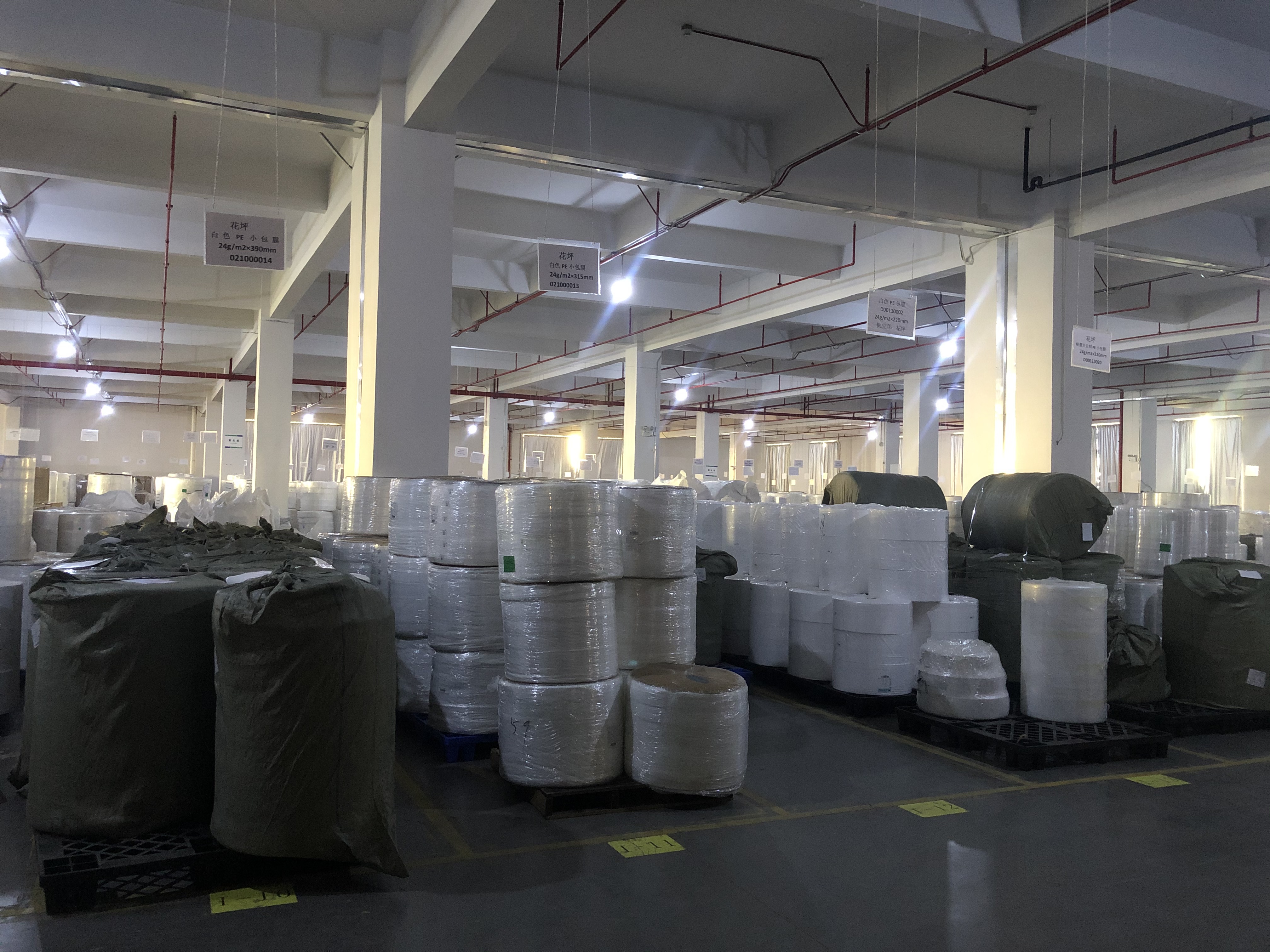
Yes, provided the capability is OEM/ODM customization across materials, sizes, absorbency performance and packaging, supported by stable batch supply and repeat-order service. New Upward SC (Guangdong) Co., Ltd., trading as Newupward, is an integrated disposable hygiene manufacturer and service provider founded in 2017, operating a 200,000 m² factory with annual output of 5,000,000,000 pads, a 10+ engineer R&D team and an 80% export ratio. In the current specification set, that capability is expressed as more than three organic cotton and plant-based fiber topsheet options, more than four sizes and absorbency-level options, and more than four retail and individual packaging options — the practical conditions for expanding a range without a second sourcing cycle.
How does launch scope change the budget and the achievable price position?
Organic cotton biodegradable pads generally carry higher material, packaging and certification costs than conventional pads, but they support stronger differentiation and premium pricing. A single-size launch concentrates that cost into one format and one pack, which keeps the first order small. A full range multiplies it across formats, packaging plates and documentation work. Two budget rules reduce error: compare quotations only after fixing the same size, thickness, topsheet, absorbent core, SAP level, packaging type, minimum order quantity, certificate requirements, carton quantity and shipment terms; and calculate packaging MOQ separately from product MOQ, because the two thresholds can differ and together determine the real launch cost.
How many sampling rounds should a buyer plan for a multi-format launch?
Plan for the sampling count to scale with the number of formats. The Taiwan, China private-label case moved from a single size to day-use, overnight, extra-long pads and disposable period pants with four sampling rounds supporting the expansion. Each round should confirm size, absorbency behaviour, topsheet material, individual wrapper, retail pack artwork, product count and labeling before the next format is approved. Reviewing existing samples and confirming realistic minimum order quantities before committing to a larger order is the most direct way to lower first-order risk.
How do 40HQ full-container orders and repeat supply work once the range is set?
Once formats, pack counts and carton specifications are approved, procurement can move to 40HQ full-container volume; in the Taiwan, China case that step followed the range build, and supply has continued on a repeat basis for more than three years. Before the first container, buyers should confirm total MOQ, expected lead time, carton and pallet details, labeling for the destination market, and the inspection arrangement. Newupward supports this stage with product specification files, packaging coordination, compliance document references and export communication for private-label buyers.
Conclusion: Decide the Expansion Path, Then the Launch Size
The single-size versus full-range question resolves once the expansion path is fixed. If the supplier can add formats inside the same relationship, a single-size launch is a low-cost entry that keeps the premium organic claim intact while demand is validated. If the channel cannot sell an incomplete shelf, a full-range portfolio is the correct choice from the first order, and the sampling and packaging workload should be planned and budgeted as part of that decision. What should be avoided is the middle of the two without a trigger: a single size with no route to a second format, or a full range built before any format has been physically approved.
The Taiwan, China case shows what the staged route looks like in practice — one size, four sampling rounds, day-use, overnight, extra-long pads and disposable period pants, then 40HQ full-container procurement and more than three years of repeat supply. The lesson is not that one model beats the other. It is that scope should be decided against channel requirement and supplier extendability, and both of those can be checked before the purchase order is issued.
Next step: if you are weighing a single-size pilot against a full-range organic launch, request a sample set and a specification-based quotation that covers format, absorbency, topsheet, packaging, MOQ and container planning. The product catalogue is available for download here: E-catalog of sanitary pads – New Upward (PDF).
New Upward SC (Guangdong) Co., Ltd. (Newupward) — website: www.newupward.com · Email: info@newupward.com · Tel / WhatsApp: +86 157-9847-3913 · Address: A4-02, Building A, No.108, Lijia Road, Henggang Street, Longgang District, Shenzhen City, China 518115.
Have Questions or Need More Details?
Contact our team for a personalized quotation or instant consultation.
Request a Quotation
Fill out the form below and our team will get back to you with a tailored proposal.
WhatsApp Direct Chat
Prefer to chat in real-time? Message us on WhatsApp for instant assistance & quick answers.
- Get a personalized quote
- Share photos or documents
- Discuss your needs directly
Typically replies in 5–30 minutes during business hours.