
Technical Guide: Topsheet and Absorbent-Core Selection for Cooling Organic Sanitary Pads
A cooling organic sanitary pad is a laminate, not a single material. The topsheet controls what touches the skin, the absorbent core controls fluid handling and rewet, and the cooling formulation has to be applied consistently across both without weakening skin-contact safety or hygienic performance. This guide sets out how those three decisions are made, how a customized cooling formulation is developed, and how four rounds of sampling and refinement are used to lock a specification before the first order.
Problem Definition: Why “Cooling” Fails as a One-Line Brief
Cooling is usually written into a product brief as a sensation, not as a specification. A buyer describes the experience the brand wants; a supplier quotes a pad. Between those two points, three engineering decisions are left undefined: the topsheet material, the absorbent-core build, and the way the cooling formulation is carried into the finished product.
When those decisions are not fixed in writing, the failure modes are predictable. Samples feel cooling in one size and neutral in another. Absorbency is acceptable in a laboratory test but rewet changes once the formulation is applied. Batch-to-batch sensation drifts because the formulation was never specified as a controlled part of the bill of materials. The buyer then evaluates the supplier on price, when the real gap was specification.
The corrective approach is to treat the cooling effect as one line item inside a documented BOM: topsheet grade, core build and SAP dosage, formulation, backsheet, wrapper — each with an approved sample and, where relevant, a test reference. That is the structure used in New Upward’s cooling private-label development, and it is the structure this guide recommends.
Industry Background: What Buyers Now Ask For
Feminine hygiene sourcing has shifted from catalogue selection to evidence review. Importers, pharmacy buyers and private-label brand owners increasingly ask for a report number, an issuing laboratory, a certificate scope and an expiry date alongside the sample, because retail and regulatory reviewers ask them the same questions.
Two evidence layers now sit behind a skin-contact product. The first is material biocompatibility: in vitro cytotoxicity and skin sensitization testing of the non-woven fabrics used at the skin-contact surface. The second is finished-product hygiene performance, where GB 15979-2024 (Hygienic requirements for disposable sanitary products) is the reference standard cited in Chinese test reports for disposable sanitary products.
Organic and eco-positioned lines add a third layer: material scope certification. New Upward holds a GOTS Scope Certificate (No. EGL/236426/GOTS/236426260101190405) and an OCS Scope Certificate (No. EGL/236426/OCS/236426260101190029), both issued by ECOCERT Greenlife S.A.S. and both valid from 2026-01-01 to 2026-12-31. Certificates of this type cover defined material categories — dyed fabrics, greige fabrics, greige yarns, undyed fibers, personal care and hygiene — which is precisely why the buyer must confirm that the specific fabric in the BOM falls inside the scope before printing a claim.
Detailed Solution: Selecting Topsheet, Core and Cooling Formulation
1. Topsheet selection
The topsheet is the only layer with continuous skin contact, so it carries most of the safety and comfort argument. New Upward’s customization scope covers organic cotton topsheet, bamboo fiber non-woven and related skin-contact options, each with a different evidence path.
Organic cotton topsheet. Suited to premium and eco-positioned ranges, because the material claim can be supported by GOTS or OCS scope certification. The buyer’s task is scope verification: confirm the fabric category, confirm the certificate is valid on the production date, and confirm that the claim wording on pack matches the standard’s claims policy rather than exceeding it.
Bamboo fiber non-woven. Used for soft, breathable positioning. Where an antimicrobial material story is part of the brand narrative, the supporting references are material-level: Report No. 210285558 (100% bamboo fiber spunlace non-woven, tested under GB/T 20944.3-2008, issued by GTTC on 2021-09-23) and Report No. 2025FM19954R01E (surface-layer antimicrobial activity of Lilimolone bamboo fiber sanitary pads, issued by Guangdong Detection Center of Microbiology on 2025-11-19). Both are material test reports. Neither converts a pad into a medical device, and claim wording still has to pass local labelling review.
Conventional synthetic topsheet. Remains the value-tier option and is normally the lowest material cost route. It is a valid commercial choice, but it weakens eco-positioning and offers no organic material scope evidence, so it rarely fits a cooling organic brief.
Whichever topsheet is chosen, the same fabric report set should be requested: cytotoxicity, skin sensitization, and skin irritation on the non-woven fabric, plus finished-product hygiene testing.
2. Absorbent-core selection
The core determines absorbency, rewet, thickness and how the pad behaves under pressure. In New Upward’s configuration, the core is a fluff-pulp absorbent core with adjustable SAP dosage, and the customization scope includes pad length, shape, thickness, absorbency level and wings.
Four core variables should be fixed before sampling, because changing any of them after approval restarts validation:
- Length and shape — day-use, night-use and extra-long formats handle different flow stages and changing positions during sleep.
- Thickness — an ultra-thin build trades some capacity for discretion; the cooling formulation must not be used to compensate for a core that is already at its limit.
- SAP dosage — the main lever on absorption and rewet under load, and the variable most likely to drift between sampling and mass production if it is not written into the specification.
- Wings and fit — winged formats affect leakage protection and how the pad sits during movement.
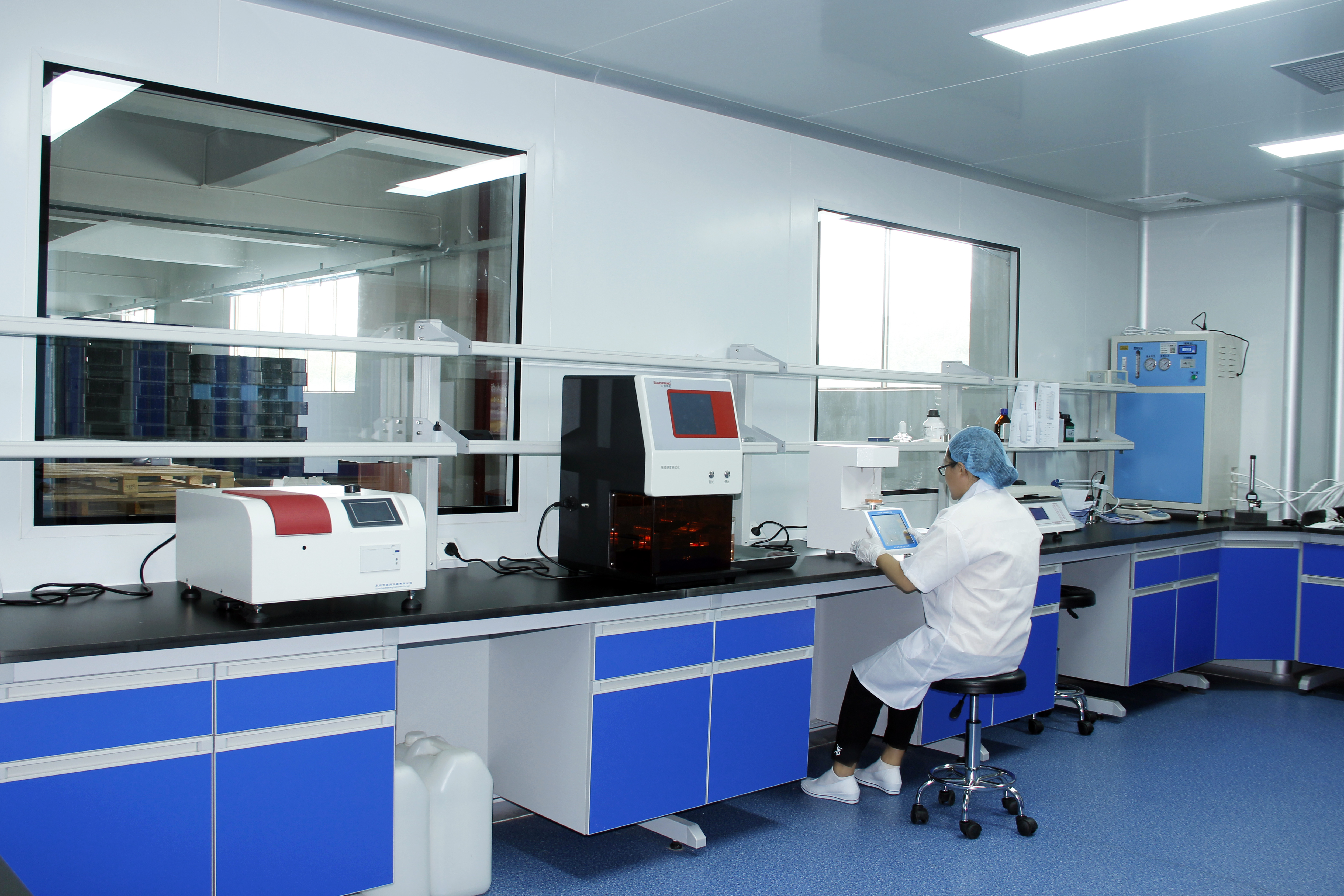
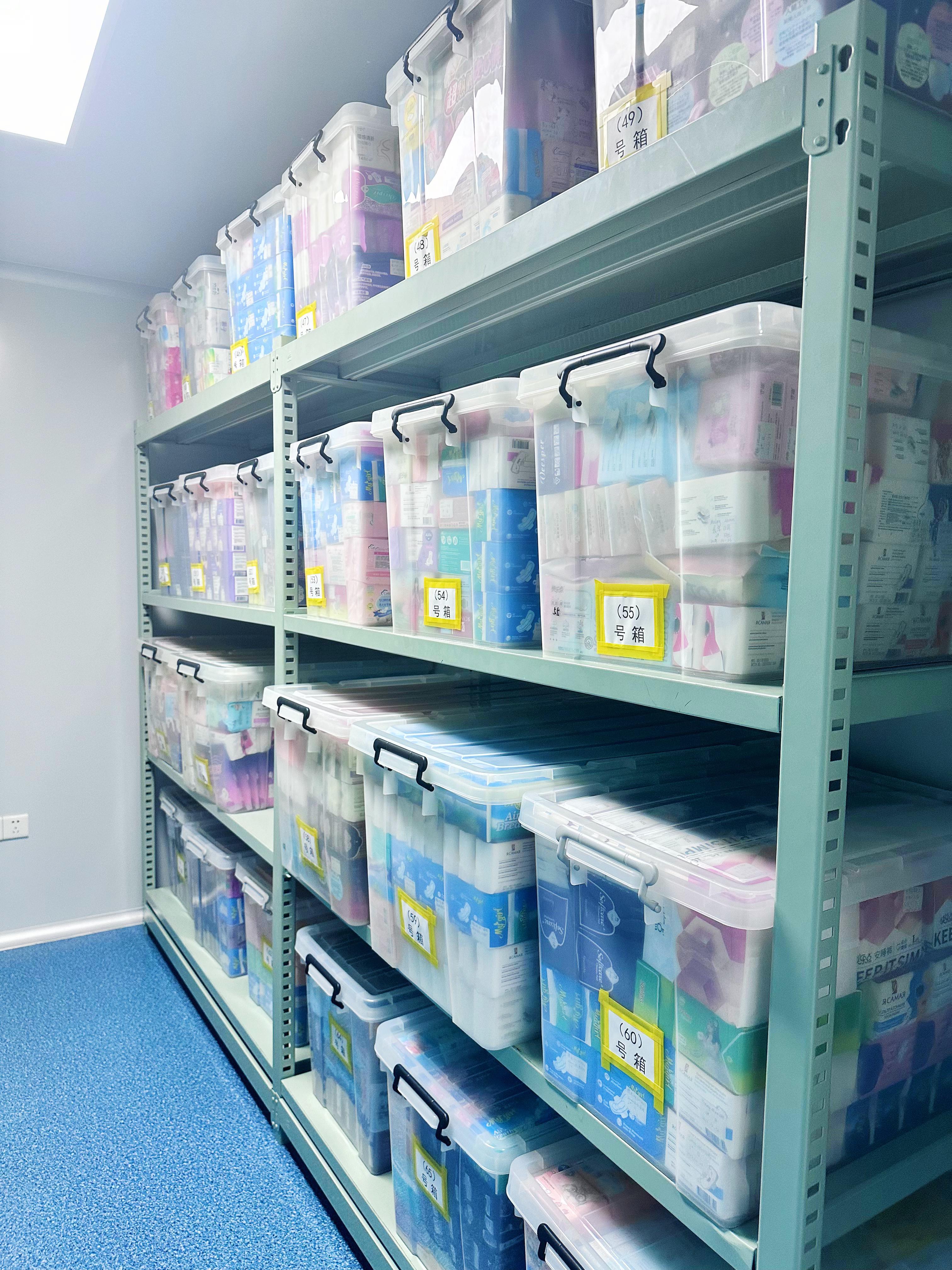
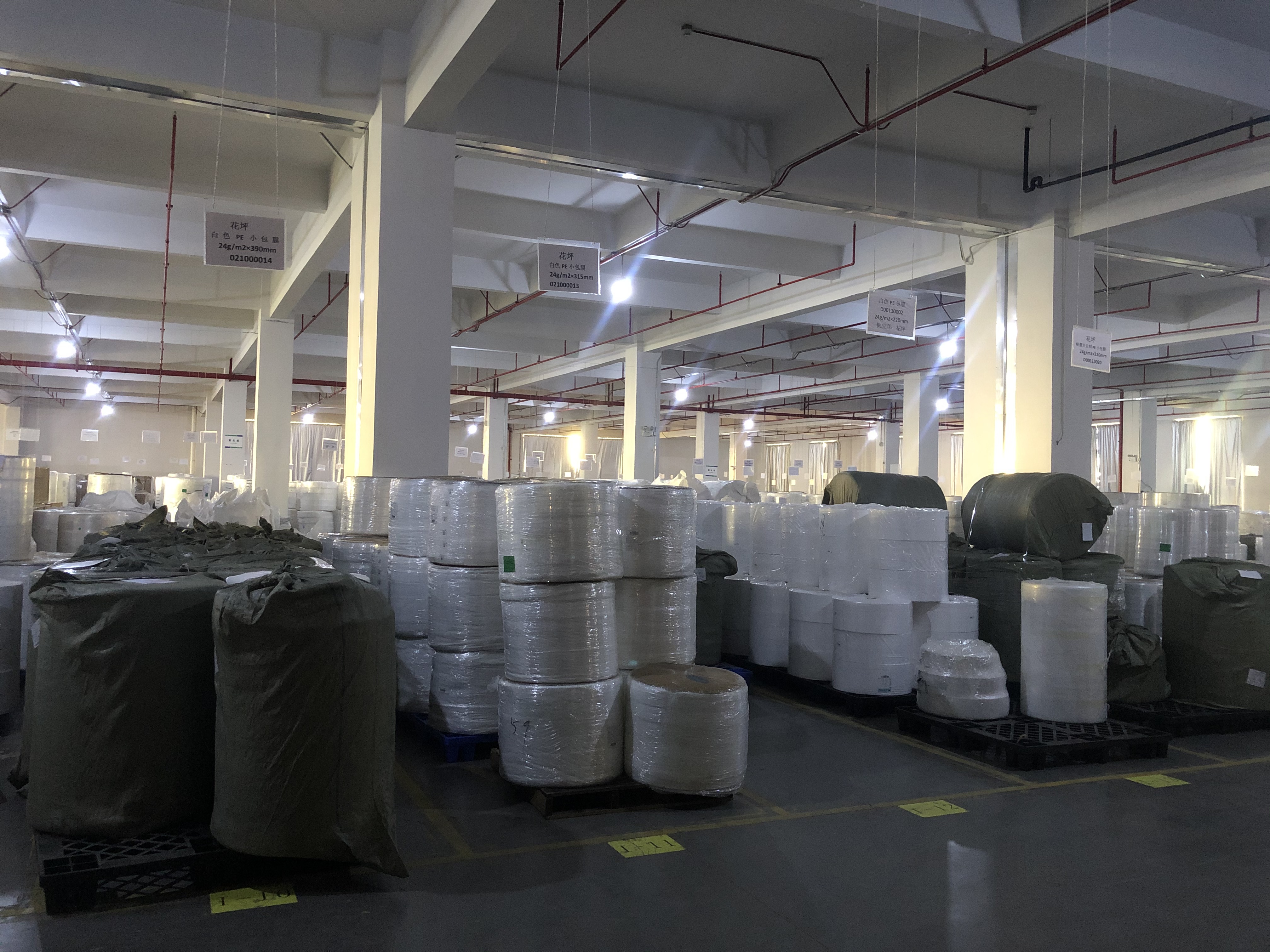
Core performance is verified through absorption, rewet and leakage testing in New Upward’s quality-control sequence, whose checks include incoming material inspection, approved sample control, in-process inspection, absorption/rewet/leakage testing, finished-goods sampling, packaging check, retained samples and batch traceability.
3. Cooling formulation development
The cooling effect in New Upward’s private-label development is a customized cooling formulation, not a stock additive selected from a list. Development therefore runs in parallel with topsheet and core selection, because the formulation has to be applied to a defined substrate and validated against the finished laminate.
Three rules keep this stage controllable. First, specify the formulation as a BOM line with an approved sample reference, so repeat orders reproduce the same sensation. Second, validate skin contact on the actual non-woven fabrics used, using the biocompatibility reports described below. Third, keep the cooling claim separate from absorbency and hygiene claims — they are supported by different evidence.
4. Backsheet and wrapper
The backsheet and individual wrapper complete the laminate and often carry the sustainability story. A plant-based backsheet and plant-based wrapper option is available within New Upward’s customization scope, alongside pack count, packaging artwork, logo, language version and master carton configuration. Because the wrapper is the surface a consumer handles first, its material and print quality should be approved in the same sampling round as the pad itself.
Step-by-Step Breakdown: From Brief to First Order
The sequence below reflects how a customized cooling organic pad moves from a brand brief to a released order. Sample development typically takes 5–15 working days; a new OEM/ODM order runs about 25–30 days after specification and artwork confirmation, and repeat orders about 15–20 days.
- Define the brief in specification language. Target market, size range, flow stages covered, absorbency target, thickness, wings, topsheet preference, packaging format, and the claims the brand intends to print.
- Select the topsheet. Choose organic cotton, bamboo fiber or another skin-contact option, and match it to the evidence the brand can actually show at retail.
- Build the core. Fix length, shape, thickness, SAP dosage and wings. Record them as specification lines, not as sample impressions.
- Develop the cooling formulation. Define the formulation, its application, and the reference sample that represents the approved sensation.
- Complete the BOM and packaging. Backsheet, wrapper, pack count, artwork, logo, language version and master carton.
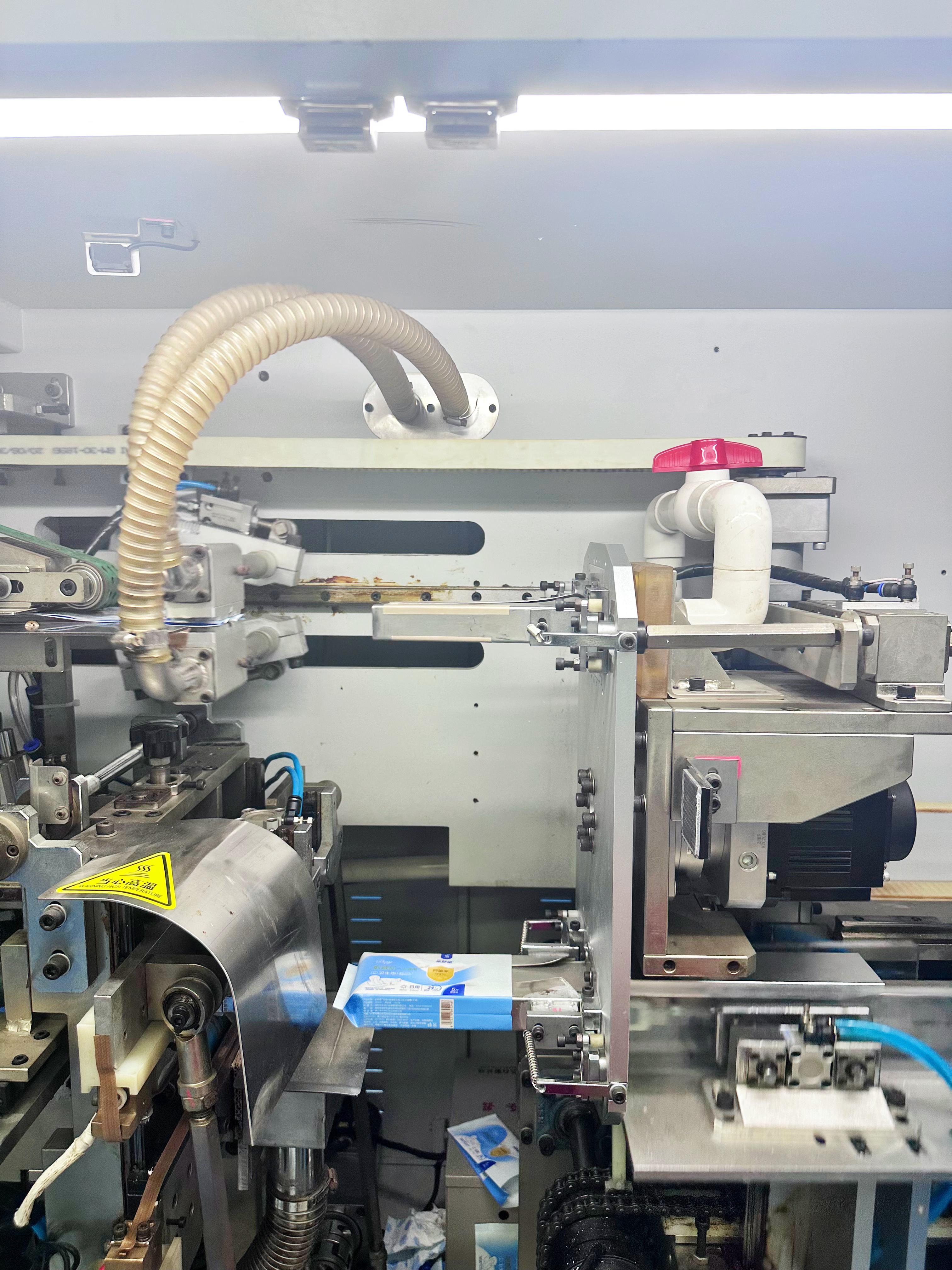
- Run sampling and refinement. In the Taiwan cooling project, four rounds of customized sampling and refinement were completed before the initial order, addressing cooling sensation, comfort and consistent product quality.
- Verify the documents. Confirm report numbers, issuing laboratories, tested scope and validity against the exact materials and product in the BOM.
- Confirm commercial terms and release. MOQ, lead time, Incoterms, payment terms and inspection arrangements, then production with retained samples for traceability.
How to Keep the Four Sampling Rounds Productive
Four rounds is a development rhythm, not a delay: it is the number of iterations the Taiwan project needed before the first order. Each round should close one category of open question so that feedback does not loop back to decisions already approved.
| Round | What should be locked | Output the buyer signs off |
|---|---|---|
| Round 1 | Topsheet hand-feel, core thickness and size/shape direction | Approved material direction and pad geometry |
| Round 2 | Cooling sensation level and its consistency across sizes | Reference sample representing the approved sensation |
| Round 3 | Absorbency, rewet and fit with wings during movement; wrapper and pack format | Performance-approved sample plus packaging direction |
| Round 4 | Production-equivalent build, artwork and language version, documentation set | Golden sample and released specification for mass production |
Two practical points matter here. Feedback should be written against the specification line being evaluated, not against general satisfaction, otherwise the next round cannot be interpreted. And because development is frequently handled remotely — the Taiwan cooperation was built without an in-person meeting — the sample report becomes the only shared record, so it needs to be explicit.
Verifying Skin-Contact Safety and Hygienic Performance
Documentation should be checked against the material actually used, not against the supplier’s general capability. The table below lists the reference documents available for New Upward’s skin-contact non-woven fabrics and finished bamboo pad product, with the tested scope and standard as stated on each report.
| Document | Reference number | Standard / method | Scope as stated |
|---|---|---|---|
| In Vitro Cytotoxicity Test Report | SDWH-M201900236-1 (E) | ISO 10993-5:2009 | Non-woven fabrics, skin-contact raw material for feminine hygiene products (Sanitation & Environment Technology Institute, Soochow University) |
| Skin Sensitization Test Report | SDWH-M201900236-2 (E) | ISO 10993-10:2010 | Non-woven fabrics, skin-contact raw material for feminine hygiene products |
| Skin Irritation Test Report | SDWH-M201900236-3 (E) | ISO 10993-10:2010 | Non-woven fabrics, skin-contact raw material for feminine hygiene products |
| Lilimolone Sanitary Pads Test Report | 260059776 | GB/T 8939-2018; GB 15979-2024 | Lilimolone Ultra-Thin Bamboo Sanitary Pads 245mm — physical-chemical and hygiene safety (GTTC, 2026-04-01) |
| CE Declaration of Conformity | DOC No. H-YG-MD-240414161/01 | Medical Device Regulation (EU) 2017/745; ISO 10993-1:2020; ISO 10993-5:2009; ISO 10993-10:2021; ISO 10993-23:2021 | Feminine hygiene pads, sanitary pads 180 mm to 420 mm, sanitary liners 150 mm to 190 mm |
Reading rule for buyers: a biocompatibility report on non-woven fabric proves the fabric, not the finished pack. Pair it with a finished-product report such as Report No. 260059776, which cites GB 15979-2024 for hygiene and GB/T 8939-2018 for sanitary pad performance, and confirm that the product name and size on the report match the SKU being ordered.
Use Cases
Differentiation-led private label in Taiwan
An emerging feminine care brand in Taiwan, China, building a private-label range of sanitary pads and disposable period pants, wanted a distinctive cooling experience, comfortable wear and reliable supply. Development covered topsheet and absorbent-core material selection together with a customized cooling formulation, and required four rounds of sampling and refinement before the first order. The range expanded from a single size to daytime, overnight and extra-long overnight pads plus disposable period pants in multiple sizes, ordered in 40HQ containers, and developed into a repeat-order partnership of more than three years.
Retail and pharmacy channels
For retail shelf placement, the requirement shifts from sensation to repeatability. Documented projects include a United States retail programme covering more than 200 stores and a private-label organic cotton biodegradable pad launch supported into 58 pharmacy stores in Saudi Arabia, where the launch period recorded zero returns and selected stores reported more than 30% category sales share, with margins about 15% higher than regular sanitary pads. Those outcomes depend on stable leakage protection and consistent batch quality — the same core and topsheet discipline described above.
Comparison: Which Topsheet Option Fits Which Brief
| Topsheet option | Evidence available | Best-fit positioning | What the buyer must verify |
|---|---|---|---|
| Organic cotton topsheet | GOTS Scope Certificate EGL/236426/GOTS/236426260101190405; OCS Scope Certificate EGL/236426/OCS/236426260101190029 (both valid 2026-01-01 to 2026-12-31) | Premium and eco-positioned retail; organic claim | Fabric category inside scope; certificate valid on production date; claim wording per standard |
| Bamboo fiber non-woven | Report No. 210285558 (GB/T 20944.3-2008, 100% bamboo fiber spunlace); Report No. 2025FM19954R01E (surface-layer antimicrobial activity) | Soft, breathable, comfort-led ranges | Material-level scope only; no medical claim; local labelling rules |
| Conventional synthetic topsheet | No organic material scope evidence in this document set | Value tier and lowest material cost | Whether the eco brief is still supportable at all |
Comparison: Core and Formulation Variables to Fix in the BOM
| Variable | Options within New Upward’s customization scope | Verified by |
|---|---|---|
| Pad length and shape | Day-use, night-use and extra-long formats; shape customization | Approved sample; GB/T 8939-2018 performance testing |
| Thickness | Ultra-thin through standard builds | Approved sample; absorption / rewet / leakage testing |
| Core | Fluff-pulp absorbent core with adjustable SAP dosage | In-process inspection and finished-goods sampling |
| Wings | Winged and non-winged construction | Fit evaluation during sampling rounds |
| Cooling formulation | Customized cooling formulation | Reference sample plus skin-contact biocompatibility reports |
| Backsheet and wrapper | Plant-based backsheet and individual wrapper option; artwork, logo, language version | Packaging check; approved artwork |
FAQ
- Which test reports should a buyer check for skin-contact safety of a cooling organic sanitary pad?
- Check three fabric-level biocompatibility reports and one finished-product report. The fabric reports are In Vitro Cytotoxicity Test Report No. SDWH-M201900236-1 (E) under ISO 10993-5:2009, Skin Sensitization Test Report No. SDWH-M201900236-2 (E) and Skin Irritation Test Report No. SDWH-M201900236-3 (E), the latter two under ISO 10993-10:2010, all issued by the Sanitation & Environment Technology Institute, Soochow University, and all scoped to non-woven fabrics used as skin-contact raw material for feminine hygiene products. The finished-product reference is Report No. 260059776 for Lilimolone Ultra-Thin Bamboo Sanitary Pads 245mm, which cites GB 15979-2024 for hygiene requirements and GB/T 8939-2018 for sanitary pad performance.
- Can topsheet, absorbent core and cooling formulation be customized in one project?
- Yes. New Upward’s customization scope covers pad length, shape, thickness, absorbency, wings, organic cotton topsheet, fluff-pulp absorbent core, SAP dosage, plant-based backsheet, individual wrapper, pack count, packaging artwork, logo, language version and master carton, and the cooling effect is developed as a customized cooling formulation. New Upward SC (Guangdong) Co., Ltd., referred to as Newupward, is a China-based disposable hygiene manufacturing and supply-chain partner founded in 2017, operating a 200,000 m² factory with a 10+ engineer R&D team and an annual output of 5,000,000,000 pads. Monthly capacity is approximately 450 million sanitary pads under full-line operation, and actual available capacity depends on product specification, material readiness and production schedule.
- What drives cost in a customized cooling organic sanitary pad project?
- Cost is driven by specification, not by the word “cooling”. The variables are pad size, absorbency level, organic cotton material, biodegradable backsheet option, packaging printing and pack count, plus testing requirements. Normal MOQ is 300,000 pieces per size, and project-specific MOQ depends on those same variables, with trial orders evaluated where materials and mature specifications allow. This is why quotations should only be compared after size, thickness, topsheet, core, SAP level, packaging type, MOQ, certificate requirements, carton quantity and shipment terms are fixed — a lower unit price usually reflects a different specification, not a better one.
- How many sampling rounds are realistic before the first order?
- Plan for several rounds when the cooling sensation and the laminate are both new. In New Upward’s Taiwan cooling project, four rounds of customized sampling and refinement were completed before the initial order, addressing cooling sensation, comfort and consistent product quality. Sample development typically takes 5–15 working days per cycle. Each round should close a defined question — topsheet hand-feel and geometry, then sensation level and its consistency, then absorbency, rewet and fit, then a production-equivalent build with artwork and documentation — so that approved decisions are not reopened.
- What lead time should a buyer expect after the specification is approved?
- A new OEM/ODM order runs about 25–30 days after specification and artwork confirmation, and a repeat order about 15–20 days. Shipment terms available are FOB Shenzhen/Guangzhou, CIF destination port and EXW factory, with samples usually sent by express and bulk orders by sea or air according to buyer requirements; standard payment terms are 50% T/T deposit before production with the 50% balance before shipment or against a copy of the B/L. Documentation, inspection arrangements and logistics coordination are handled alongside production. To move from this guide to a concrete proposal, send the target size range, absorbency target, topsheet preference and packaging format to info@newupward.com or WhatsApp +86 157-9847-3913, and request a cooling sample set and quotation.
Conclusion
Cooling organic sanitary pads are won or lost in three specification decisions: the topsheet that touches the skin, the fluff-pulp core and SAP dosage that manage fluid, and the cooling formulation that has to reproduce the same sensation in every batch. Evidence follows those decisions — GOTS and OCS scope certificates for organic material, Report No. 210285558 and Report No. 2025FM19954R01E for bamboo fiber material testing, SDWH-M201900236-1/2/3 (E) for skin-contact biocompatibility, and Report No. 260059776 for finished-product performance against GB 15979-2024 and GB/T 8939-2018.
A buyer who fixes those variables, runs the sampling rounds as decision gates, and reads every report against the exact material and SKU ordered will get a cooling pad that can be reordered — which is the only version of the product that survives a second season at retail.
Next step: request a cooling sample set and specification review.
New Upward SC (Guangdong) Co., Ltd. (Newupward) supports OEM, ODM and private-label development for organic, bamboo fiber and biodegradable sanitary pads, from topsheet and core selection through cooling formulation sampling, packaging, documentation and export delivery.
Website: www.newupward.com | Email: info@newupward.com | WhatsApp: +86 157-9847-3913
Download the sanitary pad catalogue for full format references: E-catalog of sanitary pads – New Upward (PDF)
Have Questions or Need More Details?
Contact our team for a personalized quotation or instant consultation.
Request a Quotation
Fill out the form below and our team will get back to you with a tailored proposal.
WhatsApp Direct Chat
Prefer to chat in real-time? Message us on WhatsApp for instant assistance & quick answers.
- Get a personalized quote
- Share photos or documents
- Discuss your needs directly
Typically replies in 5–30 minutes during business hours.