
Custom Cooling Organic Sanitary Pads vs Standard Organic Pads: A Private-Label Decision
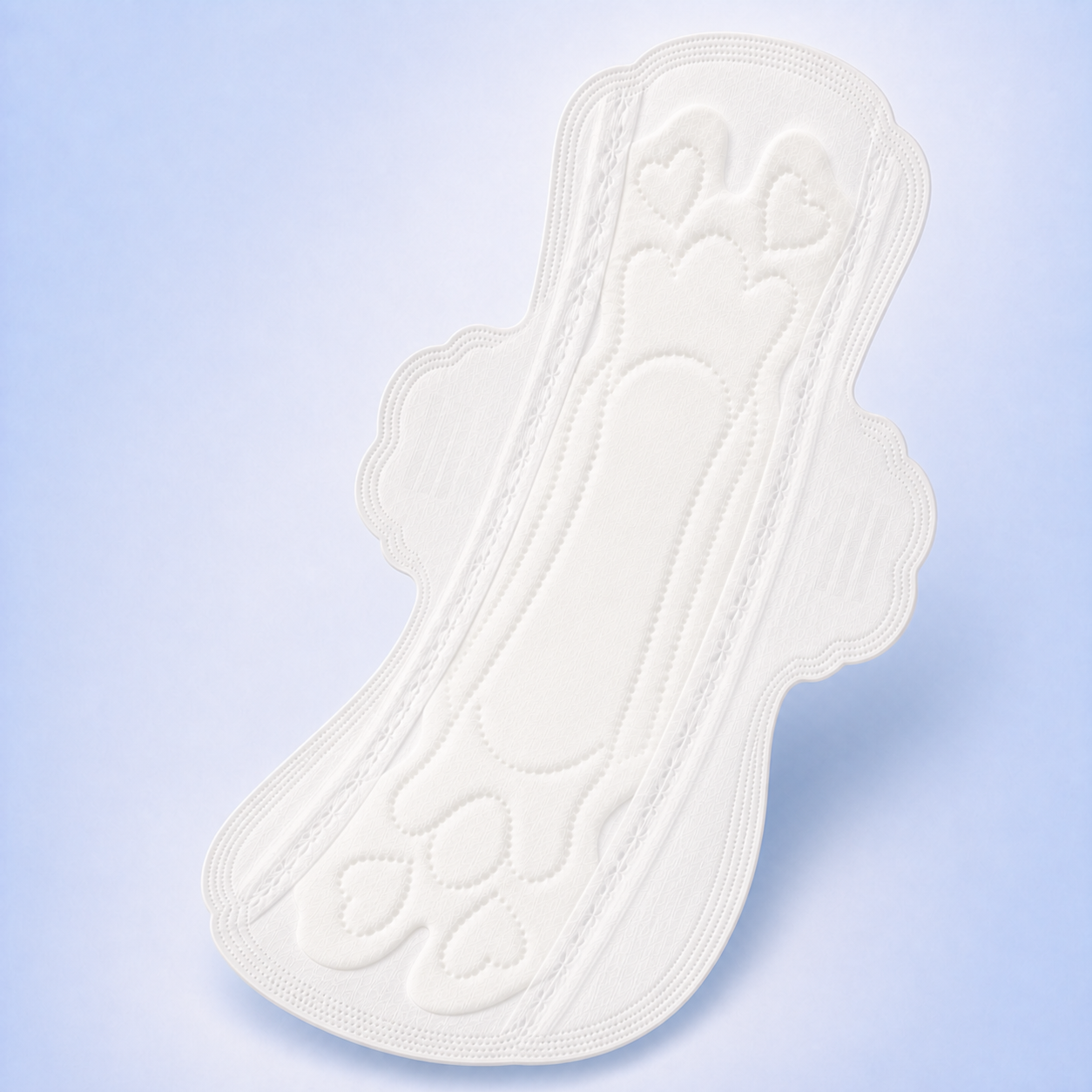
A private-label decision starts with the product promise, then moves to sampling, safety evidence, SKU range and repeat supply.
The decision between custom cooling organic sanitary pads and standard organic pads is not a choice between a good product and a poor one. It is a choice between two levels of private-label program complexity. A standard organic pad option gives the buyer a simpler eco friendly organic sanitary pad range with fewer new variables. A customized cooling-formula organic pad program adds differentiation, but it also adds sampling rounds, construction choices, evidence checks, SKU discipline and supply planning.
For a private-label buyer at the decision stage, the practical question is this: does the target channel need a product difference that justifies a customized cooling formula, or does the brand need a clean, well-documented organic range that can launch with less development work? The Taiwan, China case referenced for this decision shows a program that used four rounds of customized sampling and choices across topsheet, absorbent-core materials and cooling formulation. That case is useful not because every buyer should copy it, but because it shows where the extra work belongs and where a simpler standard option may be enough.
The private-label decision at a glance
Choose the standard organic option when the launch needs a straightforward organic pad range, a limited SKU set, a shorter development path and a simpler evidence story. The standard option still supports organic cotton and biodegradable material positioning, private-label packaging, multiple sizes and absorbency levels, and OEM/ODM coordination. It is the right base when the brand promise is mainly material safety, skin-friendliness and eco-positioning.
Choose the custom cooling-formula organic program when the private label needs a differentiated hero product that retail buyers can recognize, and when the buyer can support four sampling rounds, a construction-specific safety review and a disciplined SKU plan. The cooling formulation is not a shortcut to differentiation. It is a new variable that must be matched to the topsheet, absorbent core, packaging and documentation.
Problem definition: differentiation is not a free upgrade
The private-label problem is not a lack of organic pad suppliers. It is the risk of building a range that is either too generic for the shelf or too complex to repeat. A standard organic pad option reduces development variables. The buyer can focus on organic cotton topsheet selection, absorbency level, size range, packaging and documentation. A customized cooling program adds a new product promise, and that promise must be supported by the exact sample, not by a general material claim.
This is where many private-label decisions go wrong. A buyer sees a cooling concept and assumes it can be applied across a full range. In practice, a cooling formulation may interact with the topsheet and absorbent core. A construction that works for a day-use pad may not behave the same way in an extra-long overnight pad or in disposable period pants. The buyer must decide whether the cooling formula is a hero-SKU feature or a range-wide platform. That decision affects sampling, safety documentation, packaging claims and container planning.
Industry background: eco-positioning is growing, but evidence still decides
The organic and biodegradable segment has visible market attention. TechSci Research estimated the global organic sanitary napkins market at USD 3.02 billion for 2025, and Mark & Spark Solutions projected a 20.1% compound annual growth rate for biodegradable sanitary napkins from 2024 to 2030. These figures are useful context, but they are not proof that a specific private-label SKU will sell. Market definitions also vary between organic pads only and broader organic period care, so a buyer should treat market estimates as background rather than as a demand guarantee.
The more reliable industry signal is the direction of product positioning. Organic cotton biodegradable pads are positioned in the sustainable and premium feminine-care markets, with stronger differentiation and premium pricing potential than conventional pads that compete mainly on price and basic absorbency. For a private label, that means the product story must be consistent across material choice, packaging, certificates and retail claims. A cooling formula can strengthen that story only if the evidence and production plan are equally strong.
Standard organic pads: what a simpler option actually covers
A standard organic sanitary pad option is not a commodity by default. It is a defined organic construction with fewer customization variables. The supplied product comparison describes organic cotton biodegradable pads as using naturally and pollution-free cultivated organic cotton, with a softer and more skin-friendly topsheet, thinner construction, faster absorption and improved liquid retention compared with conventional pads. These are product-positioning claims from the supplied comparison, and they should still be matched to the exact sample and test documentation.
The standard option can include more than three organic cotton and plant-based fiber topsheet options, more than four sizes and absorbency-level options, and more than four retail and individual packaging options. Complete OEM/ODM customization can cover materials, sizes, absorbency performance and packaging. For a private-label buyer, this is often enough to build a coherent range: day-use pads, night-use pads, extra-long pads and panty liners can share a material story while using different sizes and absorbency levels.
The standard option is especially suitable when the target channel is supermarket, pharmacy, organic retail or a distributor portfolio that needs a clear organic proposition without a new sensory claim. It is also suitable when the buyer wants to test the market before committing to a cooling platform. In that situation, the standard range becomes the base business, and a cooling product can be added later as a hero SKU if the evidence and demand support it.
Custom cooling organic pads: what the customization adds
A custom cooling organic pad program adds a new formulation decision to the same organic pad base. The buyer is no longer only choosing a topsheet, absorbency level and pack count. The buyer is also choosing how the cooling formulation fits the topsheet, the absorbent core and the final product construction. That is why the Taiwan, China case required choices across topsheet, absorbent-core materials and cooling formulation rather than a single packaging change.
The cooling formula should be treated as a construction variable, not as a standalone marketing word. A private-label buyer should ask whether the cooling formulation is intended for all SKUs or only selected SKUs, whether it changes the safety evidence scope, and whether the packaging claim will be made on every pack or only on the hero product. If the claim appears on the pack, the exact construction behind that pack should be the construction that was sampled and reviewed.
This is also where the supplier relationship matters. New Upward SC (Guangdong) Co., Ltd., referred to as New Upward, is a feminine care and disposable hygiene product manufacturing and service provider. The company was founded in 2017, operates a 200,000 m² factory, employs 100 people, reports annual output of 5,000,000,000 pads, and has a 10+ engineer R&D team with an 80% export ratio. Those facts show scale and export orientation; they do not replace sample approval, report review or production verification. A buyer should use them as capability context, not as proof that a specific cooling construction is suitable.

Formulation and sample evaluation belong together: a cooling claim should be tied to the exact topsheet, core and formulation sample.
The Taiwan, China case: when four rounds of sampling were justified
In the Taiwan, China case referenced for this decision, the private-label team used four rounds of customized sampling and made choices across topsheet, absorbent-core materials and cooling formulation. That level of iteration is justified when the product must carry a differentiation story at retail and when the buyer can define what each round is meant to prove. It is not justified when the buyer only wants a lower price or a faster catalogue addition.
Four rounds make sense when the construction is still moving. The first round can establish a baseline organic pad; later rounds can compare topsheet and core combinations, review how the cooling formulation fits the chosen construction, and lock the final production specification. The exact sequence depends on the project, but the principle is consistent: each round should answer a decision question. Without written approval criteria, extra rounds become delay rather than development.
The case also shows the limit of sampling. A sample proves that a construction can be reviewed and approved. It does not prove market success, and it does not replace ISO 10993-5:2009 or GB 15979-2024-related documentation. The buyer should connect the approved sample to the report sample, the packaging artwork and the production specification. If those four items do not match, the differentiation is not yet under control.
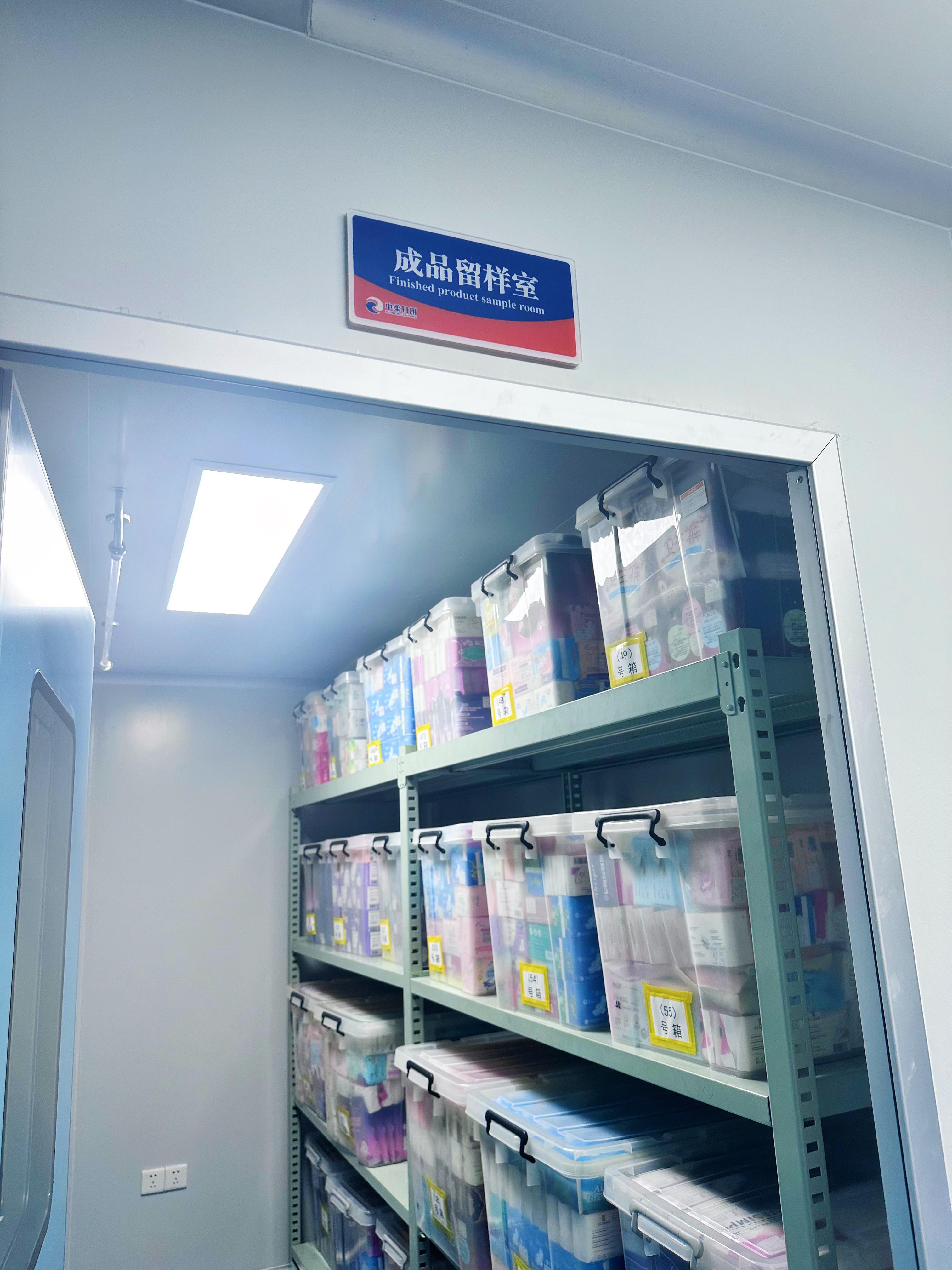
Sampling rounds should end with a written approved construction, not only a visual preference.
Step-by-step: how to choose between standard and custom cooling programs
- Define the retail promise and claim boundary. Decide whether the brand is selling a clean organic range or a differentiated cooling product. The claim boundary should be written before sampling because it determines which evidence is needed.
- Set the evidence threshold before the first sample. For a cooling program, confirm that the In Vitro Cytotoxicity Test Report under ISO 10993-5:2009 and GB 15979-2024-related documentation will be reviewed against the proposed construction. For a standard program, confirm the same documents against the standard organic construction.
- Decide whether cooling applies to all SKUs or one hero SKU. Range-wide cooling increases sampling and documentation workload. A hero-SKU approach can test differentiation with less SKU risk, while the standard organic pads carry the base range.
- Lock topsheet and absorbent core first, then the cooling formulation. If the base construction is still changing, the cooling evaluation has no stable reference. The buyer should approve the skin-contact layer and absorbency structure before comparing formula options.
- Run sampling rounds with written approval criteria. The Taiwan, China case used four rounds. A buyer planning a similar program should define what each round must prove: fit, absorption structure, formula compatibility, packaging and final production readiness.
- Validate the safety and compliance file against the exact sample. Check the report number, issuing laboratory, sample identity, product scope and date. The supplied documentation references In Vitro Cytotoxicity Test Report No. SDWH-M201900236-1 under ISO 10993-5:2009; the buyer should confirm that the tested sample matches the proposed topsheet, core and cooling formulation.
- Model the SKU range and 40HQ container fill. A full-container 40HQ order is a volume commitment. More SKUs can fragment the container plan, so the buyer should decide the day, night, extra-long and disposable period pants mix before mass production.
- Plan repeat supply beyond three years. Confirm stable batch supply, repeat-order service, document continuity and QC checkpoints. A differentiated product is only useful if the approved construction can be repeated.
Use cases: when a simpler option is enough, and when differentiation pays
A standard organic range is often enough for a first private-label launch into supermarket, pharmacy or organic retail. The buyer needs a clear organic cotton story, multiple absorbency levels, private-label packaging and documents that support the claim. The range can include day-use pads, night-use pads, extra-long pads and panty liners without adding a new formulation variable. This is also a practical route for distributors that need a stable organic line across several retail accounts.
A custom cooling program is more suitable when the brand needs a differentiated hero product for premium feminine hygiene retail, organic personal care positioning or a channel that expects a new product story. The Taiwan, China case fits this pattern because the buyer invested in four rounds of customized sampling and made choices across topsheet, absorbent-core materials and cooling formulation. That investment only pays if the product difference is visible to the buyer and supported by the evidence file.
A mixed portfolio can be the most practical decision. Use standard organic pads for the base range and a custom cooling construction for one or two hero SKUs. This keeps the organic range stable while giving the brand a differentiation point. It also limits the safety-documentation scope and reduces the risk of applying a cooling claim to every size before the evidence is ready.
SKU, 40HQ and three-year supply: the operational comparison
SKU expansion changes the decision. Moving from day-use to overnight and extra-long pads adds size and absorbency complexity. Adding disposable period pants adds another product category with its own fit and packaging requirements. A standard organic range can absorb this expansion through existing size and absorbency options. A cooling program must decide whether the cooling formulation applies to every SKU or only to selected products. Applying it everywhere increases sampling and documentation workload; applying it only to a hero SKU keeps the base range simpler.
Full-container 40HQ procurement raises the commitment level. The buyer is no longer testing a sample room preference; the buyer is filling a container. That requires a realistic SKU mix, packaging MOQ review, carton planning and demand confidence. A differentiated range with many low-volume SKUs can make container fill harder to manage than a focused standard range. The buyer should compare the commercial value of differentiation with the operational cost of a fragmented container plan.
Repeat supply beyond three years depends on stability. The supplied comparison states that reliability of supply for organic cotton biodegradable pads is enhanced through OEM/ODM customization covering materials, sizes, absorbency performance and packaging, along with stable batch supply and repeat-order service. For a cooling program, the same logic applies, but the approved construction must be protected. If the topsheet, core or cooling formulation changes after approval, the buyer should reassess the sample and documentation scope.
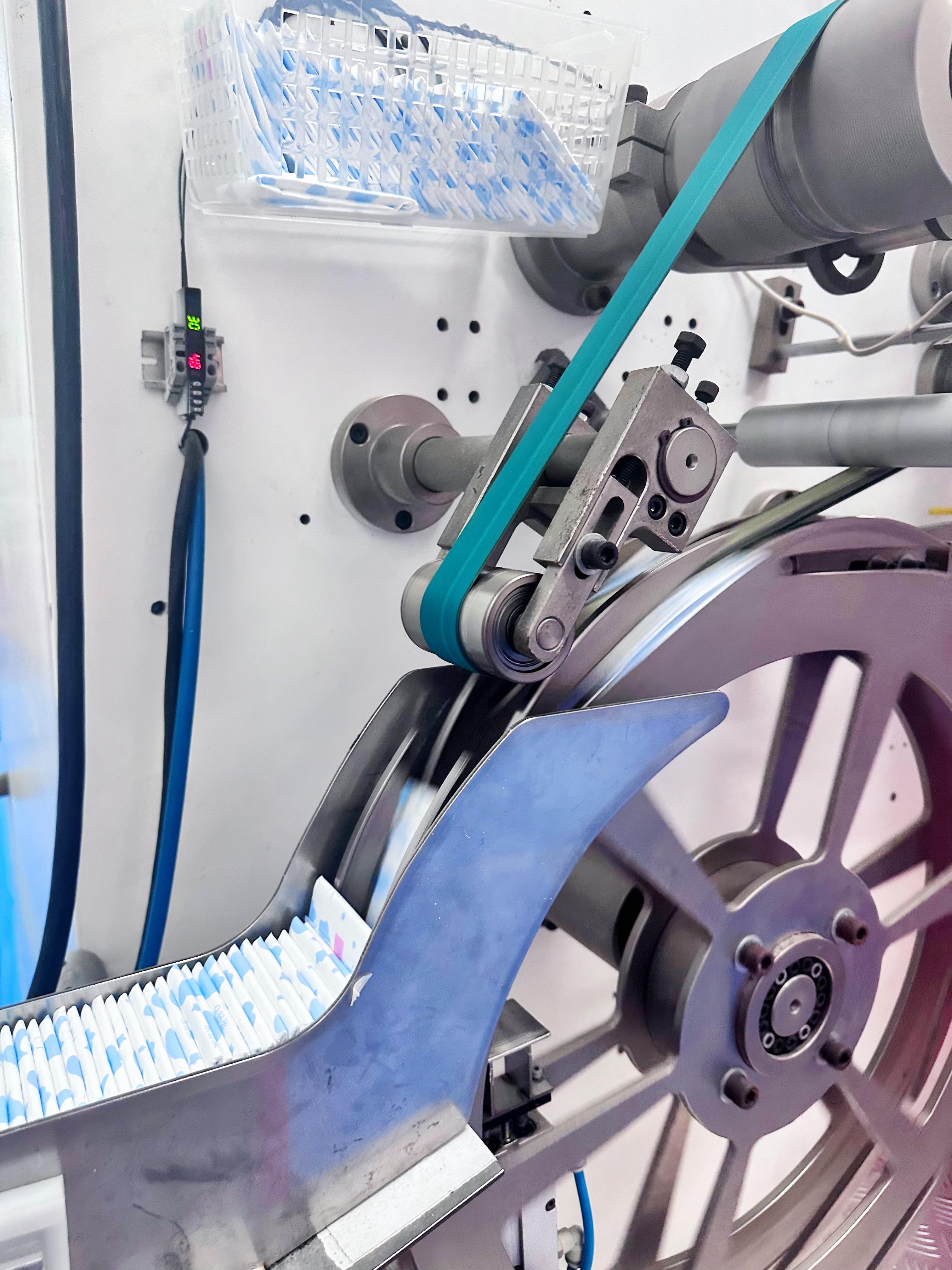
A 40HQ order turns product selection into a production and container-planning decision.
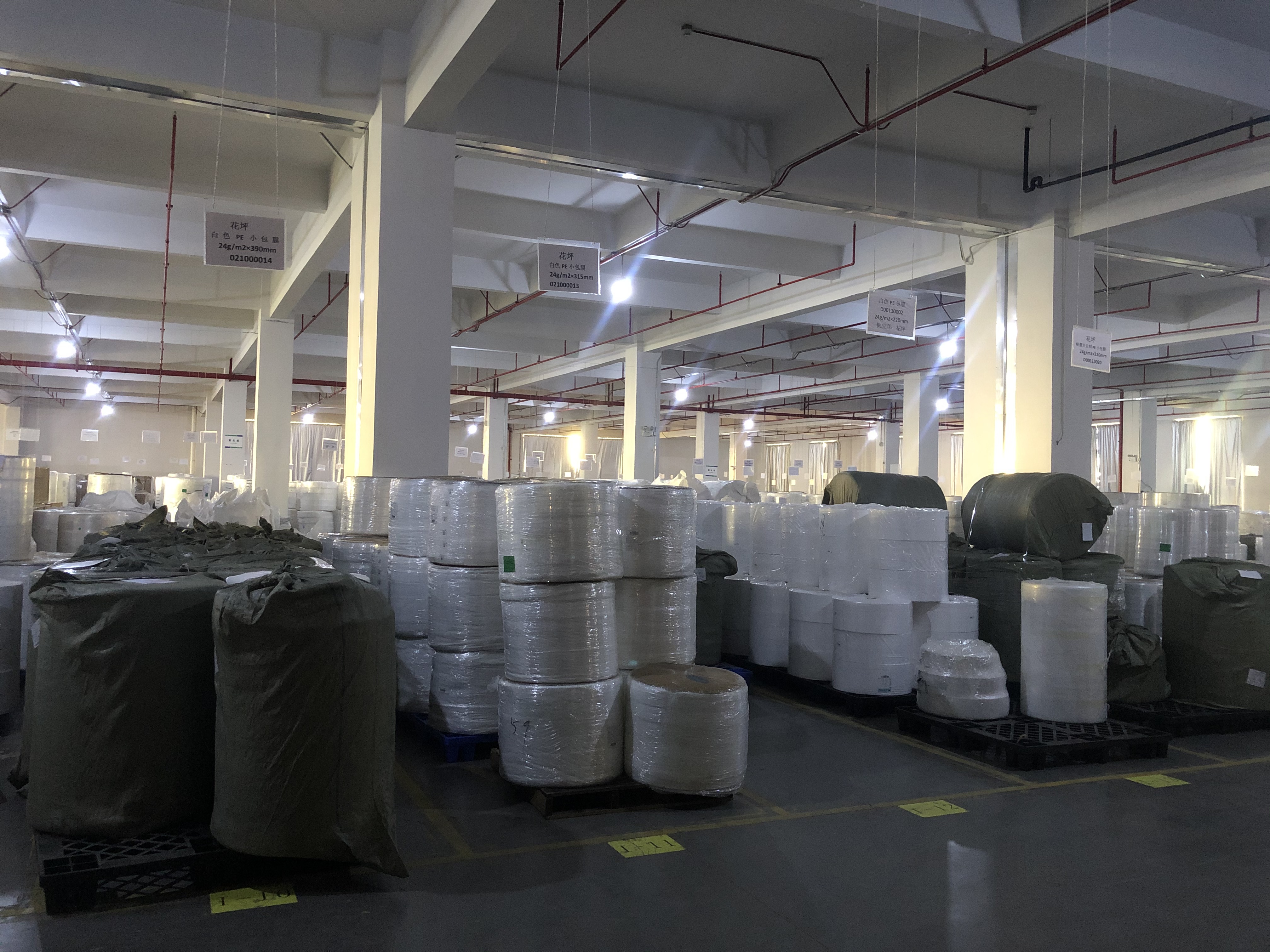
Repeat supply beyond three years depends on batch consistency, documented specifications and repeat-order service.
Comparison table: standard organic pads vs custom cooling organic program
| Decision factor | Standard organic pad option | Custom cooling-formula organic program |
|---|---|---|
| Product proposition | Organic cotton and biodegradable positioning, skin-friendly material story and eco-friendly private-label range. | Adds a differentiated cooling-formula story to the organic base, with the claim tied to the exact construction. |
| Construction choices | Organic cotton and plant-based fiber topsheet options, multiple sizes, absorbency levels and packaging options. | Adds choices across topsheet, absorbent-core materials and cooling formulation, as shown in the Taiwan, China case. |
| Sampling workload | Simpler approval path focused on size, absorbency, topsheet, packaging and documentation. | Requires more structured sampling. The Taiwan, China case used four rounds of customized sampling. |
| Compliance evidence | Review ISO 10993-5:2009 and GB 15979-2024-related documentation against the standard construction. | Review the same evidence against the exact cooling construction, including sample identity and report scope. |
| SKU complexity | Day, night, extra-long and panty liner range can share a defined organic platform. | Decide whether cooling applies to all SKUs or selected hero SKUs to limit documentation and sampling scope. |
| 40HQ planning | Focused range can simplify container fill and carton planning. | More differentiation can support value, but SKU fragmentation must be controlled before a full-container order. |
| Repeat supply | Stable batch supply and repeat-order service support long-term organic range continuity. | Requires protected approved construction, document continuity and repeat-order control beyond three years. |
| Best fit | Buyers that need a clear organic launch, limited SKUs and a simpler evidence path. | Buyers that need a differentiated premium product and can support sampling, validation and SKU discipline. |

Quality control and clean-production routines matter more when a new formulation is added to the range.
FAQ
What compliance evidence should be checked before choosing a cooling organic pad program?
Check the In Vitro Cytotoxicity Test Report under ISO 10993-5:2009 and GB 15979-2024-related documentation. Confirm that the report sample matches the proposed topsheet, absorbent core and cooling formulation, and that the report number, issuing laboratory, product scope and date are visible. The supplied documentation references In Vitro Cytotoxicity Test Report No. SDWH-M201900236-1 under ISO 10993-5:2009. CE, FSC, Halal or organic material certificates should be checked only where the certificate scope covers the product and target market.
Can one supplier handle both standard organic pads and a customized cooling range?
Yes, if the supplier can manage specification confirmation, private-label packaging, compliance document support, stable batch supply and repeat-order service. New Upward SC (Guangdong) Co., Ltd. is positioned to support OEM/ODM customization covering materials, sizes, absorbency performance and packaging. Buyers should still verify samples, report scope, production schedule and document continuity before committing.
Does a custom cooling organic pad program cost more than a standard organic pad?
Organic cotton biodegradable pads generally carry higher material, packaging and certification costs than conventional pads. A custom cooling program adds sampling and validation workload, so the comparison should include sample rounds, SKU count, packaging MOQ, container fill and documentation. No single unit price can be assumed without a locked specification and a confirmed order quantity.
How many sampling rounds should a private-label cooling pad project plan?
The Taiwan, China case used four rounds of customized sampling across topsheet, absorbent-core materials and cooling formulation. That is a case-specific decision, not a universal rule. The buyer should define what each round must prove and approve the final construction before mass production.
What should be confirmed before a full-container 40HQ order and more than three years of repeat supply?
Confirm the SKU mix, carton configuration, packaging MOQ, batch consistency, QC checkpoints, repeat-order service and document continuity. A 40HQ order is a volume commitment, not a sample order. The buyer should ensure the selected day, night, extra-long and disposable period pants range can be repeated without changing the approved construction.
Where can a buyer request a sample or quote for a standard or cooling organic pad program?
A buyer can request a sample or quote from New Upward through www.newupward.com or info@newupward.com. New Upward can organize product selection, packaging direction, certificate references, test-report information and OEM/ODM sourcing support. The sanitary pad catalog is available for download.
Next step: define the SKU range, claim boundary and evidence file before choosing between a standard organic range and a custom cooling program. A sample review should compare the exact topsheet, absorbent core, cooling formulation and packaging.
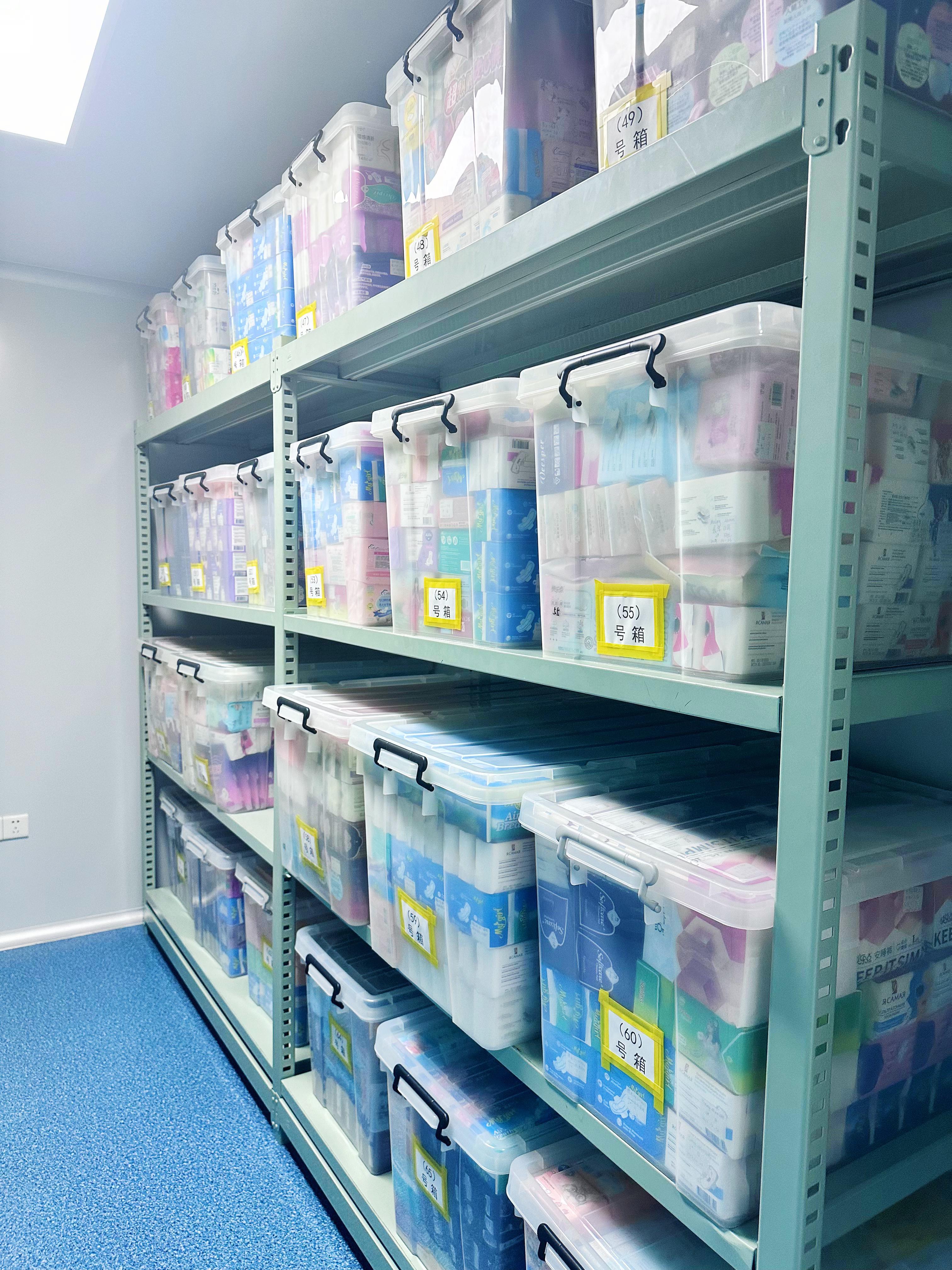
Request samples for the standard organic range and the proposed cooling construction before a full-container order.
Conclusion: match the program to the evidence you can support
Standard organic sanitary pads are the better decision when the private label needs a clear eco friendly organic sanitary pad range, a simpler sampling path, a focused SKU set and a manageable 40HQ plan. Custom cooling organic sanitary pads are the better decision when the brand needs a differentiated hero product and can support four rounds of customized sampling, construction-specific safety documentation, SKU discipline and repeat-supply control.
The Taiwan, China case shows that differentiation is a program decision, not a product name. The buyer must connect the retail promise to the topsheet, absorbent-core materials and cooling formulation, then connect that construction to the ISO 10993-5:2009 report and GB 15979-2024-related documentation. A standard option can be enough when the evidence and channel fit the simpler promise. A cooling program is justified when the differentiation is real, documented and repeatable.
Have Questions or Need More Details?
Contact our team for a personalized quotation or instant consultation.
Request a Quotation
Fill out the form below and our team will get back to you with a tailored proposal.
WhatsApp Direct Chat
Prefer to chat in real-time? Message us on WhatsApp for instant assistance & quick answers.
- Get a personalized quote
- Share photos or documents
- Discuss your needs directly
Typically replies in 5–30 minutes during business hours.