
Cooling Organic Sanitary Pads: Solving Private-Label Differentiation
Cooling Organic Sanitary Pads: Solving Taiwan's Private-Label Differentiation Problem
Short answer: a private-label brand that buys a catalogue pad has only price left to argue with. The Taiwan, China project described here took the other route. The brand defined a cooling experience first, then fixed the topsheet, absorbent core and cooling formulation that could actually deliver it, refined the product through four rounds of customized sampling before the first order, and scaled from a single size to daytime, overnight and extra-long overnight pads plus disposable period pants. Supply ran on 40HQ full containers and repeated for more than three years, with cooperation that was built without an in-person meeting.
New Upward SC (Guangdong) Co., Ltd., referred to as Newupward, is a China-based disposable hygiene manufacturing and service provider founded in 2017. It operates a 200,000 m² factory with 100 employees, 10+ R&D engineers and a stated annual output of 5,000,000,000 pads, exporting about 80% of its output to Europe, North America, the Middle East, Africa, Southeast Asia, Central Asia and South America. Lilimolone is the product line name used for its ultra-thin bamboo sanitary pads, including Lilimolone Ultra-Thin Bamboo Sanitary Pads in 155 mm, 245 mm and 290 mm.
This article is written for buyers in the research-to-evaluation stage who need to decide whether a differentiated eco friendly organic sanitary pad range is feasible, what it constrains, and which evidence to demand before committing to a first container.
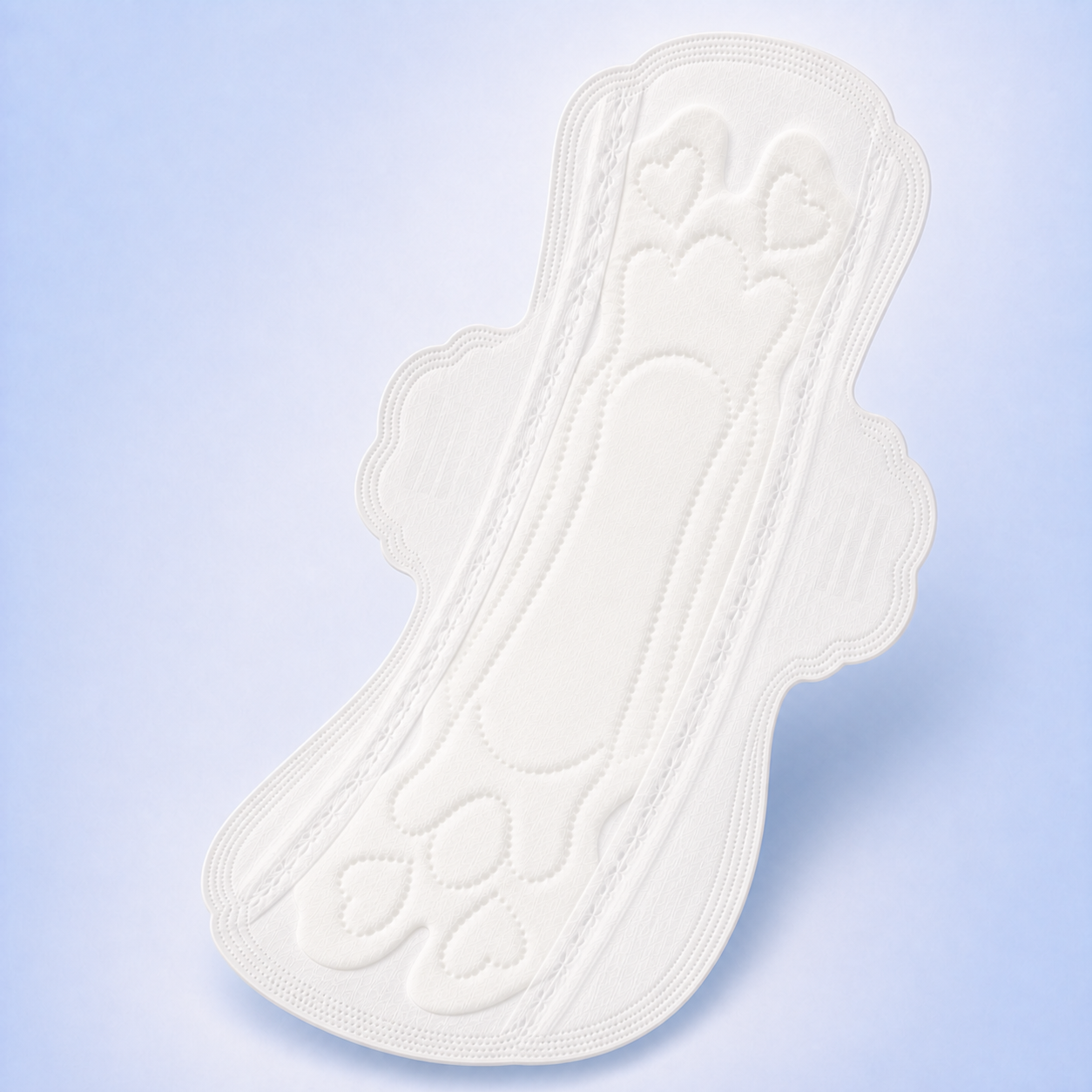
Private-label organic sanitary pad formats: the differentiation decision is made at specification stage, not at packaging stage.
Problem Definition: Differentiation That Survives a Purchase Order
A private-label feminine care brand has three levers on shelf: price, distribution and product experience. Price is the only lever a competitor can copy in one season. Distribution is rented from the retailer. Product experience is the only asset the brand owns, and it disappears the moment the specification reverts to a catalogue item.
The buyer in this case was an emerging feminine care brand in Taiwan, China, specialising in private-label sanitary pads and disposable period pants, looking for differentiated products, a comfortable user experience and reliable supply to support range expansion. That is a common brief. What turned it into a development project rather than a quotation request is the third requirement: reliable supply. A differentiated sample that cannot be repeated at container scale is not a product, it is a lab result.
Where differentiation usually fails
- Formulation drift. A cooling effect agreed on a hand sample is not automatically the effect delivered in mass production if the formulation or the material supplier changes between approval and reorder.
- Material substitution. Topsheet and core choices drive skin feel, thickness and rewet behaviour. Swapping them to protect a price target erases exactly what the brand paid for.
- Range gaps. A single size cannot carry a private-label identity through a purchase cycle. Retail buyers assess whether the range covers day, night and heavier-flow use.
- Claim exposure. Sensory language is comparatively safe. Medical or antibacterial language is not, unless the target market rules and the material evidence both support the wording.
Those four failure points are the constraints this article deals with, in the order the Taiwan, China project locked them.
Industry Background: Why Private Label Moved From Price to Experience
Sanitary pads are a mature category. Absorbency, leakage protection and skin contact are already expected, so a new private-label line rarely wins because it absorbs more than the shelf average. Retail chains, pharmacy channels and e-commerce brands increasingly look for a sensory or material story they can own: a surface feel, a thickness, a format coverage, or an environmental position the brand can explain in one line on pack.
Two structural facts shape that search. First, the manufacturing base serving private label is concentrated. A partner such as Newupward combines OEM, ODM and private-label development with monthly capacity of roughly 450 million sanitary pads under full-line operation, and treats size, absorbency, surface material, packaging, logo and private-label design as customizable variables rather than fixed catalogue items. Second, the same supplier must serve markets with different documentation expectations, which is why certificate scope and report numbers matter as much as the product itself.
Cooling is a useful illustration of the first trend. It is a sensory positioning, not a therapeutic one: the claim rests on a formulation decision taken at development stage, which is why it cannot be added later as a packaging line.
The Solution: How the Taiwan, China Cooling Range Was Built
1. Define the experience before the specification
The brief was not a cheaper pad. It was a differentiated product with a distinctive cooling experience, for a market where the brand could not win a price argument against established labels. Translating that into a specification meant deciding, in order: the sensory target, the skin-contact material, the absorbent structure, the format range, and only then the commercial envelope.
2. Customise the cooling formulation
The differentiating element was a customized cooling formulation. The important detail for other buyers is where it sits in the development order: the formulation was treated as part of the product specification, alongside materials, so that samples and mass production could be compared against the same reference. Newupward's customization scope covers pad length, shape, thickness, absorbency, wings, organic cotton topsheet, fluff-pulp absorbent core, SAP dosage, plant-based backsheet, individual wrapper, pack count, packaging artwork, logo, language version and master carton. A formulation decision belongs inside that same document, not outside it.
3. Select the topsheet and absorbent core
Two skin-contact routes were available for the range, and they lead to different product stories:
- Organic cotton platform (NU07). A 100% organic cotton topsheet, a fluff pulp and SAP absorbent core, and a breathable PE film backsheet with a biodegradable film option. The format set covers panty liner, day use, night use and extra-long night, with size customizable by project. Surface features include high absorbency, breathability, skin-friendly contact and anti-leakage design, plus a winged disposable construction.
- Bamboo fibre platform (Lilimolone Ultra-Thin). A bamboo fibre nonwoven topsheet, a high-absorbency pulp/SAP core and a breathable leak-proof PE film backsheet, offered in 155 mm, 245 mm and 290 mm.
In the Taiwan, China project the work centred on selecting the topsheet and absorbent-core materials that matched the intended cooling and comfort experience, rather than accepting a default combination. The sequencing matters. The topsheet controls the surface the consumer feels, the core controls thickness and rewet behaviour, the backsheet controls breathability and leakage security. Changing any one of them after sampling invalidates the sample.
4. Refine through four rounds of sampling
Newupward completed four rounds of customized sampling and refinement before the initial order, addressing the client's requirements for cooling sensation, comfort and consistent product quality. Four rounds is a project outcome, not a standard: it reflects how far the first sample sat from the brand's sensory target. For planning, sample development typically runs 5 to 15 working days per cycle, so a multi-round programme should be scheduled as a development phase rather than treated as a formality before the purchase order.
5. Expand from one size to a full range
The collaboration moved from a single product size to daytime, overnight and extra-long overnight sanitary pads, plus disposable period pants in different sizes. Each addition carries its own constraint. Daytime pads carry the volume. Overnight and extra-long formats carry absorbency and length. Period pants carry a different construction and a different test basis: the antibacterial menstrual pants test report No. 250059629MT covers menstrual pant gusset fabric and references GB 18401-2010, GB 31701-2015 and T/GDBX 056-2022.
6. Scale with full-container procurement
The commercial structure that followed was full-container procurement using 40HQ containers, covering the multi-SKU range rather than a single item. Container-level ordering is what converts a differentiated sample into a shelf programme, because it forces packaging artwork, pack counts, carton specification and batch traceability to be fixed together. Quality control runs from incoming material inspection and approved sample control through in-process inspection, absorption, rewet and leakage testing, finished-goods sampling, packaging checks, retained samples and batch traceability.
7. Sustain the relationship
As documented in August 2026, the cooperation had lasted more than three years, with repeat orders and continued product development support. It was built through professional communication, ongoing supply and repeat cooperation, without an in-person meeting. For buyers evaluating a China-based partner at distance, that is the operational proof point: the process carried the relationship, not the handshake.
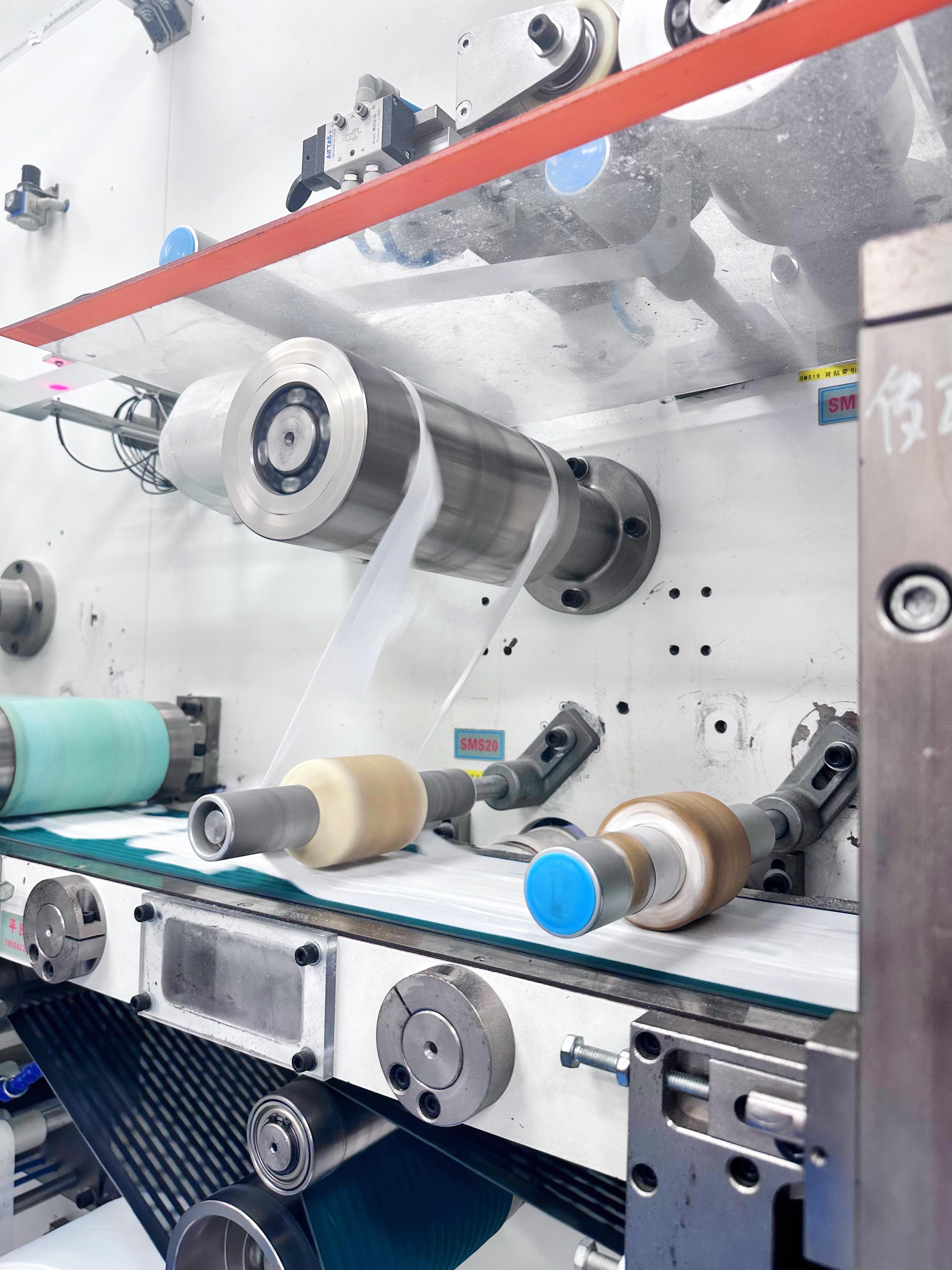
Production line: a differentiated sample only becomes a product when the same specification can be repeated at container volume.
Documentation Constraints That Shape the Material Choice
For a range positioned as organic and eco friendly, the document set is not paperwork that follows the product. It constrains which materials and formats can be offered at all. Newupward's available references include the following, and buyers should check scope and validity rather than accept a logo.
- CE Declaration of Conformity DOC No. H-YG-MD-240414161/01, a manufacturer's self-declaration covering feminine hygiene pads from 180 mm to 420 mm, sanitary liners from 150 mm to 190 mm, incontinence pads, under pads and nursing pads. It references Medical Device Regulation (EU) 2017/745 and ISO 10993-1, ISO 10993-5, ISO 10993-10 and ISO 10993-23, and names Humiss International B.V. as European Authorized Representative.
- EU Representative Agreement 2026 with WeTapeV Euro s.r.o., valid from 2026-04-16 to 2027-04-16.
- GOTS scope certificate EGL/236426/GOTS/236426260101190405 and OCS scope certificate EGL/236426/OCS/236426260101190029, both issued by ECOCERT Greenlife S.A.S. and valid from 2026-01-01 to 2026-12-31, covering organic textile material categories used as organic cotton evidence for hygiene projects.
- FSC Chain of Custody RINA-COC-001701 / DCI-COC-000148, valid from 2022-05-12 to 2027-05-11, covering purchase of FSC Mix pulp and manufacture and sale of FSC Mix sanitary towels and similar products.
- Halal Certificate No. 44521209189851, valid from 2025-02-01 to 2028-01-31, for products listed in the certificate attachment.
- Level 1 service qualification certificate No. SSDY20260609102 for sanitary products production and sales services, issued 2026-06-09 and valid to 2029-06-08.
- Product and material test reports: Lilimolone Ultra-Thin Bamboo Sanitary Pads 245 mm report No. 260059776 against GB/T 8939-2018 and GB 15979-2024; bamboo fibre antimicrobial activity reports No. 2025FM19954R01E and No. 210285558.
Two practical notes for buyers. First, the GOTS and OCS scope certificates shown run to 2026-12-31, so any organic cotton claim printed for 2027 should be confirmed against renewed documentation before artwork is approved. Second, antimicrobial activity testing on bamboo fibre is a material test. It does not automatically support a medical or disease-prevention claim, and packaging wording should be checked against the target market's rules.
Step-by-Step Breakdown: Running a Comparable Project
- Write the sensory and functional target. One page covering what the consumer should feel, which formats are required and which claims the brand intends to print. Constraint locked: the claim list.
- Choose the skin-contact material. Organic cotton or bamboo fibre nonwoven, decided against brand position and available evidence. Constraint locked: the topsheet.
- Fix core and backsheet. Pulp/SAP core with SAP dosage, plus breathable PE film or a biodegradable film option. Constraint locked: absorbency and thickness envelope.
- Define the documentation set per market. Confirm which certificates and reports the importer needs before sampling starts, so product and paperwork develop together.
- Run sample rounds one variable at a time. Typically 5 to 15 working days per cycle. Approve a physical reference sample and retain it.
- Lock specification and artwork. Size, absorbency, wrapper, pack count, barcode, language, logo and carton marks are frozen at this point.
- Place the first production order. A new OEM/ODM order runs about 25 to 30 days after specification and artwork confirmation.
- Plan repeat supply. Repeat orders run about 15 to 20 days, which is why the first order should be specified around the range that will actually be reordered, not a single test SKU.
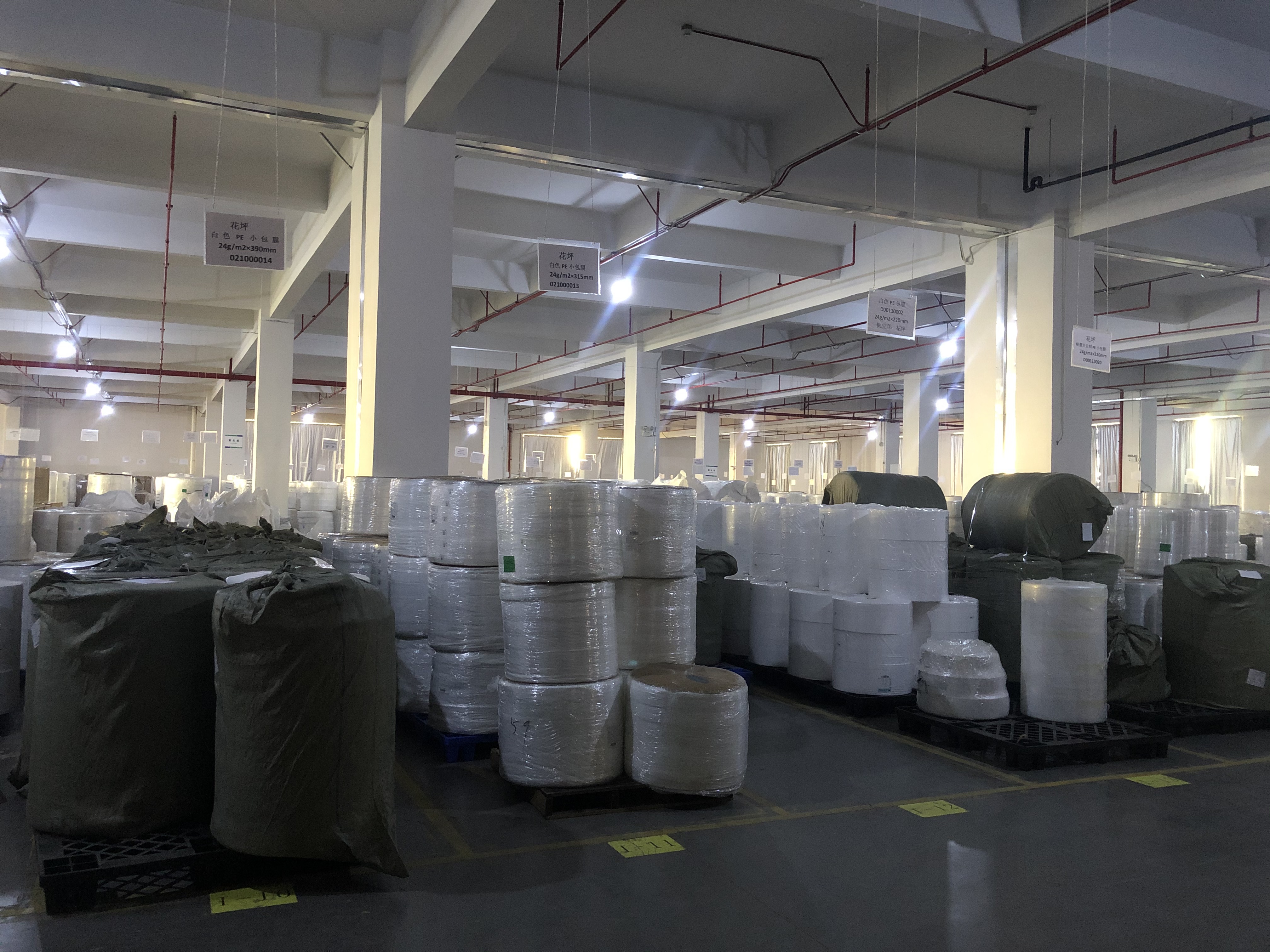
Warehouse staging: 40HQ full-container programmes fix pack counts, carton marks and batch traceability before the first run.
Use Cases: What Each Format Does in a Private-Label Range
Daytime pads
The volume format and the primary repeat purchase. Customization covers length, shape, thickness, absorbency, wings, wrapper and pack count. In the bamboo range this role is served by the 155 mm and 245 mm formats, and in the organic cotton platform by the day use format.
Overnight pads
Longer pads with a heavier absorbency requirement, typically the format where consumers judge leakage protection. The 290 mm option sits in the bamboo range, and night use is a listed format in the organic cotton platform.
Extra-long overnight pads
Added for heavy-flow days and sleep use, where the constraint is length plus absorbency plus a secure backsheet. It was one of the formats the Taiwan, China client added after the initial single-size launch.
Disposable period pants
A different construction rather than a longer pad: full-coverage protection for overnight use, heavy-flow days, frequent movement during sleep, or situations where changing is inconvenient. Because the construction differs, the test basis differs too, which is why the menstrual pants test report No. 250059629MT references gusset fabric and separate GB and T/GDBX standards.
Channel fit shapes the same range differently. Supermarket listings need clear retail packaging and a shelf-ready size ladder; pharmacy channels place weight on documentation and label clarity; e-commerce needs product images, accurate claims and packaging that photographs well. All three were served from the same specification in this project.
Side-by-Side: Skin-Contact Platforms and Format Expansion
The table below compares the two material routes using documented specification only. It is a decision aid, not a ranking: the correct choice depends on the brand position and the evidence the importer requires.
| Decision area | Organic cotton platform (NU07) | Bamboo fibre platform (Lilimolone Ultra-Thin) |
|---|---|---|
| Topsheet | 100% organic cotton | Bamboo fibre nonwoven |
| Absorbent core | Fluff pulp and SAP | High-absorbency pulp/SAP core |
| Backsheet | Breathable PE film, biodegradable film option | Breathable leak-proof PE film |
| Formats and sizes | Panty liner, day use, night use, extra-long night; size customizable by project | 155 mm, 245 mm, 290 mm |
| Customization scope | Size, absorbency, embossing, wrapper, packaging for private label | Size, absorbency, surface material, packaging design, logo, private label |
| Documentation available | GOTS and OCS organic cotton scope certificates; product-level testing arranged per project | Product test report No. 260059776 (245 mm); antimicrobial activity reports No. 2025FM19954R01E and No. 210285558 |
Table 1. Material route comparison based on documented specification. Claim suitability depends on the target market.
| Format | Role in the range | What must be locked | Reference point |
|---|---|---|---|
| Daytime pad | Primary repeat purchase and volume SKU | Length, absorbency level, wrapper, pack count | 155 mm and 245 mm in the bamboo range; day use in the organic cotton platform |
| Overnight pad | Sleep-use coverage | Length, SAP dosage, backsheet, wing design | 290 mm in the bamboo range; night use in the organic cotton platform |
| Extra-long overnight pad | Heavy-flow and full-night coverage | Length, absorbency, leakage barrier | Extra-long night format listed for the organic cotton platform |
| Disposable period pants | Full-coverage alternative to pads | Construction, gusset fabric, size grading | Antibacterial menstrual pants test report No. 250059629MT |
Table 2. Format expansion and the constraint each format adds to the specification.
FAQ
Which CE documents should a buyer verify from CE certified organic sanitary pads manufacturers?
Ask for the Declaration of Conformity itself, not a logo on a catalogue page. For Newupward the CE Declaration of Conformity carries DOC No. H-YG-MD-240414161/01 and covers feminine hygiene pads from 180 mm to 420 mm, sanitary liners from 150 mm to 190 mm, incontinence pads, under pads and nursing pads. It references Medical Device Regulation (EU) 2017/745 together with ISO 10993-1, ISO 10993-5, ISO 10993-10 and ISO 10993-23, and it is a manufacturer's self-declaration naming Humiss International B.V. as European Authorized Representative. A separate EU Representative Agreement 2026 with WeTapeV Euro s.r.o. is valid from 2026-04-16 to 2027-04-16. Buyers should also match the product-level report to the exact item ordered: the Lilimolone Ultra-Thin Bamboo Sanitary Pads 245 mm report is No. 260059776 under GB/T 8939-2018 and GB 15979-2024.
Can a manufacturer customise a cooling formulation and topsheet for a private-label organic range?
Yes, where the supplier runs development rather than catalogue sales. Newupward's customization scope covers pad length, shape, thickness, absorbency, wings, organic cotton topsheet, fluff-pulp absorbent core, SAP dosage, plant-based backsheet, individual wrapper, pack count, packaging artwork, logo, language version and master carton, supported by 10+ R&D engineers. In the Taiwan, China case the customization included a cooling formulation plus selection of topsheet and absorbent-core materials. Capacity is roughly 450 million sanitary pads per month under full-line operation, with actual availability depending on specification, material readiness and production schedule.
How should quotations for customized cooling organic sanitary pads be compared?
Only after the specification is fixed. Lock size, thickness, topsheet, core structure, SAP level, packaging type, MOQ, certificate requirements, carton quantity and shipment terms first, then compare. Newupward sets MOQ per project depending on pad size, materials, packaging printing, pack count and testing requirements, and small trial orders can be evaluated where materials and mature specifications allow. A lower unit price achieved by changing topsheet, SAP dosage or pack count is a different product, not a discount.
How many sampling rounds should a private-label cooling pad project budget for?
In the Taiwan, China project, four rounds of customized sampling and refinement were completed before the initial order, addressing cooling sensation, comfort and consistent product quality. Sample development is typically quoted at 5 to 15 working days per cycle, so multiple rounds should be scheduled as a development phase rather than a formality before purchase order. The number of rounds is project-specific; what matters is that the approved sample is retained and used as the production reference.
What lead time applies after the sample is approved?
A new OEM/ODM order usually runs about 25 to 30 days after specification and artwork confirmation, and repeat orders about 15 to 20 days, with sample development at 5 to 15 working days per cycle. For a 40HQ full-container programme, add artwork and packaging proofing before the first production run, because pack count and carton specification are frozen together with the product. To start, request a sample set or a quotation with your target market, format list, topsheet preference and pack count by contacting info@newupward.com.
Conclusion: Differentiation Is a Specification Decision
The Taiwan, China cooling range did not differentiate itself on price, packaging or promotion. It differentiated on a sequence: a defined sensory target, a customized cooling formulation, a deliberate topsheet and absorbent-core choice, four rounds of sampling to close the gap between target and sample, then a format ladder from one size to daytime, overnight and extra-long overnight pads plus disposable period pants. Only after that came the 40HQ container programme and more than three years of repeat orders, built without an in-person meeting.
For a buyer evaluating the same path, four decision rules follow from the case:
- Lock the sensory target and the claim list before the first sample, not after the artwork.
- Treat topsheet, core, backsheet and formulation as one specification; changing one invalidates the sample.
- Match the documentation set to the target market and check certificate validity dates before printing any mark.
- Specify the first order around the range you intend to reorder, because repeat lead time is measured in weeks, not months.
Next Step: Sample Set, Quotation or Catalogue
Share your target market, format list, topsheet preference, pack count and certificate requirements, and Newupward will respond with product options, sample direction and a quotation built on a fixed specification. Trial orders can be evaluated against available materials and mature specifications.
Email: info@newupward.com | laura@newupward.com | nu@newupward.com
Tel / WhatsApp: +86 157-9847-3913
Website: www.newupward.com
Download the sanitary pad catalogue (PDF): E-catalog of sanitary pads - New Upward

New Upward Company Office. The Taiwan, China partnership was developed and sustained through remote communication, sampling and repeat supply.
Have Questions or Need More Details?
Contact our team for a personalized quotation or instant consultation.
Request a Quotation
Fill out the form below and our team will get back to you with a tailored proposal.
WhatsApp Direct Chat
Prefer to chat in real-time? Message us on WhatsApp for instant assistance & quick answers.
- Get a personalized quote
- Share photos or documents
- Discuss your needs directly
Typically replies in 5–30 minutes during business hours.