
Eco Friendly Organic Sanitary Pads: Long-Term Partnership and After-Sales FAQ
Written for brands, importers and distributors evaluating a multi-year organic feminine care supply relationship.
Short answer: a long-term partnership on eco friendly organic sanitary pads is decided by five verifiable points — documented skin-contact safety, a sampling process that survives more than one revision round, a product range that can expand from one pad size into a full line, order scaling that reaches full-container volume without changing the approved specification, and after-sales support that functions remotely. This article answers the questions buyers ask before committing, using a documented three-year repeat-order partnership in Taiwan, China as a reference case, and drawing on the product, factory and documentation facts of New Upward SC (Guangdong) Co., Ltd. (www.newupward.com).
Organic feminine care buyers rarely struggle to find a supplier. The harder question is which supplier still holds the same specification, the same documentation support and the same delivery rhythm after the launch order has shipped. That is why questions about sampling rounds, order scaling, quality consistency and after-sales support usually arrive late in the evaluation — often after a brand has already tested one factory.
The reference case behind this article is a three-year repeat-order partnership with an emerging feminine care brand in Taiwan, China. It was built through four rounds of customized sampling, expansion from a single pad specification to multiple pad sizes and menstrual pants, and full-container 40HQ procurement, coordinated remotely without an in-person factory visit. The pattern is more useful than the case itself: the relationship was not won by price, but by process.
Why the Second and Third Order Decide Whether a Partnership Works
The first order tests a product. The second and third orders test a process. Three failures appear most often in between.
- Specification drift. The approved sample is set aside as a reference, and the size, absorbency, topsheet material or wrapper quietly shifts to whatever is convenient for the next production run.
- Documentation gaps. A retail or pharmacy buyer asks for a skin-contact safety report or a certificate with a defined scope, number and validity period, and the supplier can only provide a screenshot without a report number or issuing laboratory.
- Range gaps. The brand adds a night-use length, a panty liner or a heavier-flow product, and the partner can only quote the original SKU.
None of these are product defects. They are process defects, and they surface exactly when the buyer has the least room to fix them — mid-launch, with packaging already printed and a retail window already agreed.
Distance makes the problem sharper. A buyer who never walks through the factory has no informal way to check what changed. Every check has to exist as an artefact: a written sample approval, a version-controlled artwork file, a QC checklist, a report number, a batch reference on the carton. Long-term supply relationships in organic feminine care are therefore documented relationships, and the supplier's ability to produce those documents remotely is a genuine capability, not an administrative detail.
What Is Changing in the Organic Sanitary Pad Market
Three market signals explain why buyers are now evaluating suppliers on repeat-supply capability rather than on a single quotation.
- TechSci Research projects the global organic sanitary pads market at USD 3.02 billion in 2025, growing to USD 4.51 billion by 2031.
- Mark & Spark Solutions places the biodegradable sanitary napkins segment on a 20.1% CAGR between 2024 and 2030.
- Dataintelo reports Asia Pacific holding a 38.6% revenue share of the biodegradable sanitary napkins market in 2025.
Regulation is moving on a comparable schedule. FDA's Quality Management System Regulation (QMSR), which incorporates ISO 13485:2016 into 21 CFR Part 820, took effect on February 2, 2026 for menstrual products — a change that moves the conversation from marketing claims towards documented quality systems for brands selling into the United States. Sanitary towels and tampons are traded under HS code 9619.00, so importers already handle the classification routinely; what has changed is the depth of evidence expected behind the product.
One performance claim circulating in trade media — that bamboo fiber pads absorb up to four times more fluid than traditional plastic-based pads — comes from a single commercial source and should be treated as unverified until it is matched to product-level test data for the exact SKU being purchased.
For buyers, the practical consequence is straightforward. A market growing at double-digit rates in the biodegradable segment, and a market where one region already holds more than a third of revenue, rewards product lines that can be reordered, re-documented and extended — not only launched.
How a Long-Term Organic Sanitary Pad Partnership Is Structured
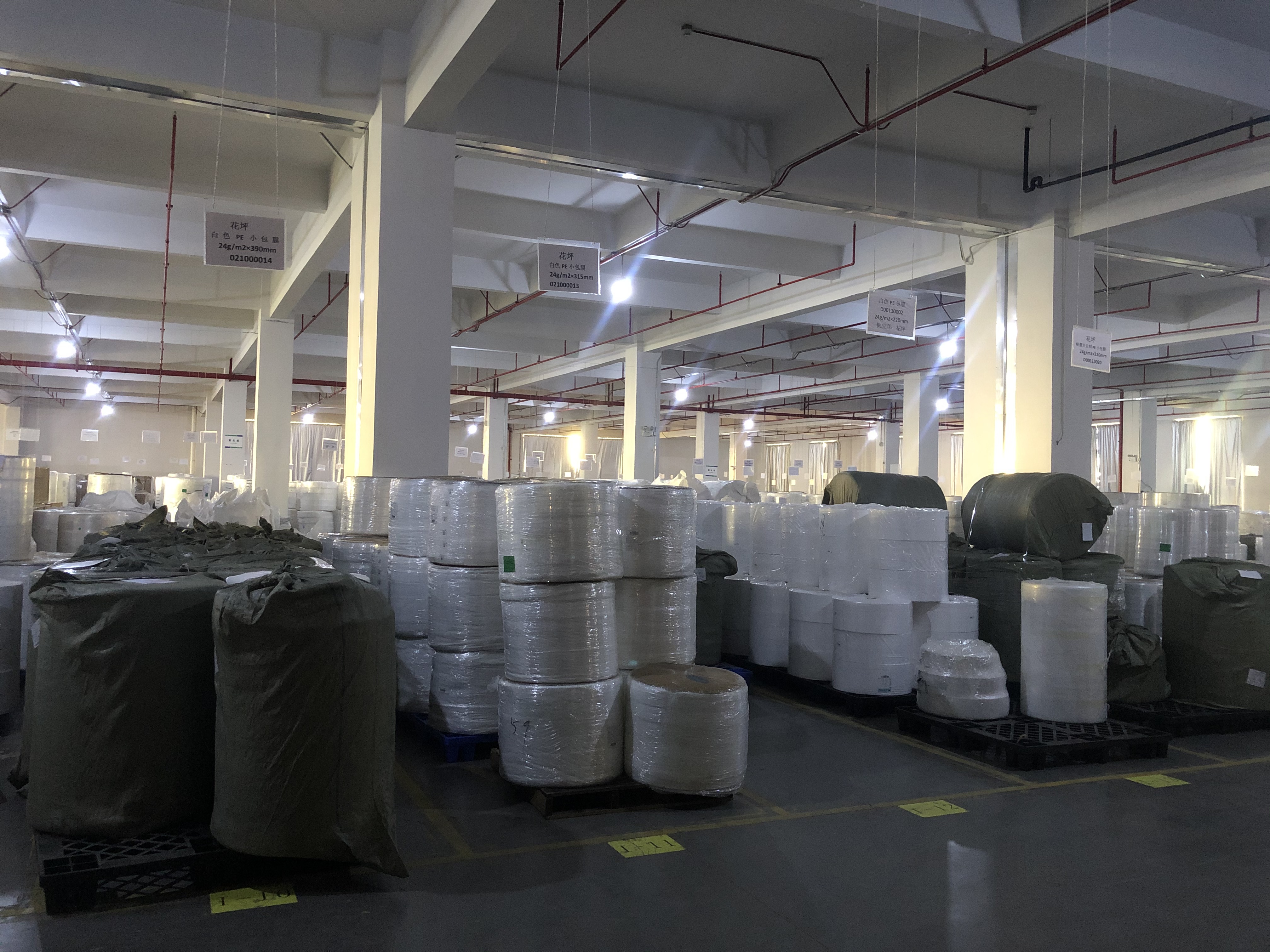
New Upward SC (Guangdong) Co., Ltd. — trading as Newupward — is an integrated disposable hygiene product manufacturing and service provider specializing in feminine care, established in 2017. The company operates a manufacturing facility covering 200,000 square meters, employs approximately 100 staff, and maintains an R&D team of more than 10 engineers. Annual production capacity reaches 5,000,000,000 pads, and around 80% of output is exported to Europe, North America, the Middle East, Africa, Southeast Asia, Central Asia and South America.
The product system spans feminine care, adult care, baby care, daily cleansing and pet care. Within feminine care, two families are directly relevant to organic and eco-positioned programmes:
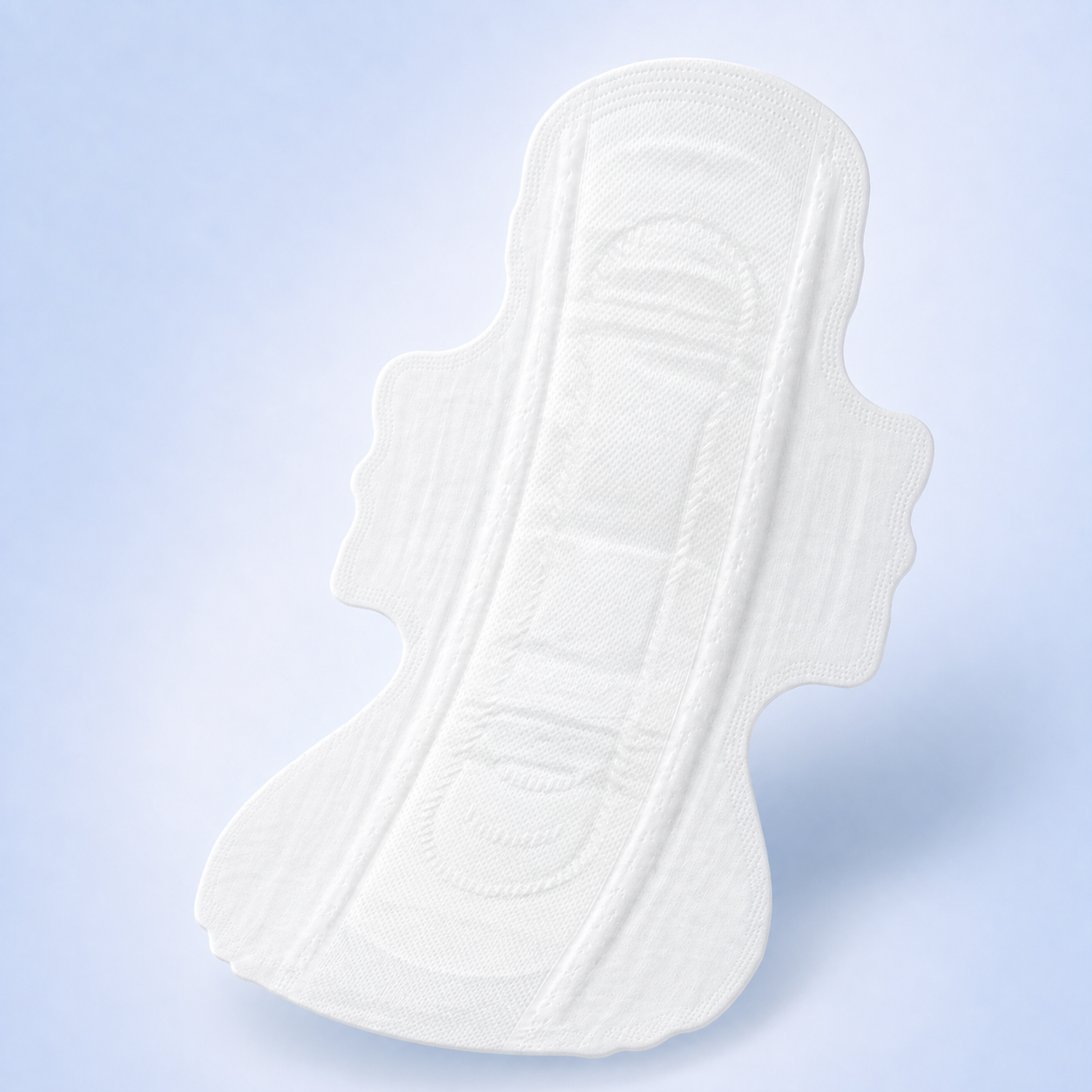
- Organic cotton sanitary pads (model NU07) — a winged disposable sanitary pad in the Organic Cotton Biodegradable Sanitary Pads category, with a 100% organic cotton top sheet, an absorbent core of fluff pulp and SAP, a breathable PE film or biodegradable film backsheet option, and soft nonwoven side layers and wings. Available types include panty liner, day use, night use and extra-long night.
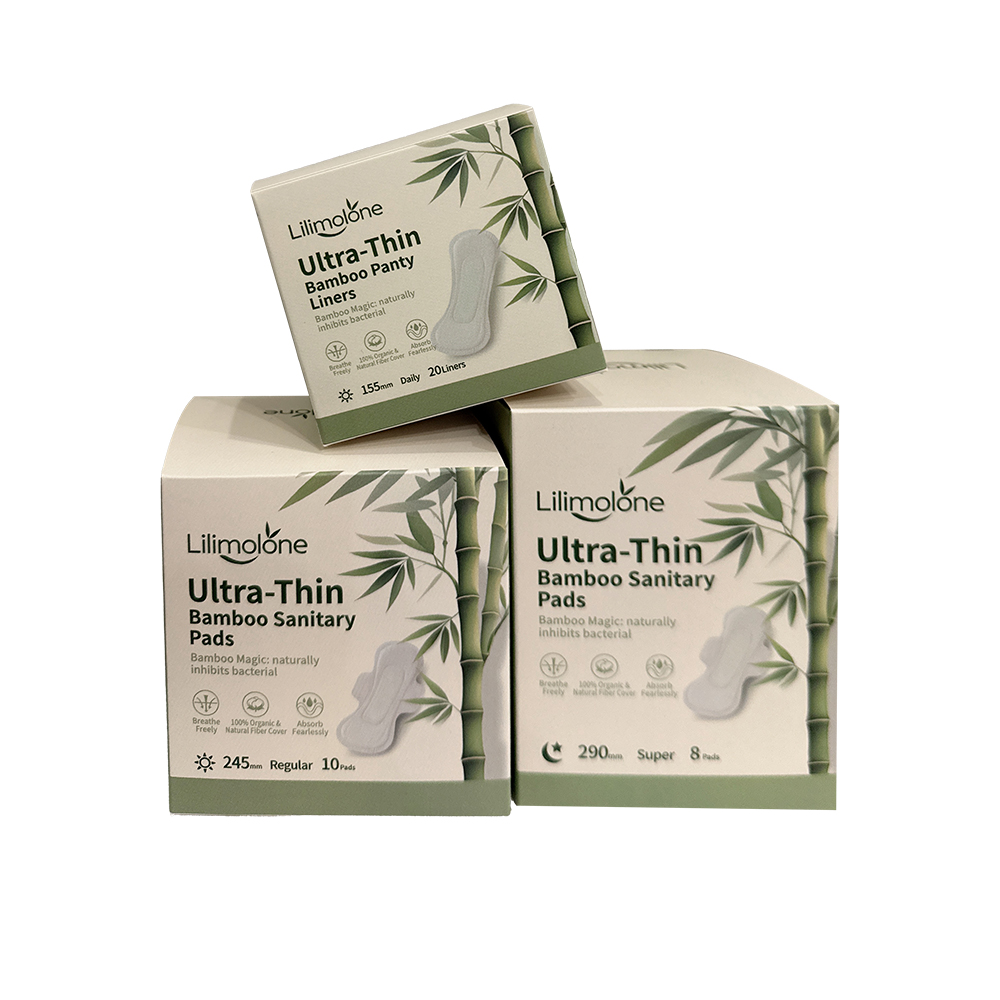
- Lilimolone Ultra-Thin Bamboo Sanitary Pads — ultra-thin bamboo fiber sanitary pads and panty liners available in 155 mm, 245 mm and 290 mm, with a bamboo fiber nonwoven topsheet, a high-absorbency pulp/SAP core and a breathable leak-proof PE backsheet.
Both families are designed for retail, supermarket, drugstore channels, cross-border e-commerce and OEM/ODM hygiene product manufacturing, and both can be customized for size, absorbency, surface material, packaging design, logo and private-label execution. A long-term programme is built by turning those capabilities into five repeatable support areas.
Sampling and specification locking
Sampling is only useful if it produces a written record. Each round should change one defined variable — length, absorbency, topsheet material, wing geometry or wrapper — and the approved round should become the specification reference for every later purchase order.
Range expansion
A brand launching with a single day-use pad will usually need a panty liner, a night-use length and often menstrual pants within one or two selling seasons. Because the same partner can supply panty liner, day-use, night-use and extra-long night types, plus menstrual pants within the feminine care range, expansion does not require a new supplier qualification cycle.
Quality consistency across batches
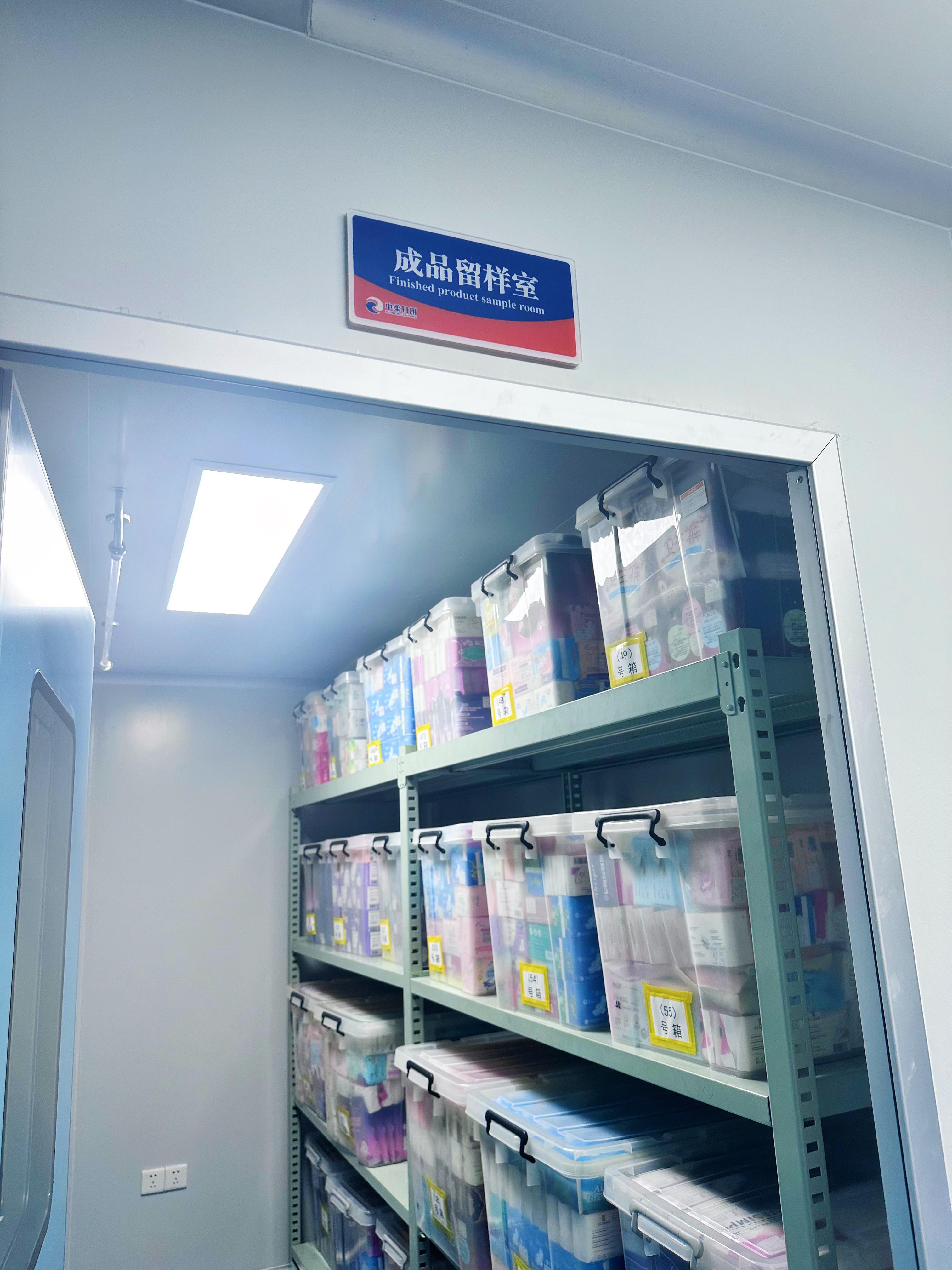
Consistency is a production discipline rather than a final inspection. It depends on controlled workshop areas, defined process checks and an agreed QC checklist that both sides can inspect against — with the option of third-party inspection before shipment for retail and pharmacy channels.
Documentation and certification support
Organic and skin-contact products attract more document requests than standard feminine hygiene items. A workable partner organises product test reports, material certificates and market-entry documents so that a retail buyer can verify scope, number and validity rather than accepting a claim.
Remote after-sales support
When the buyer and supplier never meet, after-sales support becomes a communication system: a named contact, English-language documents, version-controlled artwork approvals, sample confirmations in writing, and a repeat-order review that catches drift before the next container is booked.

From First Sample Request to Repeat Full-Container Orders: A Six-Step Breakdown
- Define the market and the channel before the product. A supermarket listing, a pharmacy listing and a cross-border e-commerce listing place different demands on documentation, packaging language and product photography. Channel choice should be settled before the specification.
- Fix the specification before discussing price. Size, topsheet material, absorbent core, absorbency level, backsheet type, wrapper, pack count, carton quantity, certificate expectations and shipment terms all need to be identical across quotations before any comparison is meaningful.
- Run sample rounds with a written change log. Each round should resolve a specific question, and the approved round should be signed off and archived.
- Approve artwork as a controlled version. Individual wrapper, retail bag, logo, colour system, product count, size labelling, barcode, carton marks and language all pass through artwork approval, and packaging MOQ should be confirmed separately from product MOQ.
- Assemble the documentation pack. Confirm which reports, certificates and declarations the target market requires, and check that each one names the covered product, the issuing body, the number and the validity period.
- Scale to full-container orders and set a repeat routine. The reference case in Taiwan, China reached full-container 40HQ procurement on repeat cycles, with each cycle checked against the same approved specification and documentation set.

Use Cases: How the Partnership Model Works in Practice
Case 1 — Three years of repeat orders with an emerging feminine care brand (Taiwan, China)
The brand began with a single organic pad concept and no established supply relationship. Four rounds of customized sampling were used to lock the specification, with each round changing a defined variable rather than restarting the conversation. Once the launch specification was approved, the range expanded to multiple pad sizes and menstrual pants, and procurement moved to full-container 40HQ shipments on a repeat cycle.
What makes the case useful is not the volume. It is that the entire relationship — sampling, revision, artwork approval, documentation requests, order confirmation and after-sales follow-up — was conducted remotely, without an in-person meeting at any point. The partnership lasted three years because the process was documented, not because of proximity.
Case 2 — Private-label range launch across retail, pharmacy and e-commerce channels
A second, more typical pattern is a private-label launch built around one brand system across several channels. Supermarket listings need clear retail packaging, a defined size range and stable supply. Pharmacy channels place more weight on documentation and trust signals. E-commerce channels need product images, accurate English product names and claim language that matches the supporting documents.
Because the same production and packaging system can serve all three, the product range is commonly planned as a single series covering panty liner, day-use and night-use pads, with an added heavy-flow or overnight length, a unified brand system, and clear size, count and usage marking for shelf selection.
Case 2 describes an application pattern supported by the product, channel and packaging facts in the source material. It is not a named customer project.
Single-Order Sourcing vs Long-Term Partnership: What Changes
The table below compares a one-off purchasing approach with the long-term partnership model described above. Dimensions are process-based, because those are the variables that determine whether a second and third order are actually re-orderable.
| Dimension | Single-order sourcing | Long-term partnership programme |
|---|---|---|
| Sampling | Usually one or two rounds, often without a written change log | Multi-round customized sampling against defined variables — four rounds in the Taiwan, China reference case |
| Product range | One SKU agreed for the trial order | Panty liner, day use, night use, extra-long night and menstrual pants, with 155 mm, 245 mm and 290 mm bamboo fiber lengths available |
| Packaging | Standard pack, limited change | Individual wrapper, retail bag, logo, colour system, pack count, carton marks and private-label artwork coordination |
| Documentation | Product photos and a price quotation | Product test reports, material certificates, CE Declaration of Conformity, EU Representative Agreement, Halal Certificate, FSC Chain of Custody, GOTS or OCS material scope certificates where applicable |
| Quality approach | Reliance on final inspection | Controlled workshop areas, defined process checks, agreed QC checklist and optional third-party inspection before shipment |
| After-sales | Reactive, contact changes with personnel | Named contact, English-language documents, version-controlled artwork approval, repeat-order review |
| Scale | Trial or partial volume | Full-container 40HQ repeat procurement |
| Best fit | One-off purchase, test-market sampling, urgent fill-in | Private-label brand or distributor with a multi-year product plan |
Documentation map for organic and skin-contact products
| Document | What it evidences | Typical use |
|---|---|---|
| CE Declaration of Conformity | Product conformity for EU market support | EU retail and e-commerce listing preparation |
| EU Representative Agreement | EU market representation arrangement | Importer and marketplace onboarding |
| Halal Certificate | Compliance with Muslim-market requirements | Middle East and Muslim-market distribution |
| FSC Chain of Custody | FSC mix pulp supply chain | Pulp sourcing statements |
| GOTS / OCS material scope certificates | Organic cotton supply chain scope | Organic cotton sanitary pad claims |
| Product test report | Hygiene and skin-contact performance for a specific product | Retail and pharmacy documentation requests |
| Antimicrobial activity reports | Bamboo fiber material performance claims | Support for material-related product statements |
| In vitro cytotoxicity, skin sensitization and skin allergy reports | Skin-contact safety review for the finished product | Retailer and pharmacy skin-safety requests |
FAQ: Long-Term Partnership, Sampling and After-Sales Support
1. Which certificates and test reports should a brand verify before committing to a long-term organic sanitary pad partnership?
Verify both factory-level and product-level documents, because a factory system certificate alone does not prove how a specific SKU performs. For sanitary pads and menstrual care products, useful references include a CE Declaration of Conformity, an EU Representative Agreement, a Halal Certificate for Muslim markets, FSC Chain of Custody documents for FSC mix pulp supply, and GOTS or OCS material scope certificates where an organic cotton supply chain is involved. For skin-contact review, buyers typically request in vitro cytotoxicity, skin sensitization and skin allergy test reports alongside product test reports for hygiene and skin-contact performance — for example Report No. 260059776 for Lilimolone Ultra-Thin Bamboo Sanitary Pads, and Report No. 2025FM19954R01E and Report No. 210285558 covering bamboo fiber antimicrobial activity. Each document should state the covered product, the test item, the issuing laboratory, the report number and the validity period; screenshots without scope or number carry little weight. Brands selling into the United States should also account for FDA's QMSR, which incorporates ISO 13485:2016 into 21 CFR Part 820 and took effect on February 2, 2026 for menstrual products. Local market requirements should be confirmed with the importer or a compliance consultant.
2. Can one partner support a full range expansion — from a single pad size to multiple sizes and menstrual pants?
Yes, provided the partner already carries the adjacent categories. The organic cotton sanitary pad model NU07 is available as panty liner, day use, night use and extra-long night types, and the Lilimolone Ultra-Thin Bamboo Sanitary Pads series covers 155 mm, 245 mm and 290 mm. Beyond pads, menstrual pants sit within the same feminine care range, which means a brand can add a period-care product without qualifying a separate vendor. Customization covers size, absorbency, surface material, packaging design, logo and private-label execution, and the packaging path runs through individual wrapper, retail bag, display box and master carton. A practical caution: packaging MOQ is often different from product MOQ, so both should be confirmed before a launch cost is calculated.
3. How does order scaling work between a trial order and a full-container order?
Scaling is a specification discipline. Before any quotation is compared, fix the product size, topsheet material, absorbency level, core structure, packaging count, MOQ, carton details, certificate requirements and shipment terms — otherwise the cheaper quote usually reflects a lighter core, a thinner film or a missing document rather than a better price. In the Taiwan, China reference case, the partnership moved from custom sample rounds to full-container 40HQ procurement while keeping the approved specification as the fixed reference for every cycle. The same logic applies to distributors extending an existing line: keep the specification constant and let volume change, not the other way round.
4. How many sampling rounds should a brand expect before mass production?
There is no universal number, and a fixed promise of "one sample approval" is usually a warning sign for an organic or skin-contact product. In the Taiwan, China reference case, the emerging feminine care brand completed four rounds of customized sampling before locking the specification — each round resolving a defined variable rather than restarting the design. A structured sampling request shortens the process, so the first message should include product type, size, target market, material preference, absorbency requirement, packaging style, estimated quantity and budget range. Sample cost and sample lead time should be confirmed against those details, and the approved round should be recorded in writing so that later production runs are measured against it.
5. How does after-sales support work when the buyer and supplier never meet in person?
It works as a documented remote routine rather than a personal relationship. That routine typically includes a named contact for the account, English-language specification and packaging documents, sample and artwork approvals kept under version control, an agreed QC checklist, the option of third-party inspection before shipment, batch or traceability information on the packing, and a repeat-order review before each new production cycle. The partnership described in this article ran for three years on exactly that basis, without an in-person meeting at any stage. Brands that want to test the routine before committing can start with a sample request or a specification-based quotation: contact info@newupward.com or laura@newupward.com, call or message +86 157-9847-3913 on WhatsApp, or review the product range at www.newupward.com.
Conclusion: Five Checks Before You Commit
A long-term organic sanitary pad partnership is easier to evaluate when the questions are asked in the right order. Documentation first, because skin-contact and market-entry evidence cannot be improvised later. Range capability second, because most brands outgrow a single SKU within a season. Order scaling third, because a specification that changes with volume is not a specification. Sampling fourth, because the number of rounds a supplier is willing to run tells you how they will treat a repeat order. After-sales last, because it is the part of the relationship that has to work when nobody is in the room.
The market context supports that ordering. Organic and biodegradable segments are growing at double-digit rates in the biodegradable category, one region already holds more than a third of revenue, and the US regulatory framework for menstrual products tightened on February 2, 2026. Buyers who select on documented process rather than on headline unit price are the ones who can reorder without re-negotiating.
Next step: sample, quotation or catalogue
New Upward SC (Guangdong) Co., Ltd. supports OEM/ODM programmes for organic cotton, bamboo fiber and biodegradable sanitary pads, panty liners and menstrual pants, including customization of size, absorbency, surface material, packaging design and logo.
- Download the sanitary pad catalogue (PDF): E-catalog of sanitary pads — New Upward
- Email: info@newupward.com / laura@newupward.com
- WhatsApp and phone: +86 157-9847-3913
- Website: www.newupward.com
- Address: A4-02, Building A, No.108, Lijia Road, Henggang Street, Longgang District, Shenzhen City, China 518115
Send your target market, product size, material preference and estimated order quantity, and the response can be matched to a specific specification rather than a generic price list.
Have Questions or Need More Details?
Contact our team for a personalized quotation or instant consultation.
Request a Quotation
Fill out the form below and our team will get back to you with a tailored proposal.
WhatsApp Direct Chat
Prefer to chat in real-time? Message us on WhatsApp for instant assistance & quick answers.
- Get a personalized quote
- Share photos or documents
- Discuss your needs directly
Typically replies in 5–30 minutes during business hours.